'Steel Maiden,' a high-speed two-button action roguelite crafted single-handedly by CEO Cho Ki-chul—a 30-year veteran art director turned solo developer—met with visitors at the Unity World booth during G-STAR 2026. Stepping out of the familiar team development environment, he is completing a game that combines his artistic strengths with tactile action feedback through a new solo development pipeline powered by AI and the Unity engine.
Delivering the thrilling satisfaction of extreme slashes and parry-counters using only two buttons (left and right), 'Steel Maiden' previously caught gamers' attention through Stove Indie Boostlab and a Steam demo, and took to G-STAR to gather on-site feedback. We spoke in detail with CEO Cho Ki-chul, who fully transitioned from art director to solo developer, about everything from behind-the-scenes stories of AI-assisted development to the new characters coming in the full release.
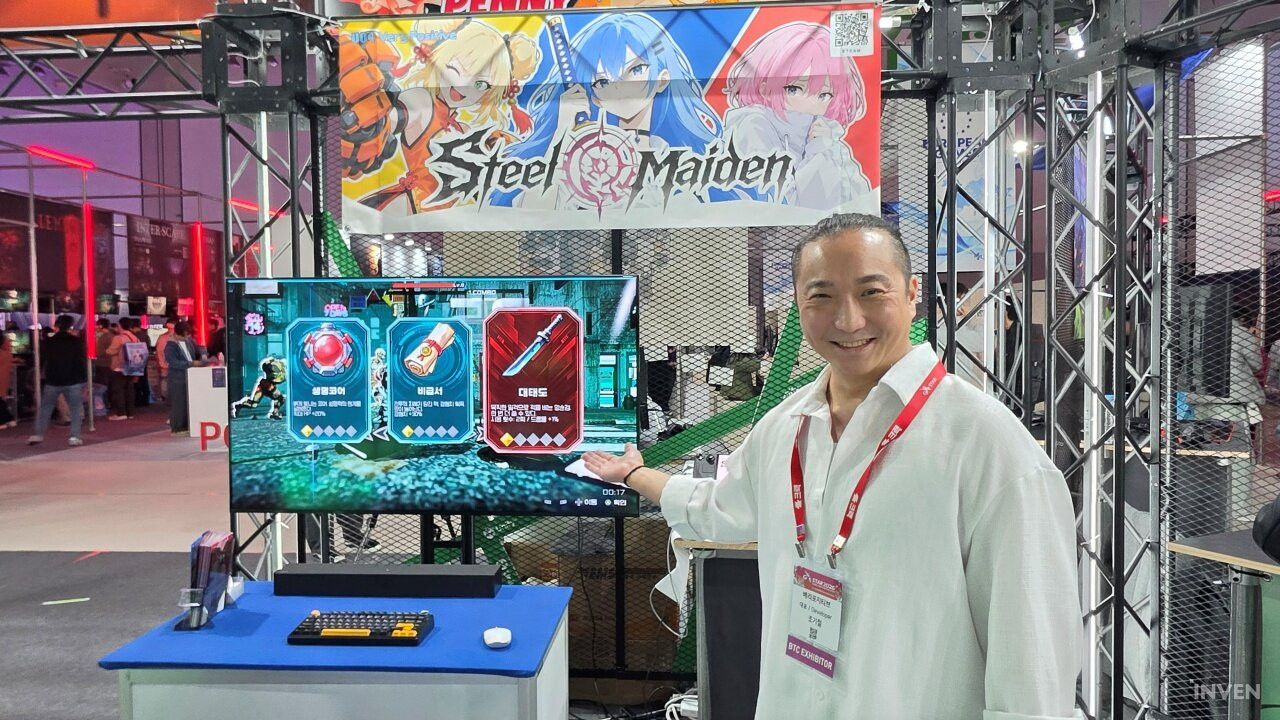
Please introduce yourself.
"Hello. I am Cho Ki-chul, developer of 'Steel Maiden' at VeryPositive. I started working in 3D art in 1996 and began making games in 2003. I worked as an art director on 'Civilization Online' and 'My Little Puppy,' and after going independent this year, I have been creating the action games I've loved for a long time.
How do you feel about participating in G-STAR 2026 with your solo project 'Steel Maiden'? Also, was there a specific reason for participating through the Unity World booth?
"I was invited by Unity Korea to join their Indie Showcase. I'm thrilled to show a game I made alone to domestic and international attendees at G-STAR.
In particular, I wanted to watch from right next to people playing the game for the first time. Online, players who enjoyed it leave reviews, but it's hard to tell where those who quietly quit mid-way got stuck. On-site, I'm looking forward to observing the exact moment their hands stop and being able to ask them why right there. I prepared a demo version with shortened early stages so players can get a feel for the game's flow even in a short amount of time.
You worked as an art director at several companies. What inspired you to take on solo development after going independent? Also, is there a specific reason you chose Unity?
"Honestly, seeing how fast AI was advancing was a bit scary. I wondered what value the experience I accumulated over a long time would hold going forward. In the past, to start a game, you had to gather programmers and artists, set up a workplace, and convince investors to cover costs. But with generative AI and coding tools advancing, I felt I could directly start building what I wanted to make before going through that whole process. So I decided to take the experience I've gathered and first build a game development workflow leveraging AI.
For this project, rapidly implementing small ideas to test them out myself was crucial. In Unity, I could put 2D characters on a 3D stage and tweak attack timings while checking them directly on the actual game screen. I saw it as an engine well-suited for that kind of iterative work.
Could you introduce what 'Steel Maiden' is as a game currently in development? What key attraction differentiates it from other action roguelites?
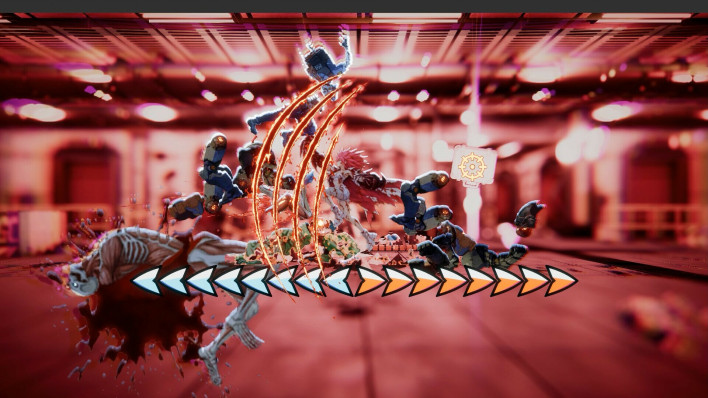
"It's an ultra-fast-paced action roguelite where you face incoming enemies using only two buttons, left and right. Pressing one side lunges and attacks in that direction. At first, you end up cutting down nearby enemies, but once you get used to it, you start watching when the enemy on the right will attack while slashing the enemy on the left. That's when combat changes.
On top of that, weapon evolutions and relic combinations are added. Moment to moment, there is the fun of judging which side to strike and when, while across a whole run, there is the fun of choosing which weapons and abilities to develop. As those two interlock, pressing the exact same buttons plays out differently depending on the build you crafted.
When did development on 'Steel Maiden' begin, and how did you utilize AI and Unity during the actual development process?
"Full-scale development began in February 2026. Just as I used to discuss directions with designers, programmers, and artists on previous teams, this time I discussed weapon and relic ideas with AI and implemented game logic using Claude Code.
For character animation, I established starting and ending poses and generated the intermediate movement via AI video. I picked usable movements, trimmed and stitched them together in After Effects, and turned them into 2D sprites. When put into Unity and played directly, movements that looked smooth in video form could feel slow the moment a button was pressed. When I identified those spots, I re-trimmed the animations and adjusted timings so visuals and sound aligned.
Also, while getting good audio sources isn't difficult, finding sounds that fit my game perfectly was really hard. So I voiced the desired sounds myself, recorded them, and converted them into sound effects using AI. I edited and synthesized those sounds to put into the game.
What was your intention behind radically compressing the controls to just two buttons (left and right), and what kind of tactile combat feedback were you hoping to achieve through this?
"When you deconstruct action games to the core, movement and attack are the two things left at the end. 'Vampire Survivors' removed attack controls altogether. I believe that creative choice gave birth to a whole genre. I started with the idea: what if I keep attack controls and eliminate manual movement controls instead? It's a method of imposing constraints and finding fresh fun within them.
I considered adding up and down buttons, but ultimately decided to stick with the constraint of just two left and right buttons to the end. Even with two buttons, I wanted to create that satisfying feedback of lunging into enemies for continuous slashes, choosing which side to hit first, or whether to wait one beat longer when enemies approach from both sides.
The fast-paced hack-and-slash slashing action combined with the tactile thrill of parry-counters triggering in between is particularly striking. What was your main focus when implementing this aspect?
"I created a sharp contrast between silky-smooth animation and slashes. Normally the character moves very fluidly, but the moment an attack happens, that flow snaps abruptly as the blade strikes. I deleted the wind-up animation before attacks so that when you press a button, it feels like you're already slashing on screen.
I also gave rhythm to the flow of time. While slashing enemies sequentially, it drives forward rapidly, but the moment a parry lands, time slows down briefly. If you press again with the right timing then, a counter detonates and combat returns to original speed. That brief single beat makes the counter feel all the more impactful.
Although the control scheme is simple, directions are limited and weapons don't swap out completely, so designing diverse builds must have involved a lot of deliberation. How did you resolve this challenge?
"When designing weapons, I envisioned a melee tank that holds ground up close, a ranged damage dealer that attacks from a distance, and a healer utilizing recovery. Depending on which weapons and relics you develop during a run, you can evolve play in one of those directions.
For example, driving a lightning rod into an enemy electrocutes surrounding enemies as well. Evolving this into a Tesla Coil creates an electric field at the point of insertion, paralyzing enemies and restoring character health. This forces you to think not only about which side to attack, but also where to set up electric fields while fighting. I wanted the results of build choices to be tangible in how your hands move during battle.
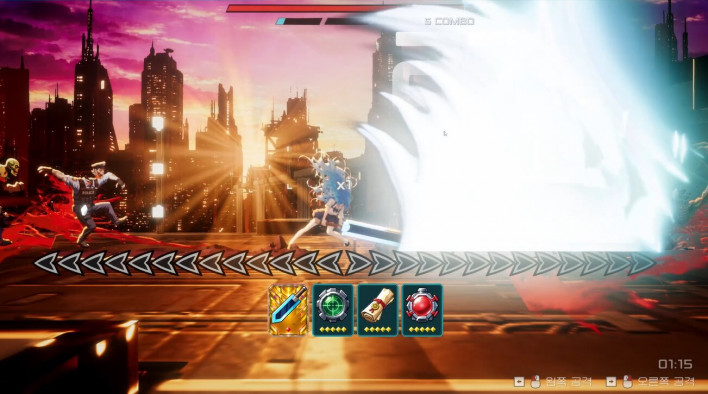
The characters are simple yet instantly eye-catching. Could you share a bit of your character design know-how?
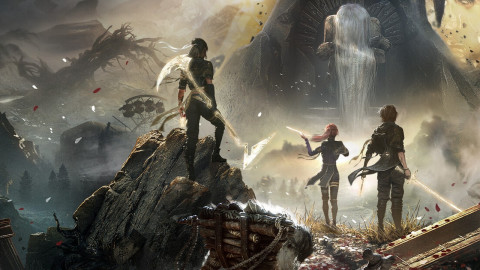
"I wanted to create a game players could enjoy immediately without having to master complex stories or systems first. I wanted each character's style to be recognizable at a glance, so I started with three colors: red, blue, and yellow. Red was set as a fiery, aggressive berserker; blue as a cold, katana-wielding swordsman; and yellow as a martial artist.
While conceptualizing the protagonist Nana, who takes the blue theme, I was reminded of Ukyo Tachibana from the 90s fighting game 'Samurai Shodown,' and included many homages. I also paid careful attention to ensuring that each character's stance and motion remain clearly visible on the combat screen. Even when stage lighting and colors shift, rim lighting catches the outlines so characters don't get lost in the background.
You'll be speaking as a presenter at the Unity Indie Relay Talk. What experiences do you hope to share with the audience?
"The presentation title is 'Steel Maiden: Afraid of AI, So I Made a Game with AI.' Starting from the fear that work I've done for a long time could change, I plan to talk about how my workflow shifted while actually building a game.
For example, an animator who understands action movements well can leverage AI to implement attack logic and refine hit timings while playtesting directly. In the past, that required multiple iterations across three separate roles—design, programming, and art—implementing, testing, and revising together. I want to convey how indie developers can use such shifts to experiment within their own games, along with the trial and error I went through.
Following your G-STAR participation, you also released a demo on Steam. How complete is it compared to the full launch version?
"In terms of playtime, the Steam demo is about 20% of the full release version. It was designed assuming around an hour and a half, but some players logged 20 to 30 hours over ten days. In the demo, you can play 10 normal stages, 10 challenge stages, and survival mode as Nana.
The full release will add Fei and Soma to the roster, expanding campaign stages and enemy combinations. We also plan to add items and relics that introduce unpredictability—making players want to try different choices even when playing comfortable builds.
Only one character was playable in this build. What action styles can we expect from the other two characters?
"Fei charges energy while holding down a directional button and unleashes a shockwave with Fa Jin, blowing away enemies all at once. Because you must hold your ground while charging, the fun lies in gauging how much longer you can endure as enemies close in right in front of you.
Soma builds an Awakening gauge by defeating enemies or taking damage. Once awakened, attack range expands temporarily, allowing a single swing to penetrate multiple layers of defenses. When overwhelmed by enemies piling up on one side, triggering Awakening lets you turn the tides within that brief window.
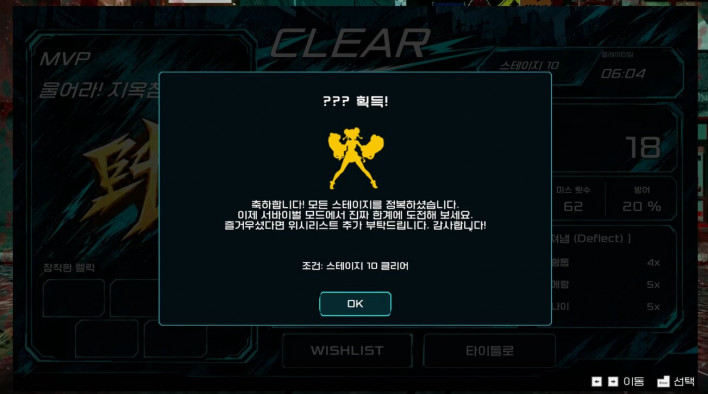
The game gained recognition among indie gamers after receiving high ratings during the Stove Indie Boostlab test. What was the most memorable feedback, and what core areas are you focusing on refining moving forward?
"We received extremely positive feedback regarding hit feedback and visual presentation. Most memorable of all was hearing several players say time flew by while playing. Creating action so immersive that it makes you want to play 'just one more run' was precisely what I wanted to achieve.
The key task moving forward is reducing drag during a run. In the Steam demo update, we lowered kill targets per stage and rearranged heavy enemy waves alongside brief breathing room intervals. We also enabled players to experience weapon evolutions earlier in the game. For the full release, we are polishing combat so that encountering new enemies demands different battle timing, and changing your build alters how you approach the same enemies.
Could you share a final message for players who enjoyed the game at G-STAR or through the demo and are looking forward to the official launch?
"I am deeply grateful to everyone who played one more run in the demo to master Nana's counter timing and find their favorite weapon combinations. Hearing that you're waiting for the official release gave me immense energy during development.
In the full launch, I hope you take the muscle memory honed with Nana and try Fei and Soma. With Fei, there's the satisfaction of charging energy right until enemies are in your face before blowing them all away; with Soma, there's the thrill of triggering Awakening when pressed back and lunging right back into the fray. We are also preparing ways for you to use your favorite weapons from the demo in new styles when combined with new relics.
After launch, I'm sure some players will discover combinations I never even imagined. Please let me know which character fit your playstyle best and which build carried you to the end. I'll be eagerly waiting to hear your stories.