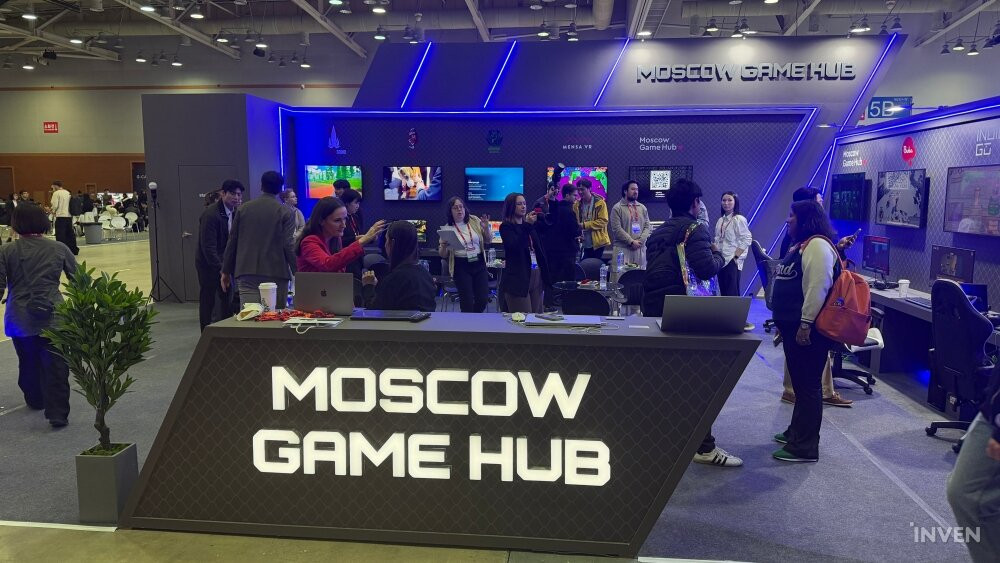
The Moscow Game Hub, a video game and animation cluster backed by the Moscow City Government, hosted a booth at G-STAR 2026 with a delegation of local developers. Marking its second consecutive year at the event, the showcase highlighted a growing trend: Russian game studios are increasingly turning to Korea not only to find publishing partners, but also as a premier stage to validate their gameplay.
The delegation's trip was organized by the Moscow Agency for Creative Industries (ACI), an entity under the Moscow Department of Culture, as part of its "Moscow Video Game Export" initiative. Participating organizations at the booth included Mensa VR, WATT Studio, Hanuman Games, Buka, Vampire Squid, Gemenot Digital, Digital Sport, SMP Esports, and gaming platform 4Game. According to materials released by the hub, the delegation scheduled over 100 business meetings during G-STAR with publishers, distributors, platform operators, and developers.
City-Backed 'Full-Cycle' Cluster Serves as Export Gateway
The Moscow Game Hub is a 55,000 m² gaming and animation cluster. It houses motion capture, photogrammetry, and sound studios alongside data centers, and features its own dedicated esports arena. The hub describes itself as the largest gaming hub in Europe.
During an on-site media briefing, Anastasia Rybkina, head of the Moscow Game Hub, described the facility as a "full-cycle" cluster supporting studios from initial concept to global expansion. Acceleration programs assist resident companies in securing investment and talent, while studios with working demos are sent to international trade shows. Rybkina, who holds a PhD in economics, has built creative industry clusters and accelerators for over a decade. According to Rybkina, the 2nd Moscow International Video Game Week hosted by the hub attracted over 250,000 visitors.
The hub's event schedule is particularly noteworthy. Rybkina revealed that resident studios attended ChinaJoy and Tokyo Game Show in 2026 with hub backing, and will head to WePlay Expo in China just days after G-STAR. Every trade show on Rybkina's 2026 itinerary is located in Asia, with specific events selected based on each studio's strategic priorities.
Results are measured in numbers. "After every exhibition, we evaluate performance by checking Steam wishlist metrics," Rybkina said, adding that the hub also separately tracks the number of international contracts signed during events. This underscores their view of trade shows as practical business generation tools rather than mere promotional showcases.
Why Korea? High-Standard Feedback from Discerning Gamers
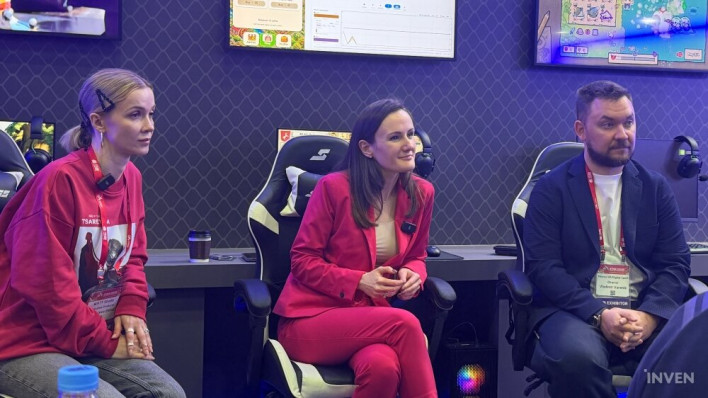
The hub highlighted Korea as a primary target market for its export initiative. Market size alone was not the deciding factor. Rybkina explained that Russian gamers view China, Korea, and Japan as trendsetting gaming markets and consume a significant number of Asian titles. She cited League of Legends and Genshin Impact as some of the most popular games in Russia. PC has maintained dominance since the 1990s, with PC and mobile now co-leading the market while console market share grows annually. In May 2026, the hub hosted a Korean culture-themed event, "K-pop Cyber Saturday," which featured a PUBG: BATTLEGROUNDS tournament.
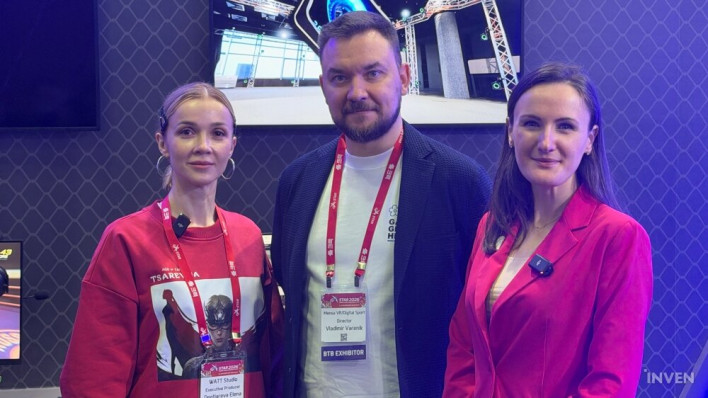
WATT Studio best exemplifies how Russian developers utilize the Korean market. WATT Studio first visited Korea at G-STAR 2025. Yelena Degtyareva, General Producer at WATT Studio, shared that the team initially came to test how Russian cultural motifs—such as ballet and Slavic dark fantasy—resonated with Korean gamers. Based on feedback gathered from Korean marketing agencies and consultants during that visit, the studio spent a year refining its combat mechanics and visual presentation, returning to G-STAR with an updated build for a second round of evaluation.
Degtyareva emphasized that the Korean market evaluates game quality and combat mechanics against high standards, making local feedback invaluable. In essence, developers are using Korea as a proving ground to refine their games before commercial launch.
Their goals for finding partners are equally concrete. Vladimir Varenik, CEO of Mensa VR, stated that the studio is actively searching for a Korean publisher to take charge of its boxing title, Russian Boxing Legends. He added that Mensa VR is also looking for boutique Korean studios and agencies to co-manage marketing and PR across Steam and the Russian market.
Russian Games: Moving Beyond Retro-Futurism to Slavic Narratives
For Korean gamers, Russian video games carry a strong association with Soviet retro-futurism, best represented by titles like Escape from Tarkov and Atomic Heart. During the briefing, press members even asked whether Korean interest remained overly focused on Soviet-era culture.
Rybkina acknowledged that retro-futurism has established itself as a proven aesthetic while showcasing the technical capabilities of Russian developers. However, she noted that because the market is saturated, attracting players requires delivering something completely fresh—pointing to original mechanics and novel settings as their focus.
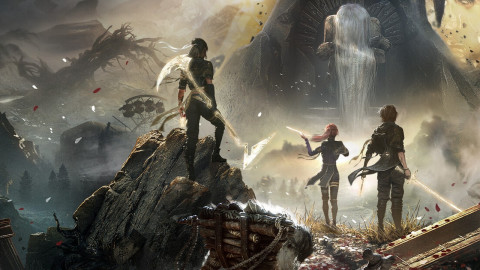
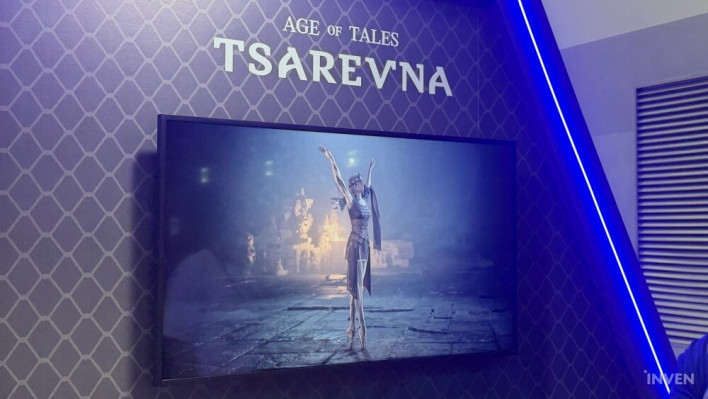
The showcased line-up follows this philosophy. WATT Studio's 'TSAREVNA: Age of Tales' is a third-person action title inspired by Alexander Pushkin's fairy tales and Slavic folklore. Its core feature is ballet-infused combat, built using motion-captured performances by a principal ballerina from the Bolshoi Theatre. Executing combos raises combat rank and unlocks dance moves that recover stamina or shift the tide of battle. A Steam release is planned for 2027.
WATT Studio's background is equally compelling. Founded in 2018 as a film virtual production team, the studio contributed to both Atomic Heart and Escape from Tarkov. Having worked on iconic retro-futurist titles, the team is now putting its original IP to the test through Slavic fairy tales.
Mensa VR introduced a role-playing game based on Leo Tolstoy's novel War and Peace. 'Russian Boxing Legends' is an Unreal Engine 5-powered boxing simulator depicting a boxer's journey from a 1990s local gym to the global stage of the 2020s. Two-time Olympic gold medalist Oleg Saitov served as a consultant, and the studio secured official fighter licenses through an agreement with the Russian Boxing Federation. Varenik stated that the studio aims for a 2028 release on Steam.
Also presented at the booth were 'Toto's Journey', a puzzle adventure by Hanuman Games starring Toto the dog from The Wizard of Oz; 'Twisted Party', a competitive multiplayer title from Vampire Squid; and 'Feodika', a strategy game by Gemenot Digital centered on managing a 9th-century European dynasty. Gemenot Digital also showcased 'Ygrekon', an AI-powered web tool designed to model and simulate in-game economic systems.
The hub also pitched itself as a gateway for Korean gaming companies looking to enter the Russian market. Through the hub, Korean businesses can connect with Russian publishers and developers to discuss joint projects or participate in events held in Moscow. Rybkina noted that the booth also hosted a game distribution platform seeking collaboration with Korean developers.
4Game is a platform supporting game releases and distribution across Russia and the Commonwealth of Independent States (CIS). Promotional materials distributed by the hub also highlighted RuStore, a Russian Android app marketplace. RuStore reported over 73 million monthly active users and more than 150 million cumulative downloads since launching in May 2022. Real-world exchanges are already taking place: Korean publisher Burning Soul showcased its PC and mobile titles at Moscow International Video Game Week in autumn 2026.