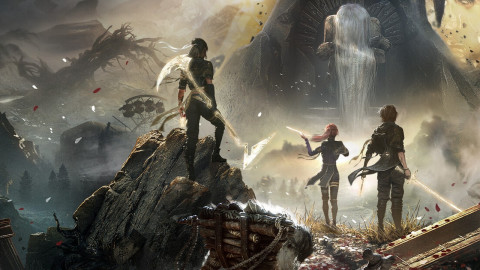

What does it take to create a compelling fantasy world? Intricately designed history and geography, intriguing characters, and an immersive storyline immediately come to mind. However, the developers of 'The Witcher' series take a slightly different emphasis. Rather than attempting to explain every lore detail, their focus is on understanding the people living in that world, bringing the story to completion through the conflicts and choices those people face.
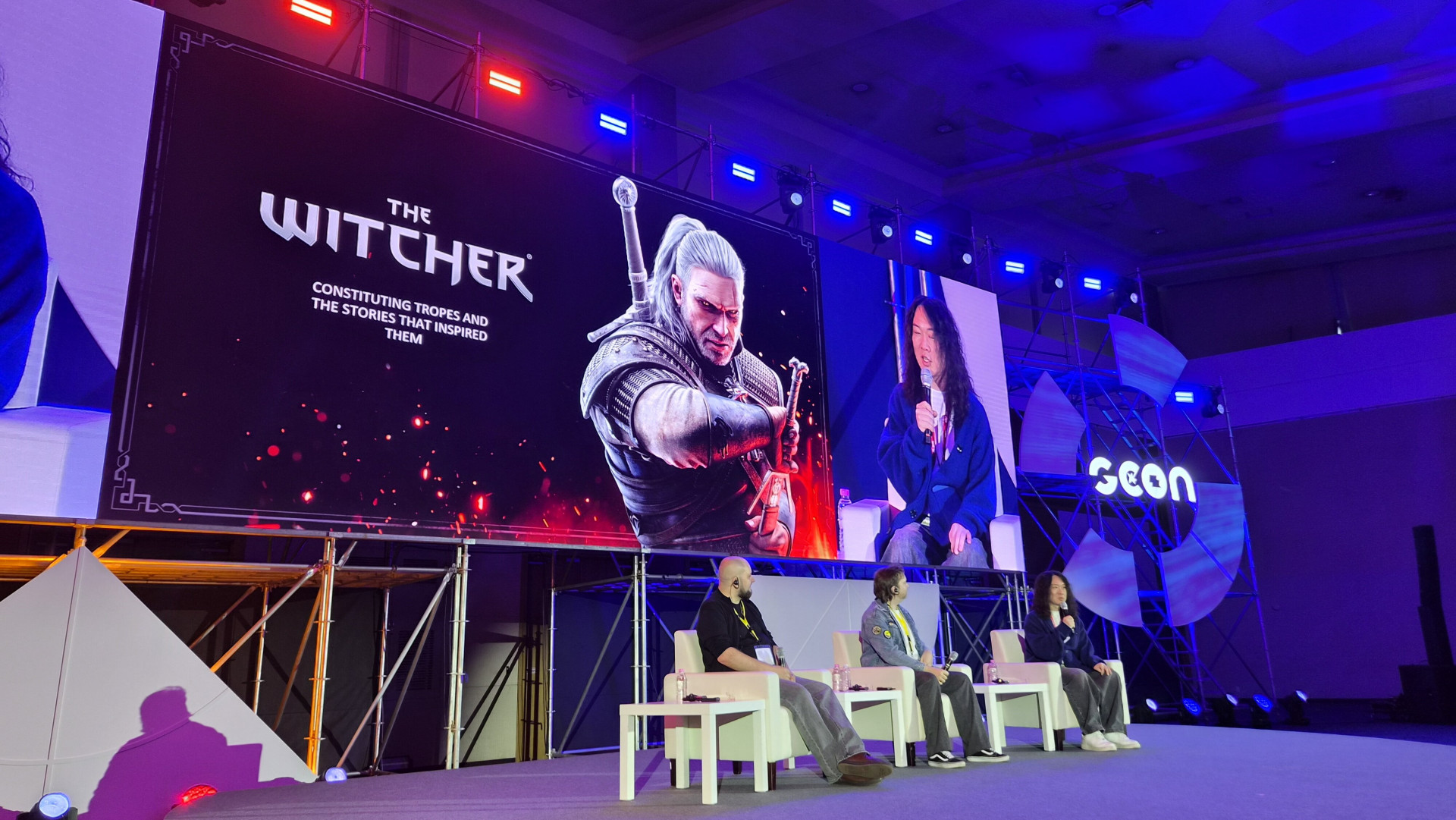
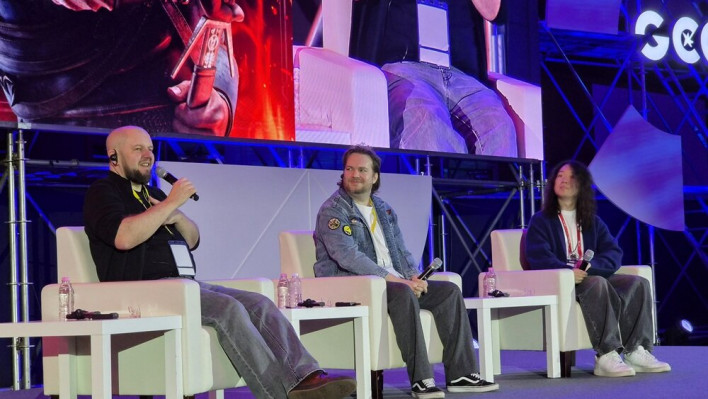
On November 19, at the game developer conference 'G-CON' during G-STAR 2026 at BEXCO in Busan, Marcin Blacha, Vice President and Story Director at CD PROJEKT RED (CDPR), and Philipp Weber, Narrative Director, took the stage. Moderated by Professor Hong-je Chang of Kwangwoon University, the session explored the unique narrative characteristics of 'The Witcher' series and the philosophy of the dev team behind them. The two highlighted that simply imitating 'The Witcher' is not enough to create another 'Witcher.' They explained that developers must look beyond understanding Andrzej Sapkowski's original novels and the previous games, delving into the history, culture, and literature that inspired those works in the first place.
Narrative Director Philipp Weber noted that he delivers this same lecture to new developers joining the team. This is because, even across hundreds of hours of a massive RPG where horror, comedy, tragedy, and hope blur together, the distinctly 'Witcher-like' atmosphere must be preserved. VP Marcin Blacha likened this to 'Bigos,' a traditional Polish stew. Although it is made with a variety of ingredients, it retains its signature flavor no matter what goes into the pot. To him, 'The Witcher' is similarly a blend of diverse cultural ingredients that retains an essential, unmistakable flavor of its own.
A Monster Slayer, Not a Hero Cultural archetypes that shaped Geralt
The presentation began with the question: "What is a witcher?" This is a slightly different question from simply defining Geralt's individual personality. Especially since Ciri will step up as the new protagonist in 'The Witcher 4,' the team stressed the importance of understanding the fundamental nature of what a witcher is beyond Geralt himself. Narrative Director Weber defined a witcher primarily as a "professional." Rather than a traditional fantasy hero driven by destiny or a sense of duty to slay monsters, a witcher treats monster hunting as a trade—a highly skilled professional carrying out a job.
To illustrate this, Weber shared a Polish folktale mentioned by Sapkowski. In the story, a clever shoemaker defeats a dragon by stuffing a sheep with sulfur. Sapkowski reasoned that if monsters actually existed in the world, the problem wouldn't be solved by a shoemaker happening to get lucky, but by someone with specialized knowledge of monsters. Born from this concept, a witcher possesses deep expertise in monster ecology and weaknesses, as well as magic and curses. In a medieval fantasy world where superstition and folklore are real, a witcher approaches problems with the pragmatic, analytical mindset of a scientist.
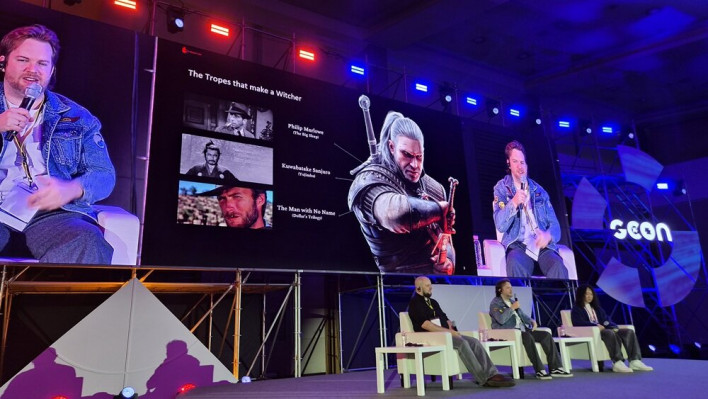
That is not to say Geralt is portrayed solely as a cold professional. The developers view him as a detective, a hunter, and at times a wandering swordsman or a Western gunslinger. Weber cited key cultural archetypes such as Raymond Chandler's detective Philip Marlowe, the ronin of Akira Kurosawa's films, and the "Man with No Name" played by Clint Eastwood. Though born of different cultures, these figures all share the archetype of a lone expert who arrives in an unfamiliar place, solves a problem, and moves on. Given that the Western gunslinger was himself inspired by Japanese samurai cinema, Geralt can be seen as a character built from layers of cross-cultural inspiration.
However, simply combining traits from various characters does not automatically make Geralt. VP Marcin Blacha emphasized that the final, indispensable element is a "heart." Geralt may act blunt and abrasive at times, often thrust into brutal situations where he must decide who lives or dies. Yet at his core, he possesses a fundamentally good heart and cannot simply turn a blind eye to the suffering of others.
This human side shines through in dialogue. While Geralt in promotional trailers might look like a taciturn, hardened warrior, in the actual games and books he frequently engages in lengthy philosophical debates about life, morality, and the meaning of neutrality. Sharing drinks and endlessly talking about the world with Dandelion is another signature aspect of his character. Weber recalled that by the time CDPR developed 'Hearts of Stone' and 'Blood and Wine,' the expansion packs for 'The Witcher 3,' the team had become thoroughly attuned to Geralt as a character. No matter what situation they put him in, they could naturally predict how he would react—a level of understanding that greatly accelerated development of the expansions.
From Geralt to Ciri The new narrative challenges facing The Witcher 4
Following Geralt, whom the developers refined over many years, Ciri takes center stage as the new protagonist in 'The Witcher 4.' Although she appeared in both the novels and games—and was playable in 'The Witcher 3'—she will now drive the narrative forward. Weber described this shift in main characters as an exciting challenge. Ciri is Geralt's adopted daughter and was trained as a witcher at Kaer Morhen, but she does not make the exact same judgments as Geralt. Even when placed in identical situations, the two characters might make very different choices. The dev team thus faces the task of preserving a character with an established personality and moral code while still offering players freedom of choice.
In discussing this process, Weber reaffirmed the RPG philosophy behind 'The Witcher' series. Games are not an educational medium meant to lecture players on right and wrong; for a title aimed at mature audiences, it should respect player judgment accordingly. The choices presented by the developers do not carry a single correct answer. A decision made with good intentions might lead to tragedy, while a morally uncomfortable choice could yield unexpected outcomes. The team aims to present these scenarios and leave it to players to process the ramifications.
VP Marcin Blacha similarly described 'The Witcher' as a narrative exploration of what it means to be human. Humans are capable of warmth and goodness, yet can also commit deplorable acts. Showing both sides of that coin has long been a key focus for the team. However, the presentation did not reveal specific new content or development schedules for 'The Witcher 4'; both speakers chose to focus on the core essence of 'The Witcher' that must be preserved even as the protagonist changes.
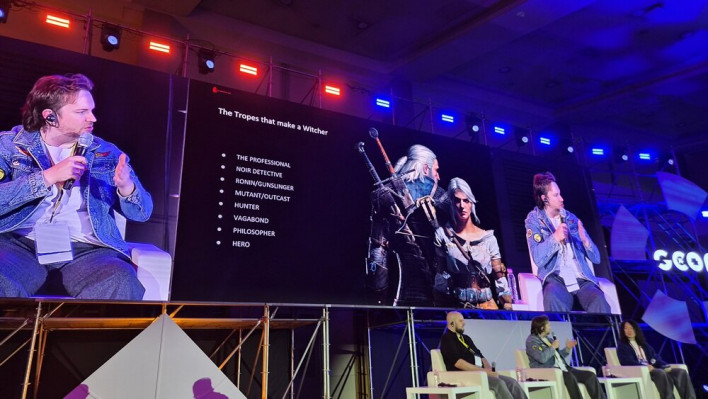
Building a world without right answers Subjective worldbuilding and historical credibility
Another hallmark of 'The Witcher' series is its vast and complex world lore. The interests of multiple kingdoms, races, and political factions tangle together, while each region harbors distinct beliefs and customs. Yet when designing this world, the developers refrain from establishing objective, absolute truths for every lore point. Weber introduced the concept of "Subjective World-building"—a method where information about the world is delivered not as absolute fact, but through the perspectives of the characters living within it.
Regardless of which nation's history you hear, the person relating it holds their own views and political stance. The victors of war record history in their favor, while the defeated may remember the exact same events completely differently. Players must listen to multiple accounts and determine where the truth lies for themselves. Weber explained that this approach mirrors how real human history is recorded, as even the historical facts we take for granted may have been filtered through someone's agenda and interpretation.
VP Marcin Blacha cited the map of The Witcher universe as a prime example of this approach. The original novels featured no official map, and even the term "The Continent," now widely used, was established outside the books. The dev team constructed the game world referencing a map created by a Czech translator who collaborated with the author, but even that map is not an absolute authority precisely detailing distances and geography. For the team, what matters is not fixing the exact location of every river and city with pinpoint accuracy, but how effectively the world's setting serves the characters and story. Utilizing the geographical relationship between the Pontar River and Temeria in Geralt's journey in 'The Witcher 2' reflects this philosophy.
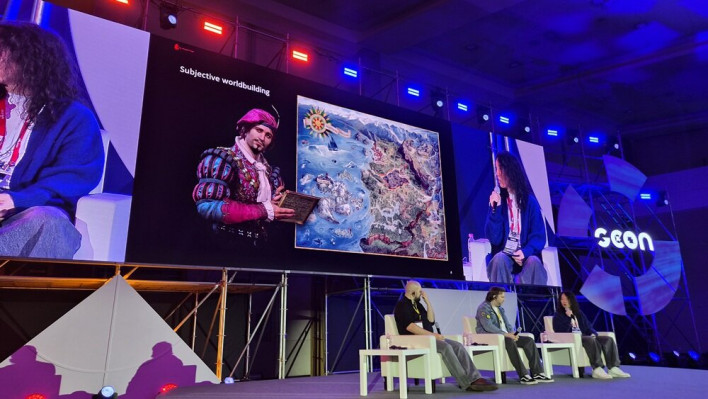
This method also carries the advantage of allowing developers to prioritize characters and events when designing world lore. Weber explained that while some works prioritize worldbuilding above all else, CDPR generally places greater weight on characters and plot. Because not every piece of world lore is rigidly set in stone, the team can flexibly adjust settings to serve the narrative. That doesn't mean ignoring logic, however; CDPR applies the principle of "Historical Credibility" to ensure the fantasy world remains convincing.
As a fantasy universe filled with magic and monsters, 'The Witcher' does not need to recreate medieval Europe perfectly. Nevertheless, its architecture, clothing, weaponry, agriculture, and lifestyles must be grounded in historical logic. A prime example is Geralt's armor. While his gear is not a one-to-one replica of historical armor, it reflects functional real-world principles, such as wearing a thick, shock-absorbing gambeson underneath metal plating. Even gear that never existed in reality must feel plausible enough that it could have existed.
To achieve this, CDPR's art team visits actual Polish medieval castles and museums, studying folk art and architectural styles. They pay close attention to details most players won't consciously notice, such as rural farming techniques or building structures. Blacha explained that accumulating such detailed historical research elevates the polish of the game world. Avoiding modern elements that clash with the period and culture—even in subtle areas—is essential to delivering a cohesive experience overall.
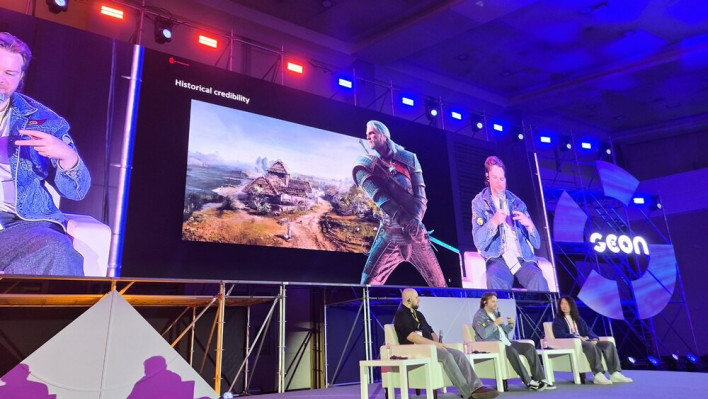
At the same time, the developers do not pursue historical realism exclusively. Striking a balance between medieval morality and modern sensibilities is equally crucial. Weber explained that peasants in 'The Witcher' live in a medieval era, but sometimes speak and think much like modern Poles. Factions like the Scoia'tael, fighting for elven liberation, were conceived through this lens, recalling modern guerrilla warfare and political struggles. However, leaning too heavily on contemporary values risks making characters look like residents of a modern metropolis rather than a medieval fantasy setting, making the balance between period moral codes and modern sensibilities vital.
This careful approach extends to depicting unnamed villagers. The devs avoid casting peasants as simple comic relief or pathetic figures existing solely to suffer. They are complex humans—shrewd, cunning, capable of love, hatred, and compassion. The traditional Polish wedding portrayed in 'Hearts of Stone' encapsulates this philosophy. By showing people with diverse personalities and backstories gathering under one roof, players come to see the inhabitants of the fantasy world as believable human beings.
Infusing Polish history and literature From memories of war to folklore and Romanticism
Both developers highlighted the importance of Polish history and cultural identity in understanding 'The Witcher.' Blacha introduced 'The Battle of Grunwald,' one of Poland's iconic historical paintings. Depicting a massive medieval European battle, the painting is recognizable to virtually any Pole and symbolizes a national identity tied to remembering a history of hardship and war. He explained that Polish people are accustomed to remembering past struggles and using historical metaphors to discuss modern issues.
He cited another example: the Polish Constitution of May 3, 1791. As the world's second modern written constitution after the United States and the first in Europe, it remains a moment of immense national pride in Poland. Blacha noted that such historical events endure in Poland's collective memory, naturally influencing the narrative process of 'The Witcher.' It allows the dev team to express human flaws and greatness, repeated throughout history, in the form of fantasy.
These historical experiences also bleed into the wars and politics of 'The Witcher.' A world where Northern Kingdoms like Temeria and Redania bear the scars of war while the southern powerhouse Nilfgaardian Empire invades repeatedly echoes Poland's own history of constant conflict with neighboring powers. What matters most is not war itself, but the people who endure it. Geralt is not a general commanding armies on the front line; he meets ordinary people living through the chaos before and after battles, witnessing the scars war leaves behind. The fact that war's devastation hits villagers and families—not just soldiers—remains central to the story.
Polish literature serves as another primary wellspring of inspiration. Blacha cited 'The Wedding' (Wesele), a play by Stanisław Wyspiański, as a key example. Set at a rural wedding, it portrays the dynamic between peasants and nobles, illuminating contradictions in Polish society where people struggled to unite even against external threats. Additionally, Polish Romantic literature—including works by Adam Mickiewicz—offers rich folklore elements like forest spirits, lake entities, and the bonds between the living and the dead.
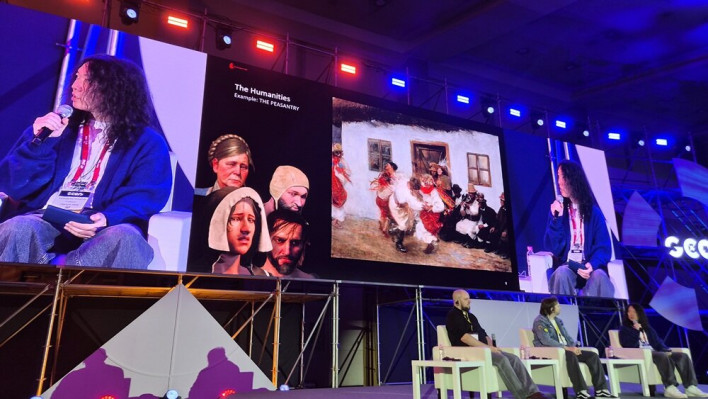
Blacha offered the example of 'Dziady,' a traditional ritual of summoning spirits of the deceased to help them pass on. This ties directly into stories of wraiths and spirits in 'The Witcher 3.' In old Polish folklore, spirits are believed to require the help of the living or remain trapped in the mortal realm due to unfinished business in life. This mindset influenced how curses and wraiths in the game are depicted not merely as monsters to be slain, but as entities carrying their own tragic backstories.
Weber added that it is vital to understand historical people not merely as figures of the past, but as human beings with feelings just like us today. He shared an anecdote involving the classic German romance 'The Beautiful Magelona.' A tale of lovers kept apart by social status, it is not widely remembered today. Yet even if an old literary work might not seem like a masterpiece by modern standards, the emotions felt by people back then when reading it were no less real.
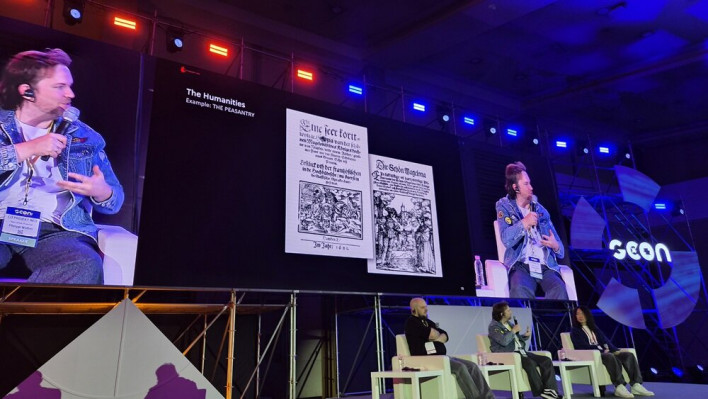
In Weber's hometown of Nürtingen, Germany, a woman executed during the witch trials once wrote a letter to her husband and signed it 'Magelona' instead of her real name, as the story held special meaning for the couple. Through this story, Weber emphasized that people centuries ago loved, feared, and sought happiness just as we do today. The dev team approaches the ordinary residents of 'The Witcher' universe with the exact same mindset.
Meanwhile, the literary foundations drawn upon by 'The Witcher' extend beyond Poland. Classic lore across Europe—such as 'Beowulf,' Snorri Sturluson's 'Edda,' Arthurian legend, and the Brothers Grimm fairy tales—also left their mark. Weber noted that Geralt's quest to find Ciri in 'The Witcher 3' shares structural parallels with the Grail quest in Arthurian legend. Ciri is not merely a missing daughter, but a figure capable of altering the fate of the world, while Geralt undergoes trials across vast lands. Geralt being knighted by Queen Meve in the original novels was also highlighted as a connection to chivalric literature.
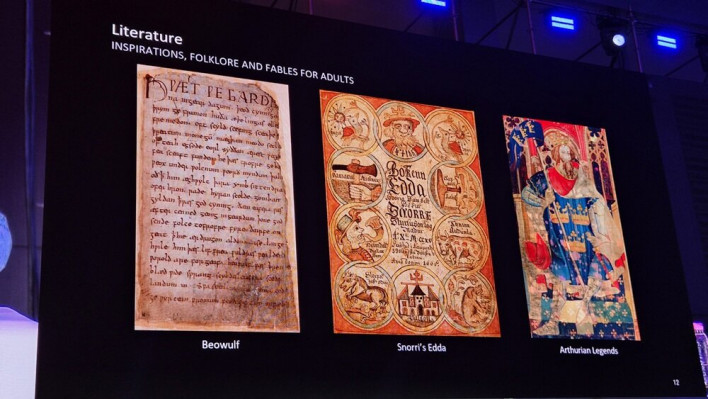
The fairy tales of the Brothers Grimm are another key reference point. For instance, the conflict between Anna Henrietta and Syanna in 'Blood and Wine' was influenced by sister rivalries in early fairy tales. However, 'The Witcher' does not replicate traditional fairy tale tropes outright; it re-examines classic moral lessons of rewarded virtue and punished wickedness through an adult lens. While modern fairy tales have often been sanitized over time to remove grim or sexual elements, 'The Witcher' unearths those dark, complex facets to explore human morality and choice.
The weight of choices emerges only with time The narrative of The Witcher balances happy endings and tragedy
Even with such a rich web of historical and literary inspirations, players do not need to be familiar with every background detail. Blacha explained that 'The Witcher 3' was designed to be enjoyed even by those who had never read the novels or played previous entries. There is no need to spell out every lore detail outright; leaving a few unexplained mysteries intact causes no harm. The developers trust players to understand the fundamental grammar of the fantasy genre and absorb the narrative in context.
A prime example is Geralt's dwarven friend, Zoltan. Players familiar with earlier games or books know their shared history, but for newcomers, knowing every detail of their past isn't essential. What matters is naturally feeling that the two are old friends. Blacha explained that the team's goal is to guide players through emotion rather than exposition. This also ties into how 'The Witcher' game series was built: rather than a direct adaptation of the novels, it takes place after the books' events, inheriting existing lore while serving as a fresh starting point.
This philosophy also shapes how choices and consequences are designed. When the moderator jokingly asked if CDPR developers simply dislike happy endings, Weber clarified that this is not the case. While tragic endings exist, happy endings and lighter stories are equally welcome. He likened it to "sunflowers blooming on a battlefield." Just because a world is dark and brutal does not mean beauty and hope cannot exist; on the contrary, having something precious worth protecting makes the grief of loss hit all the deeper.
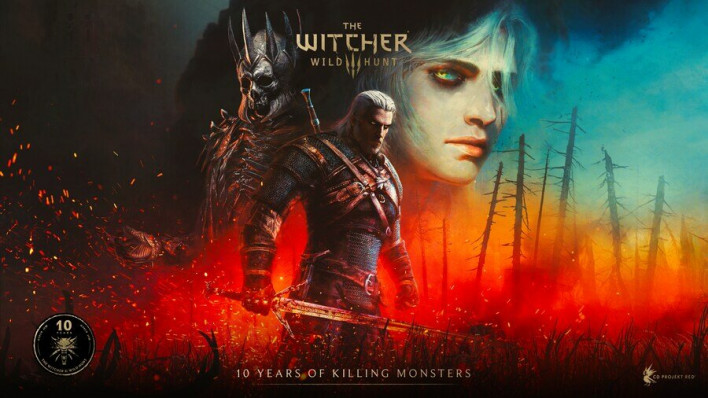
Weber elaborated that while 'The Witcher' is known for its morally gray world, that does not mean every character must stand squarely in the middle of good and evil. Truly good and truly evil individuals exist, with a broad spectrum of human nature spanning between them. However, players do not always get the outcome they hope for. A choice driven by good intentions can end in tragedy, while a decision that seems right in the moment might prove to be a grave mistake down the line.
To convey the gravity of choice, the dev team uses the mechanic of "Delayed Consequences." In typical RPGs, if a consequence plays out immediately after a choice, players can simply reload a save and pick another option. But when major consequences manifest hours later, the dynamic changes. Players cannot easily undo the outcome of their decision, forcing them to accept the consequences and move forward in the story. This connects back to the team's principle of refusing to hand players a "correct" answer. Just as in real life, where not every decision leads to the best outcome, narrative design in 'The Witcher' is built so players experience both choice and responsibility as a single, cohesive journey.
Gwent, a game the devs played late into the night Game execution matters more than fan ideas
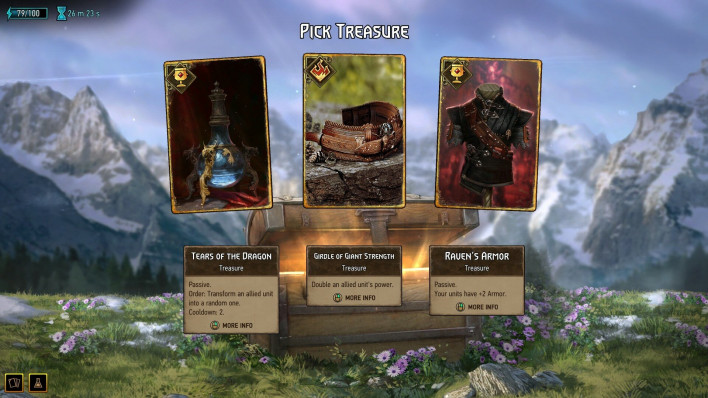
In the latter half of the presentation, the developers shared lighthearted anecdotes from development. First up was 'Gwent,' the iconic minigame from 'The Witcher 3.' During initial planning, the team worried that a card game's rules might be too complex for an in-game RPG minigame. However, once a playable build was created, those concerns vanished quickly. Collecting cards representing characters and factions to duel naturally fit right into the world of 'The Witcher.'
Gwent proved immensely popular even among the developers themselves. Before any standalone game was released, the team could duel one another using internal test builds. Weber recalled staying late after long workdays to play Gwent with colleagues, testing new strategies. The fact that the developers themselves wanted to keep playing their own minigame was a great sign. Blacha added that playing Gwent brought a lot of laughter and fun to the team, a lighthearted vibe that bled into the game's humor and inspired subsequent Gwent memes.
Questions also turned to how fan feedback is incorporated into content creation. Weber explained that while the team takes user feedback very seriously and maintains ongoing communication at events and online communities, they deliberately avoid accepting specific story or quest proposals directly from fans. If a player submits a story idea and a similar narrative happens to appear in-game, it could create misunderstandings regarding idea theft. Consequently, CDPR maintains a policy of not reading specific story pitches sent by fans.
Above all, what the dev team lacks is not ideas, but the time and resources to implement them in-game. Weber recalled writing as many as 85 quest ideas during his first two weeks at CDPR. Many were underdeveloped, and ultimately only about 12 made it into the final game. What it takes to craft a great RPG is not merely the ability to generate countless stories, but the process of selecting and polishing the ones that fit the game best.
Finally, Blacha shared some of his most memorable stories from across the series. From 'The Witcher 1,' he highlighted Act I, which centers on the conflict between villagers in a small town and a witch. He described it as a self-contained drama that felt like a complete mini-game in its own right. From 'The Witcher 2,' he fondly recalled a quest involving a character trying to dress up like a harpy by collecting harpy feathers—a hilarious story that still makes him laugh today.
From 'The Witcher 3,' stories involving wraiths left a particularly strong impression. In particular, he fondly remembered the tale of Iris von Everec in 'Hearts of Stone,' for which he helped write dialogue. He also cited the warm yet tear-jerking relationship between Geralt and Ciri. As such, the moments recalled by the dev team centered not only on epic wars or grand adventures, but on deeply human experiences—village disputes, absurd requests, personal grief, and familial love.
The presentation concluded without revealing new details on 'The Witcher 4.' Yet even without showing concrete footage of the upcoming title, the talk clearly conveyed what kind of stories the team aims to build going forward. What Blacha and Weber repeatedly emphasized was understanding humanity through history and literature. That vision encompasses everyone from professional monster hunters and war-torn peasants to figures out of old fairy tales and a witcher for a new era.
Much like bigos, the Polish dish that blends numerous ingredients without losing its unique flavor, 'The Witcher' must embrace all of these narratives while preserving its distinct identity. The secret to a "Witcher-like story," in the eyes of its creators, ultimately lies in the humans living within its world.