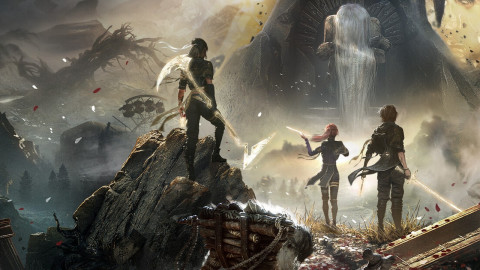
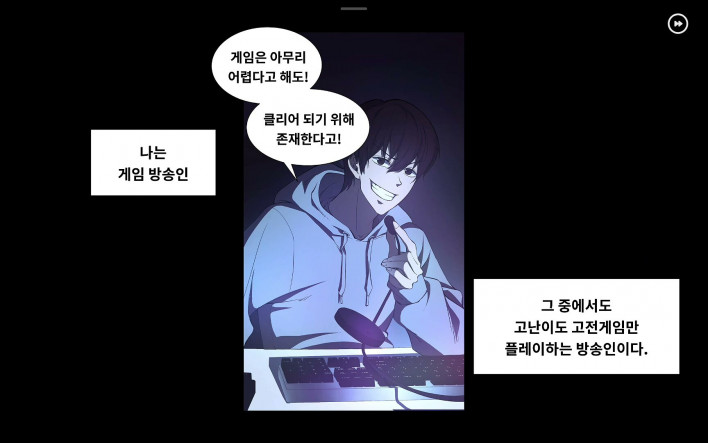
'I Became the Tyrant of a Defense Game: LAST STAGE' (hereafter 'Tyrant of a Defense Game') is a "command strategy RPG" currently under development by Webzen Crevix, based on the Naver Webtoon adapted from the web novel of the same name. The original story begins when the protagonist, after clearing the notoriously difficult game 'Protect the Empire', finds himself reincarnated as Ash, the Third Prince of the empire. As commander of the southern front, Ash defends Crossroads against invading monsters while exploring the ruined Lake Kingdom to investigate the cause of the invasion. The story of characters building relationships and uncovering the truth of the world through continuous battles has resonated with readers across both the web novel and webtoon.
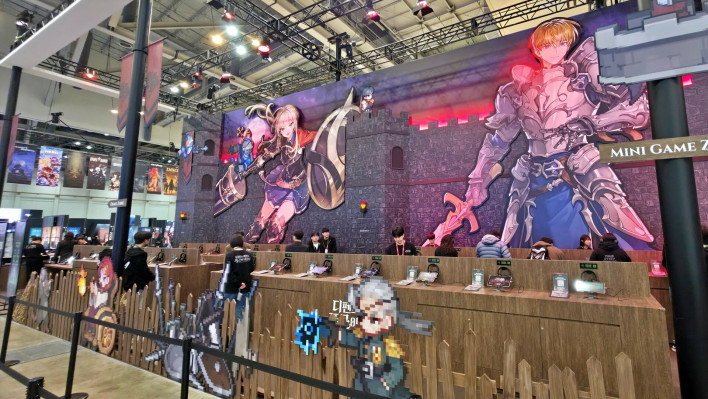
Having been a fan of the webtoon for its distinct atmosphere, I wondered when the game adaptation was first announced whether players would get to experience 'Protect the Empire' firsthand, making it one of the titles I was most eager to try at G-STAR. Premiering its hands-on demo at G-STAR 2026, 'Tyrant of a Defense Game' turned out to be a game that follows the webtoon's narrative and mood rather than directly recreating the fictional game itself.
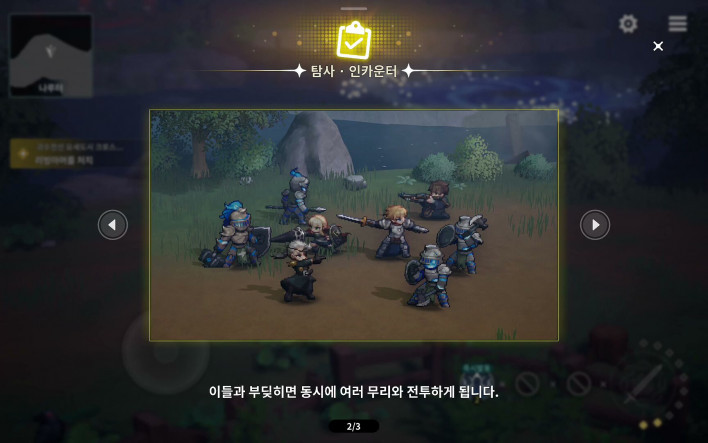
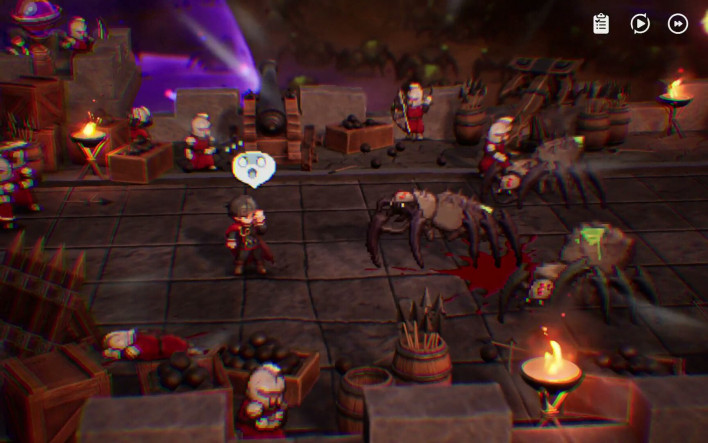
The original webtoon used pixel-art visual techniques to depict certain scenes like a game screen. 'Tyrant of a Defense Game' carries this concept forward with diorama pixel art, placing pixel characters against 3D environments. The battlefields, structures, and character designs closely mirror the webtoon, giving the impression that the webtoon had predetermined the game's visual direction.
In this G-STAR demo, players went through a brief initial tutorial before sequentially playing through Exploration, Territory Management, and Defense Battles. The structure separates the key elements described in the original work—exploring the Lake Kingdom, managing troops and resources, and commanding battles to repel monster waves—into distinct content pillars.
Exploration: To the Ruined Lake Kingdom… Ambushes, party positioning, and combat managed with fatigue in mind

Exploration adapts the process from the original story where characters infiltrated the ruined Lake Kingdom under cover of night during periods between monster waves. Players lead a party across the map to engage enemies. While party members handle the fighting, Ash acts as the commander to provide buffs to allies. The game surprisingly pays detail to lore by giving Ash an invisibility cloak to explain why he doesn't engage directly in battle. Just as in the original webtoon, setting off on an exploration shifts the time of day to night.
The Exploration segment of the demo allowed players to get accustomed to basic controls such as party setup and unit positioning. Players receive party bonuses depending on character combinations, and can adjust unit locations in real-time during battle based on each character's skills. Utilizing structures placed around the map can also help minimize damage taken by allies.
Players choose how to approach engagements. Bypassing an enemy's line of sight to approach from behind initiates an ambush for an advantageous start, but players can also intentionally step into the vision of multiple enemies to fight them all at once. The demo version supported auto-battle, easing the micro-management burden for individual characters. However, even with auto-battle enabled, players must still decide which direction to approach from and how many enemy groups to fight simultaneously.
Scattered across the map are clues from the original work as well as materials needed for character progression and territory management. Securing more resources and experience requires continuous combat, but as battles pile up, deployed characters accumulate fatigue and remaining HP must be carefully monitored. With a boss battle waiting at the end of the exploration, players must gauge their party's condition to decide whether to engage additional enemies along the way. Defeating the boss concludes that day's exploration.
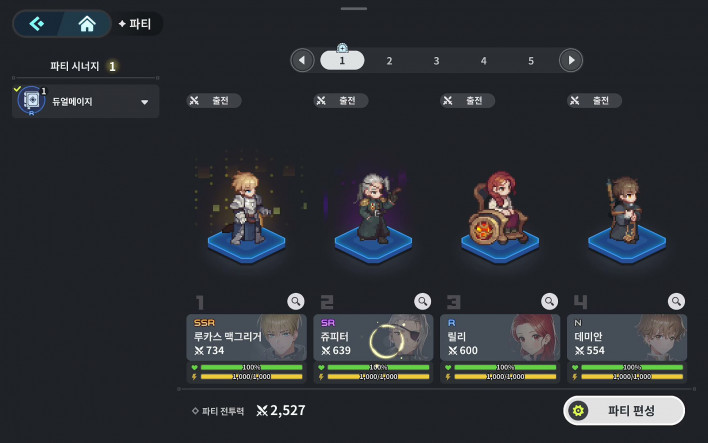
Territory Management: Time to Reorganize Troops and Resources Relatively lightweight management gameplay
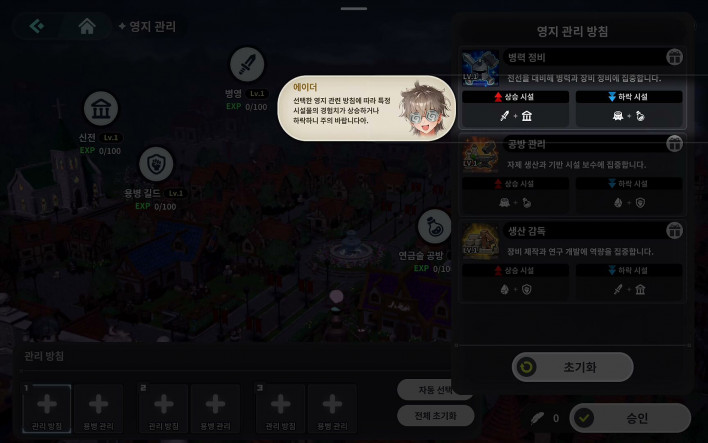
In the territory, players prepare troops, equipment, and resources required for exploration and defense battles. Facilities confirmed in the demo included the Barracks, Temple, Mercenary Guild, Alchemy Workshop, Stonemason, and Woodworking Workshop. Here, players can replenish troops, upgrade equipment, and produce materials to repair structures. Resource expenditure is also required for equipment crafting and R&D research.
The effects gained per facility vary according to the territory's operating policy. Selecting a policy may raise the level of certain facilities while decreasing others. This mechanics requires players to choose policies while considering which facilities will be needed for upcoming explorations or defense battles. Randomly occurring territory events could be resolved by dispatching mercenaries.
Territory management in the demo featured simple controls, allowing players to focus on reviewing facilities and resources. Given that exploration and defense battles require direct player intervention and tactical decision-making mid-combat, combat content carried some fatigue. Compared to those battle segments, territory management felt relatively low-pressure.
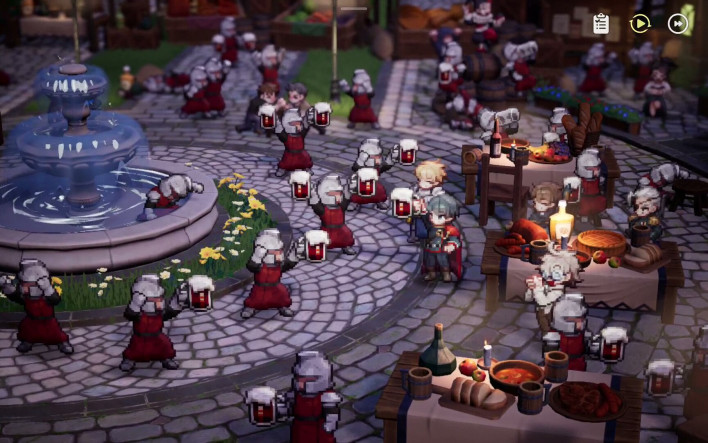
Of course, once players face multiple waves and monster attacks intensify, steady territory management will likely become essential. Players must keep an eye on the levels of hired soldiers and mercenaries while factoring in defensive structures that delay or damage advancing enemies as they tune their unit compositions. In the original story, tactics like funneling monsters into a choke point to concentrate firepower were employed, raising curiosity as to whether defensive structures prepared in the territory will enable similar tactics in the game.
Defense Battles: Monster Wave Defense and Raids Repelling waves through deployment and commands, complete with pattern-based bosses
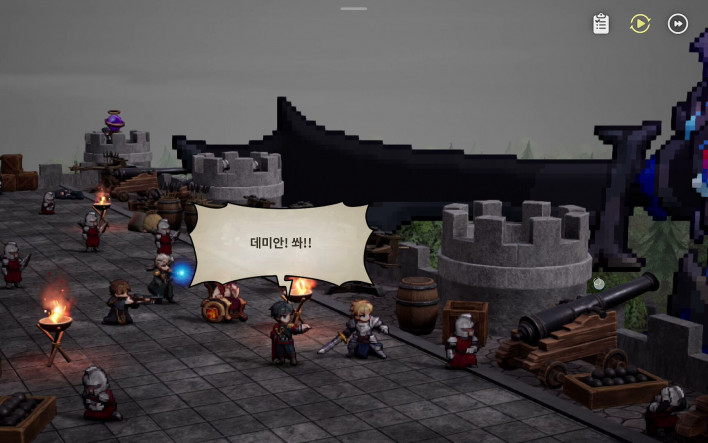
Alongside Exploration, Defense Battles make up the main combat content of the demo. As monsters march toward Crossroads, supporting fire is launched from atop the ramparts, while players deploy mercenaries and troops at the base of the wall to stop the invasion. In the demo, unit placement was restricted to the area below the wall. While it felt slightly disappointing that players couldn't utilize the ramparts themselves—which might have allowed for deeper tactical use of class traits—it was not a major drawback to overall gameplay.
Deploying troops consumes Command Power, which regenerates over time. Ash's Command Power is also used to trigger fire support and apply buffs to allies. Depending on the battlefield situation, players must decide whether to commit additional troops or buff currently engaged units.
Deployed troops can be given commands to hold their current position, retreat toward the walls, or advance toward the enemy. Units can be maneuvered to fight near obstacles or dispatched to quickly neutralize long-range enemies targeting the ramparts and allies before retreating. As maps feature more obstacles or varied enemy attack patterns, the timing of advances and retreats is expected to significantly impact damage taken by allied forces.
Defense Battles display a recommended Combat Power for each battle. In the demo, allied Combat Power comfortably exceeded the recommended threshold, presenting little difficulty. Against Living Armor enemies, simple advance and retreat commands were more than enough to clear the waves comfortably.
Fending off the monster waves unlocks a Raid where players face the final boss. The Raid transitions seamlessly from the defense battle, switching to party-based combat similar to Exploration mode. The boss encountered in the demo delivered heavy attacks and distinct skill patterns, dealing severe damage if not dodged in time.
Most notably, the boss featured a familiar pattern where it first unleashes a point-blank AoE around itself, requiring players to pull back, followed immediately by a donut-shaped AoE attack that forces players to collapse back inward. Staying in the spot used to dodge the first attack means taking damage from the second, requiring active party movement synced to boss mechanics to minimize damage.
'Command Strategy' Capturing the Webtoon's Vibe Much remains to be seen, but the concept is solid
This hands-on demo offered a clear look at Webzen's vision for "command strategy." In Exploration, players decided whether to ambush enemies and how to position party members even while using auto-battle, while in Defense Battles, players had to decide how to allocate Command Power and when to order retreats while troops fought. Although the APM demand was low, constant intervention yielded reduced damage and tactical advantages. However, identifying currently selected characters during certain battles was somewhat difficult, making repositioning slightly inconvenient.
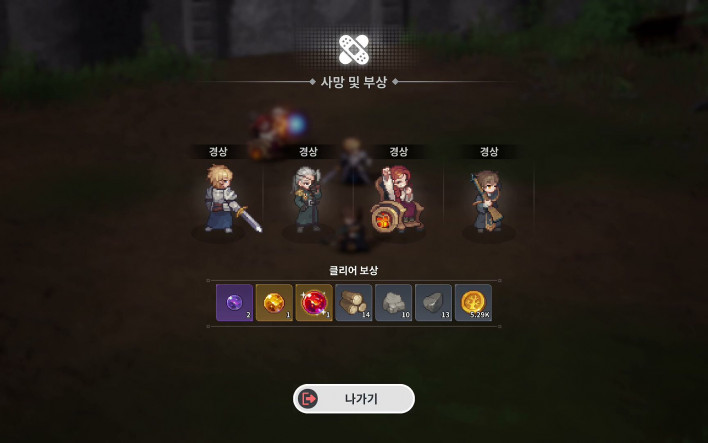
Some systems could not be fully evaluated during the short demo, most notably the Injury mechanic. While the battle results screen displayed injury status and severity, it was hard to tell how injuries affect deployment in subsequent battles or story progression. In the original work, injuries sustained in battle significantly impact character actions and narrative progression, making it intriguing to see how deeply this will be reflected in the game.
Elemental attributes and elemental status effects were also difficult to gauge. According to in-game tooltips, each character and enemy possesses an element. Applying elemental status effects deals bonus damage and scales up to 4 stacks. However, due to the low difficulty of the demo build and the difficulty of tracking damage numbers in the UI, the impact of stacking effects was hard to discern.
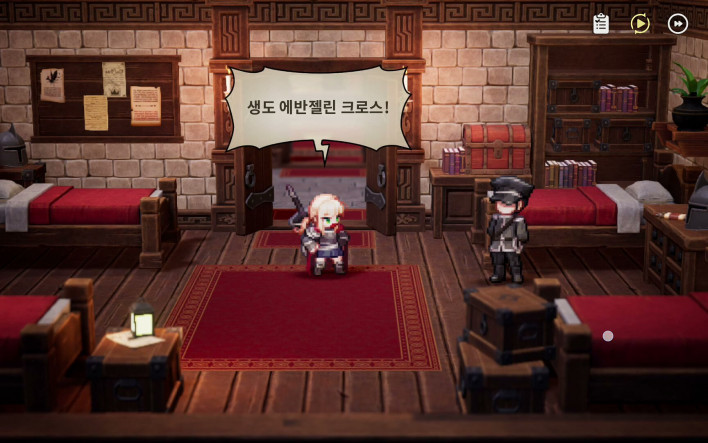
It will also be exciting to see how the game adapts the original work's dark atmosphere and interpersonal conflicts, as well as how long-term territory management ties into the narrative. In the webtoon, time before the next monster wave is strictly limited, with various incidents unfolding in the interim. Dealing with events while preparing for combat creates high tension, and how the game implements this balance remains to be seen. As Webzen has expressed plans to expand character relationships and story episodes, comparing new narrative developments with the original work should offer plenty of enjoyment for fans.
This G-STAR demo provided a clear picture of what 'Tyrant of a Defense Game' aims to achieve. Exploration and Defense Battles put strong emphasis on the player's role as commander, while the graphics and presentation faithfully capture the mood of the original webtoon. For fans of the source material, seeing how the Lake Kingdom exploration and Crossroads defense battles have been adapted into gameplay makes trying the demo worthwhile, and future closed beta tests should reveal even more depth. Even for those unfamiliar with the original work, strategy and tower defense fans who enjoy deploying troops and executing tactics according to shifting battle conditions will find plenty to keep an eye on.