
China has promised South Korea Most-Favored-Nation (MFN) treatment in the gaming and film sectors, ensuring South Korea is not treated less favorably than third countries. Non-discrimination principles will also apply to the pre-approval screening of content such as online games and films. According to the Ministry of Trade, Industry and Energy (MOTIE), this marks the first time China has included both provisions in a trade agreement.
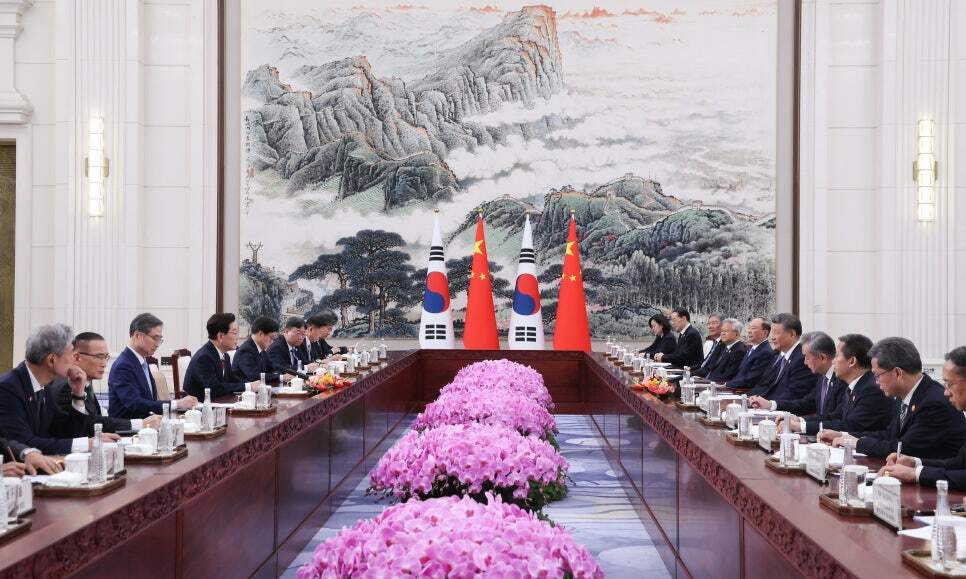
MOTIE announced on November 18 that South Korea and China declared the substantial conclusion of follow-up negotiations on services and investment under the Korea-China Free Trade Agreement (FTA) during a bilateral summit held on the sidelines of the APEC Summit. The agreement comes approximately eight years and eight months after negotiations began in March 2018. Remaining technical text will be finalized through working-level discussions.
The key highlight for the gaming industry is the pre-approval screening process. For South Korean game developers to operate games in China, they must pass a pre-approval review process known as obtaining a publishing license (banhao). Through this agreement, a treaty basis has been secured to ensure South Korean titles face no discriminatory treatment compared to third-country games during the evaluation process.
Investment protection mechanisms for companies entering the local market were also strengthened. Both countries prohibited performance requirements that impose conditions on investments, such as technology transfers. The scope of protection under the Investor-State Dispute Settlement (ISDS) mechanism was expanded to include pre-establishment stage investments. The market access approach was converted from the original agreement's positive list system to a negative list system, meaning new regulations not explicitly listed in the negative list will not be introduced in principle. A ratchet clause was also included to prevent regulations, once relaxed, from being tightened again.
The negotiation process was far from smooth. Launched as a follow-up measure to the original FTA that took effect in December 2015, official talks stalled for over four years due to differences between the two nations. Momentum picked up after the leaders of both countries agreed at a summit in January to achieve meaningful progress within the year. The two sides subsequently held five rounds of official negotiations, from the 13th round in Beijing in January to the 17th round in Seoul in October.
Kim Jung-kwan, Minister of Trade, Industry and Energy, stated, "The conclusion of these follow-up negotiations establishes a stable institutional foundation for South Korean companies to expand into the Chinese market in sectors where they hold competitive strengths, including K-content, tourism, finance, and distribution."
MOTIE will conduct legal reviews with China to finalize the text of the agreement. The ministry plans to swiftly proceed with the necessary procedures for official signing and entry into force.