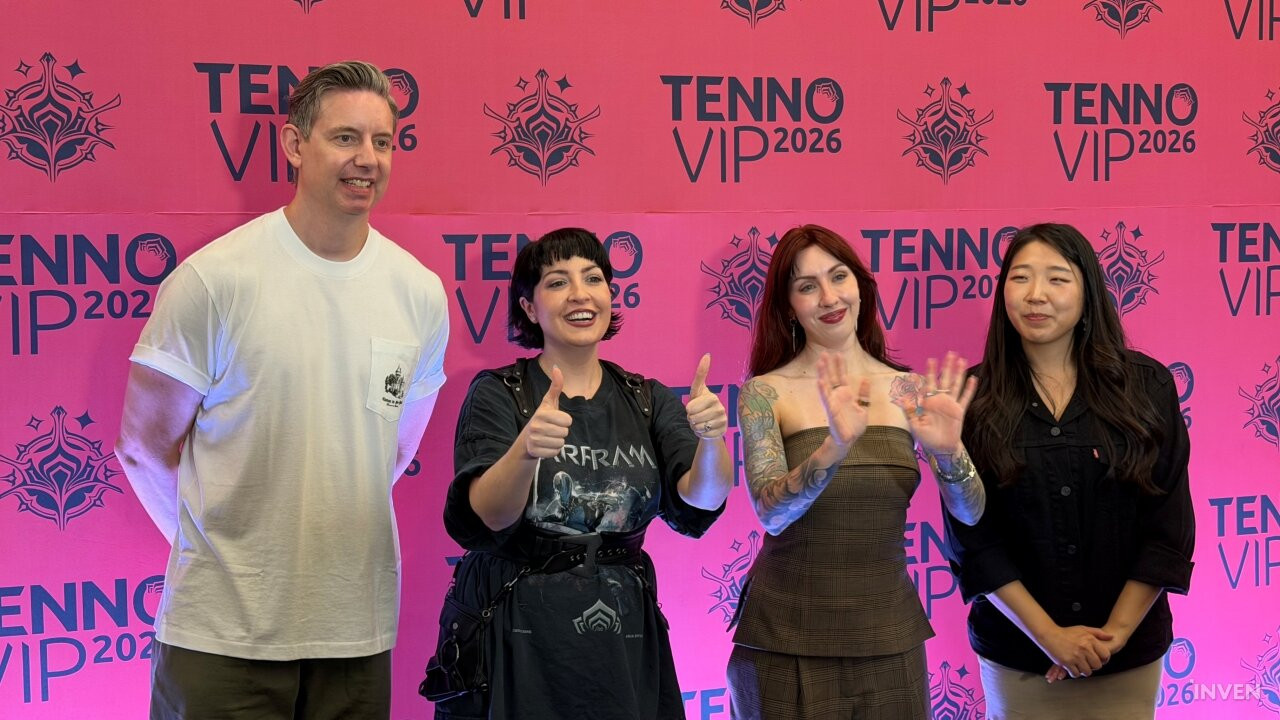
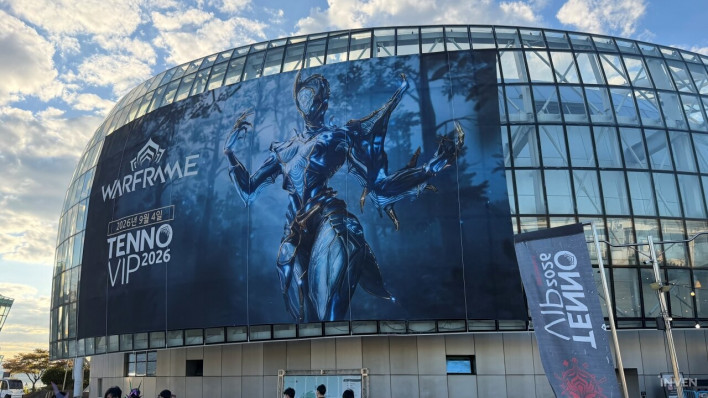
At the recent 'Tenno VIP 2026 Seoul,' Digital Extremes clearly showed where 'Warframe' is heading next. From the Korean culture-inspired new Warframe 'Narin' to the 6-player cooperative challenge 'The Icebind,' and Tau, which had long existed only in lore—the big picture of where the game is headed was made abundantly clear.
However, not everything could be addressed on-site. Deeper topics—such as the design philosophy behind Narin, how the 6-player content differs from traditional 4-player missions, and what role Tau will play in Warframe's evolving story—could not be fully asked due to time constraints.
Following Tenno VIP 2026 Seoul, we sent several additional questions to Digital Extremes. Responding to us was Megan Everett, Community Director for Warframe. In this interview, centered on 'Iceblade of Narin,' we discussed the design direction for the new Warframe, the intentions behind 'The Icebind,' Warframe beyond Tau, and why the team has been actively highlighting the Korean community lately—delving deeper into stories that couldn't be fully covered on-site.

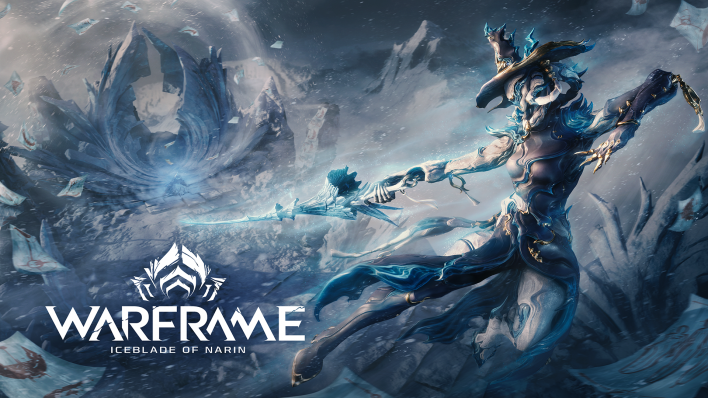
Narin is Warframe's first female Cold-themed Warframe. With Frost already serving as an iconic Cold Warframe, what was the most important consideration in crafting Narin's unique playstyle and identity?
Megan Everett: At Digital Extremes, we always love a good challenge. Creative Director Rebecca Ford originally had a personal goal to have a Warframe for every letter of the English alphabet. After reaching that goal, we started thinking about how we could diversify Warframes even further in fun ways.
Frost was released back in 2013 during Warframe's early days, and a very long time had passed before we revisited ice as a core theme. With Tau right on the horizon, it felt like the right moment to revisit this classic theme and create a special Warframe that complements Frost both aesthetically and gameplay-wise, while possessing a completely unique look and feel.
To achieve that, Narin's abilities and playstyle needed to be distinctly different from Frost's, while still grounding themselves in the existing mechanics of Cold elemental damage. Incorporating elements of sword dancing and skating allowed us to follow those Cold mechanics while giving Narin her own distinct identity in terms of mobility and overall gameplay feel.

Narin was designed to utilize the Cold Status Effect for both offense and defense, rather than just freezing enemies. In recent Warframe designs, are ability synergy and status effect utilization becoming even more important?
Megan Everett: Synergy is always important, though it's hard to say it's more crucial now than in the past. Above all, the thrill of discovery and fun must come first. Ability kits should remain open-ended so players can experiment with different loadouts and uncover playstyles that even we, as developers, didn't anticipate.
When combined with mods, weapons, armor sets, and other customization options, players can create builds so freely that they even surprise their own squadmates. We absolutely love seeing that happen in Warframe.
Narin heavily incorporates elements inspired by Korean culture. Beyond adopting superficial design motifs, what process did you go through to seamlessly integrate Korean imagery into the Warframe universe?
Megan Everett: Cultural inspiration is immensely important to everyone at Digital Extremes. We want to create content that diverse players can connect with in different ways. To do that, you can't just use a few colors or patterns. For something to truly resonate with people, you have to push yourself beyond the surface level across narrative, gameplay, character design, and many other aspects.
It's crucial that how deeply we care shows through in a meaningful way. It needs to be crafted with responsibility and love, and ultimately, it must always feel like it naturally belongs in the Warframe universe.
We draw inspiration from so many things—media, culture, history—the list is endless.
New elements have also been added to the Zariman. Can we expect to see more of this approach—expanding existing zones with new stories and content—moving forward?
Megan Everett: We always say "never say never." While we don't have specific plans to share right now, Warframe is a game built for our community, and players love revisiting places and items they've formed an emotional connection with.
So that could certainly happen. Personally, I can easily imagine it. However, at this point, we shouldn't set expectations either way regarding whether it will or won't happen.
'The Icebind' is Warframe's new venture into 6-player missions. What was the main motivation behind trying 6-player content now, in a game that has relied on 4-player co-op for so long?
Megan Everett: Ultimately, it comes down to challenge and variety. Warframe has always been an experimental game for us, so why not give it a try?
We have a substantial portion of players in our community who enjoy—and continuously ask for—more challenging gameplay. Even now, there are players who miss the old Trials content from the past.
Of course, that doesn't mean this content is "Warframe's raid." We simply wanted to give a small answer to players seeking a higher level of difficulty. Trying something new and seeing how the community responds is genuinely exciting in itself.
We believe player feedback will help us hone 'The Icebind' into truly enjoyable content. The internal testing and gameplay process up to this point has been a blast.
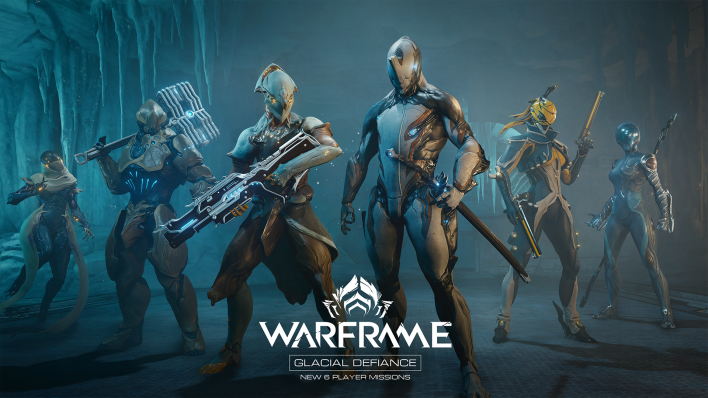
Simply increasing the squad size from 4 to 6 might not feel significantly different from existing missions. What new combat mechanics or cooperative structures are made possible specifically because it's a 6-player mode?
Megan Everett: While all Warframe missions are fundamentally designed with co-op play in mind, this new game mode adds an extra layer of cooperative strategy.
At launch, public matchmaking will not be supported for this game mode. Players must form their own squads, encouraging them to naturally communicate and establish strategic teamwork before the mission even starts.
There are also various challenging mechanics in play. A variety of modifiers create dynamic situations each time, while several restrictions escalate the overall difficulty. For instance, self-revives cannot be used in this mission. There are also new optional side objectives where players must work together for survival and optimization.
Companions and gear items are somewhat restricted as well, alongside caps on Health and Shields. The missions are tough, feature randomized elements, and will demand squad communication in ways Warframe hasn't tested before.
Warframe is a game where movement speed and firepower vary immensely from player to player. In content where six players move together, these gaps could become even more pronounced. How did you balance this?
Megan Everett: Because intricate cooperation is required, differences in movement speed or DPS are less of a problem and more of a strength, encouraging players to test diverse combinations with one another.
If the goal were merely killing enemies as in a standard Extermination mission, it would be a different story; but here, squadmates must defend objectives and handle various tasks. Consequently, bringing different loadouts capable of supporting or healing squadmates can contribute to success.
Our goal is not simply to create a game mode focused solely on maximizing DPS. We want to craft content that demands deeper strategy and planning. If we don't get the balance perfectly right from day one, we promise to continuously fine-tune it based on community feedback.
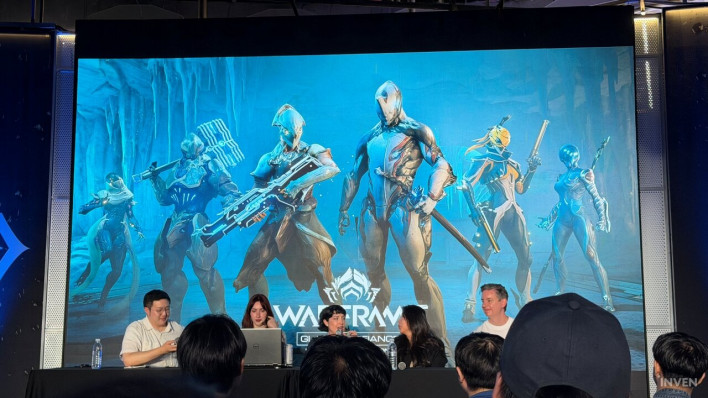
'The Icebind' has been introduced as challenging content. Is it geared specifically as high-difficulty content for veterans, or is the goal a large-scale cooperative mode that general players can naturally jump into?
Megan Everett: 'The Icebind' is definitely content designed for players seeking a challenge. As such, players must complete 'Angels of the Zariman' and 'Whispers in the Walls,' and have access to Elite Deep Archimedea or Elite Temporal Archimedea to play.
For players who don't enjoy highly demanding gameplay, it might feel overly difficult. However, with practice and perseverance, anyone will eventually be able to take it on.
We take pride in experimenting, and we hope Warframe is seen as a sort of 'theme park.' This new domain offers end-game elements tailored specifically for players who desire that style of content.
Conversely, Warframe has a wealth of content that isn't as restrictive or punishingly difficult. Offering a little something for everyone is what keeps Warframe accessible to a broad spectrum of players.
If player reception to 'The Icebind' is positive, is there a possibility of expanding 6-player content or experimenting with even larger squad sizes in the future?
Megan Everett: I can never say never. If the community response is fantastic, I can certainly imagine us expanding on it and experimenting further.
That said, we have nothing specific to share right now. We'll have to see how it's received first, and time will tell.
In October, 'Era Operation: Tauro' will begin, bringing all Tenno together to fuel Praghasa and head toward Tau. How major of a turning point is entering Tau within the overall story of Warframe for the development team?
Megan Everett: That's a huge question—in the best way possible.
Tau is extremely special. It's a destination that has been hinted at since the earliest days of Warframe's lore, so we're treating this next chapter like opening a brand-new book in a grand epic.
Tau holds monumental significance for the future of Warframe. At the same time, it provides the dev team with an entirely new toolkit to create new experiences, tell fresh stories, and discover more engaging gameplay mechanics.
This new star system we're building through Tau will continue to evolve over time, much like the Origin System that players know so well.
While I can't share much beyond what's already been revealed, players will uncover intriguing new elements as they progress along this journey. Through this, Warframe's storytelling will elevate to new heights. We can't wait to gradually lift the curtain while continuing to deliver relatable narratives through a far-future sci-fi lens.
In particular, this operation was designed so that both veteran and new players can participate as long as they meet certain minimum criteria. Is enabling as many players as possible to share in this pivotal moment in Warframe history the core goal of this event?
Megan Everett: Yes, absolutely. The community is at the heart of Warframe, and we felt no Tenno should be left behind during such a major moment.
That's precisely why we wanted to make this event accessible to as many players as possible.
Regardless of your Mastery Rank, how many hours you've played, whether you run The Steel Path, whether you've crafted every Warframe released so far, or whether you're a Founder who joined us from the very beginning.
Warframe is a game for everyone. We strive to reflect that spirit of community unity in as many ways as possible. I'm so excited to watch it unfold.
Once Tau fully opens up, it seems likely that Warframe's main narrative will shift heavily in that direction. How do you plan to parallel that with stories from existing areas and characters in the Origin System, '1999,' and the Zariman?
Megan Everett: I want to make it clear that we aren't leaving the Origin System behind entirely.
Our intuition and our relationship with the community will continue to serve as our guiding compass when deciding what to build next and which ideas to develop.
While Warframe is entering a new chapter of discovery in Tau, there are still plenty of unresolved stories left in the Origin System, and we may revisit them in the future.
At present, we have nothing specific to announce regarding how we will balance these two domains. However, I can say it's definitely something we're contemplating, and the story of the Origin System is far from 'finished.'
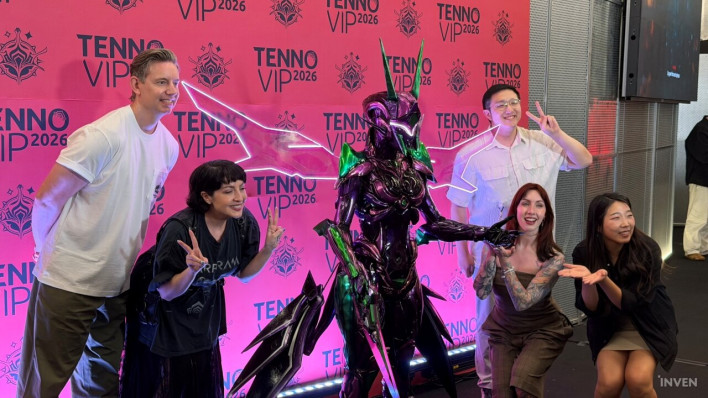
This year marked the first Tenno VIP hosted in Korea, where Narin—a Warframe inspired by Korean culture—was revealed on-site. Was there a specific reason or catalyst for actively spotlighting the Korean community in 2026?
Megan Everett: We want to show Tenno around the world that they matter to us. Visiting them in person and sharing moments together is one of the most powerful ways to convey that.
Many members of our internal team love Korean culture, and we have developers with roots in Korea as well. People learn so much by looking beyond their own culture—through music, food, history, and of course, video games.
Our data also showed us that a dedicated community playing Warframe exists in Korea. We wanted to show them that we see them, respect them, and are learning from them.
At the same event, Warframe's release on the Galaxy Store was announced. What new player base do you expect Warframe Mobile to cultivate in Korea, where both PC and mobile gaming markets are massive?
Megan Everett: It was such a blast announcing that at Tenno VIP Seoul. You could literally hear the audience gasp and cheer in real-time, which still amazes me. Put simply, it was a really, really cool moment.
That said, our goal with Warframe Mobile isn't necessarily to target a specific niche of new players. Rather, it's about making Warframe accessible to as broad an audience as possible.
We take huge pride in keeping Warframe's update sizes as small as possible and ensuring the game runs smoothly across as many devices as possible.
What matters is that you can enjoy Warframe wherever you play, however you play, and on whatever device you have—whether it's the latest high-end Android device or something a bit older.
The key is that Warframe runs seamlessly and players can enjoy the game anywhere. Jumping in for a quick mission during a commute should feel as natural and fun as visiting Baro Ki'Teer for a brief moment.
We're also curious if Narin and Tenno VIP were a one-off project for Korea. Do you plan to continue expanding Korean-inspired content or hosting events to meet Korean players directly in the future?
Megan Everett: I think this brings us back to "never say never."
Consistency is important to us, but compared to major publishers or studios, we're still a relatively small team. How much we can accomplish and where we can travel is naturally constrained by time and bandwidth.
However, I can promise that Korean players will continue to be just as important to us as any other community around the globe.
We intend to keep hosting events to meet Tenno in person across various regions worldwide, and as we grow, we want to distribute that love across different areas evenly.
While we can't promise a specific date for when we'll visit Korea next, it's definitely something we want to do again.