In the past, the Gears series was undeniably one of the two pillars of the Xbox platform. Bursting onto the scene during the Xbox 360 era, the Gears series immediately captured the attention of gamers worldwide upon release.
Celebrated for establishing the modern standard for cover-based third-person shooters, the series captivated players with heavy, visceral action that felt unexpectedly fitting for the shooter genre, along with the iconic presence of the Lancer Assault Rifle—the ultimate symbol of macho cool with a literal chainsaw mounted onto an assault rifle. Beside Halo, it became a primary driver behind the success of the Xbox 360. It was common to see gamers buying an Xbox 360 purely to play Gears of War, so there is little need to emphasize just how massive its popularity was at the time.
Yet for all that acclaim, the glory days of the Gears series did not last indefinitely. Arriving five full years after Gears of War 3, Gears of War 4 introduced a new protagonist, but reviews fell short compared to the original trilogy. While Gears 5 attempted to evolve by strengthening its narrative and introducing an open world in response to previous feedback, that entry ultimately left fans wanting as well.
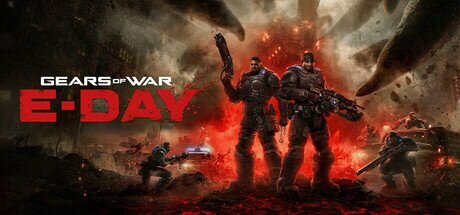
Perhaps because of this history, gamers viewed Gears of War: E-Day (hereafter Gears E-Day) with mixed feelings. On one hand, excitement built over its setting—Emergence Day, the outbreak of the Locust War prior to the first game—alongside Marcus Fenix's return as protagonist and promises of the franchise's darkest tone yet. On the other hand, doubts lingered over whether it might disappoint once again.
Could Gears E-Day serve as the savior to rescue the franchise from crisis? One thing is certain above all: the Gears series has finally remembered what it does best.
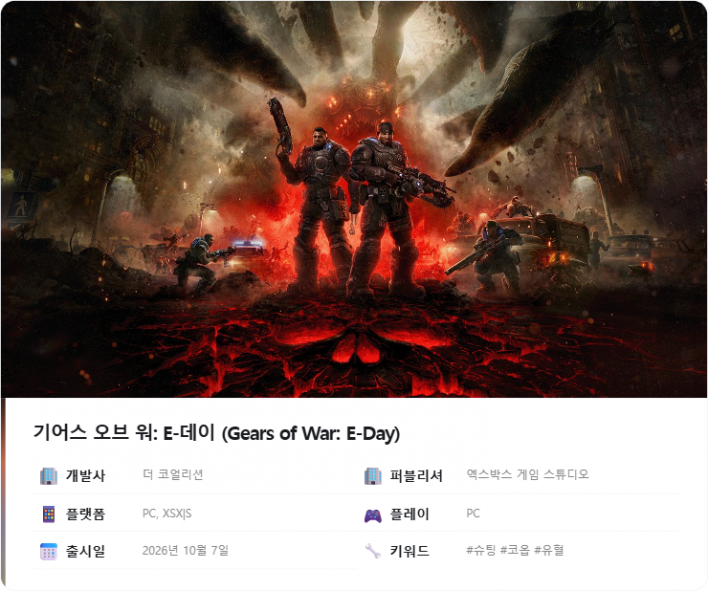
Into 'Emergence Day', the Beginning of the Series The Most Brutal and Darkest Atmosphere in Franchise History
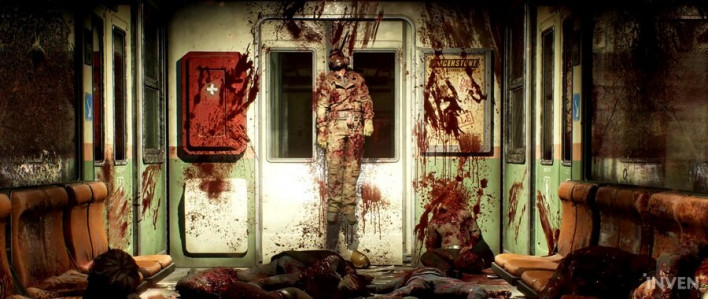
To avoid spoilers, this review will largely steer clear of story specifics. However, one thing is abundantly clear: players who felt let down by Gears 4 and Gears 5 and longed for the dark, gritty tone of the original trilogy will welcome the atmosphere of Gears E-Day with open arms.

This begins with the game's setting: Emergence Day. In lore, this is the day the full-scale Locust invasion began—a catastrophe that claimed the lives of 25% of humanity on Sera on that single day alone. As a result, the characters' mindset toward the Locust is fundamentally different. While previous games treated the Locust with the established premise of an irreconcilable enemy responsible for E-Day, Gears E-Day portrays them as terrifying, unknown monsters suddenly emerging to slaughter humanity.
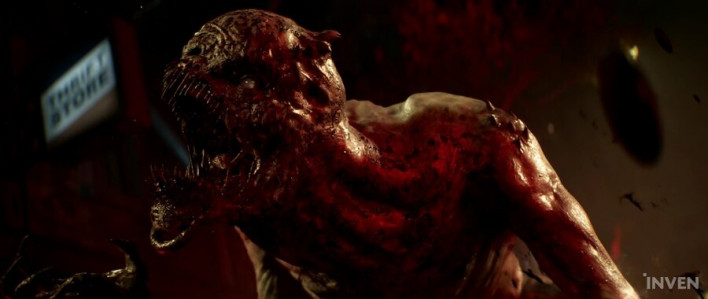
The same goes for the Gears themselves. No matter how formidable a Gear soldier may be, they are helpless when encountering these enemies for the very first time. Possessing baseline combat prowess superior to ordinary humans—and even Marcus himself—the Locust burst out from underground Emergence Holes, rendering traditional military doctrine completely useless. Wherever you turn, only traces of massacre remain.
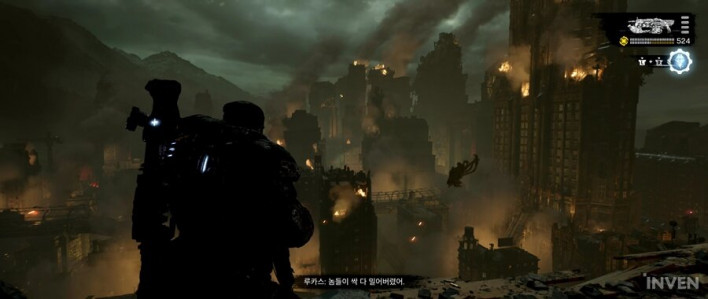
Of course, as the story progresses and the creatures are formally dubbed "Locust," the element of the unknown gradually fades. But that is as far as it goes. From beginning to end, the game maintains a relentless tone of despair as humanity is constantly pushed back by the Locust invasion. Consequently, the narrative is not about defeating the Locust, but about surviving against their overwhelming threat.
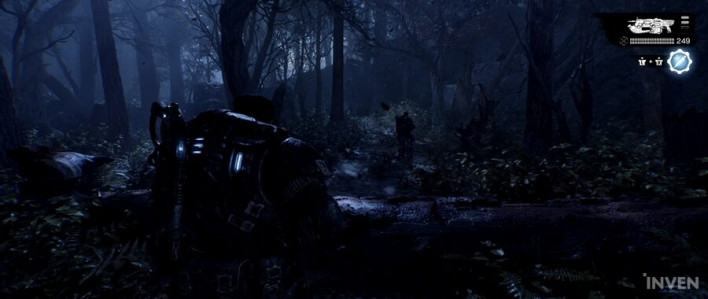
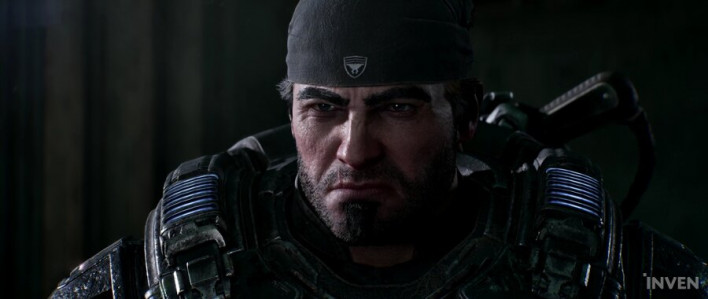
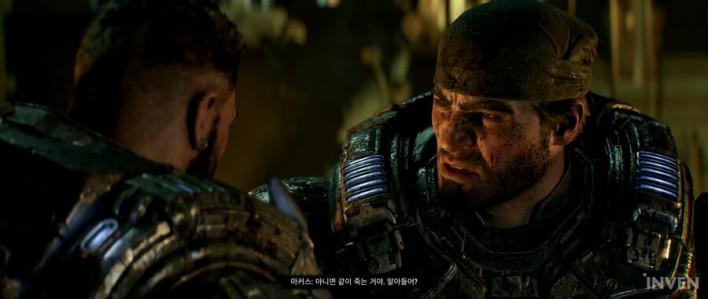
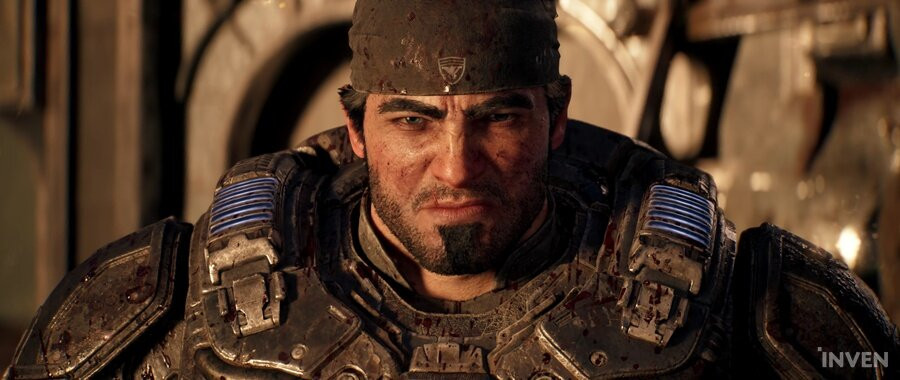
This holds true for Marcus Fenix, the enduring protagonist of the series. As leader of Bravo Squad and a Gear faithful to his orders, he does everything in his power to keep survivors and his squad alive, yet the situation shows no sign of improving. Rather than portraying Gears carving a path to victory, Gears E-Day depicts soldiers trying to survive a hopeless defeat and prepare for whatever comes next, delivering a vastly different sensation from previous entries.
Continuing from Gears 5, the Korean voice dubbing also plays a significant role in enhancing this atmosphere. Overall, the dubbing quality was quite satisfying. In the middle of chaotic firefights across a messy battlefield, keeping up with dialogue shouted from all directions through subtitles alone can be quite a chore. In that sense, the Korean dubbing feels like a stroke of genius, elevating immersion by making players instantly feel the chaos of battle.
In previous entries, there were instances where language was softened, speech honorifics randomly shifted mid-conversation, or subtitles desynced from audio. This time, such issues have been significantly reduced. Even where minor mismatches occur between audio and subtitles, they are limited to a word or two.
Still, it falls just short of perfection. For example, a commander who was shouting, "Let's teach those Locust bastards a lesson, men!" might suddenly shift into a soft-spoken tone, or speak in rapid-fire bursts as if rushed by dialogue duration limits. While overall execution is satisfying, minor details still leave room for polish.
It is not merely that the backdrop is dark; the situation itself is profoundly bleak—which is why this entry boasts the darkest atmosphere in franchise history.
From 'Open World' to 'Open Field' Aiming for an Intense, Concentrated Experience Rather Than Dilution
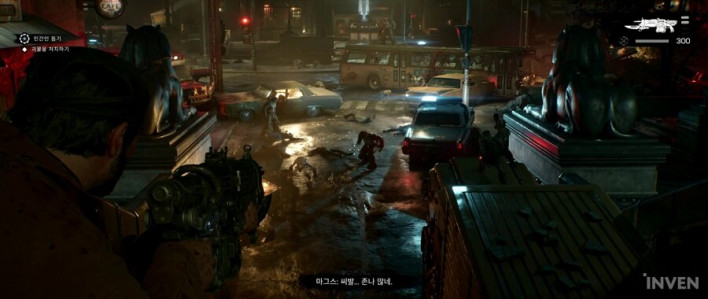
While the game's overall atmosphere returns to the bleak tone reminiscent of the long Locust War in the original trilogy, its map design feels like a compromise between Gears 5's open world and the series' traditional linear structure.
Gears 5 attempted to differentiate itself by introducing an open world for the first time in the franchise. While the initiative was positive in many respects, reception was somewhat mixed. Departing from the conventional linear structure without compromising the series' identity was commendable, but it suffered from the critical flaw of shallow depth.
Perhaps as a result, Gears E-Day offers an "open-field" design as an alternative, striking a balance between an open world and linear progression. At first glance, it might seem like a mere reduction in stage scale, but actual player satisfaction is significantly higher than Gears 5's open world.
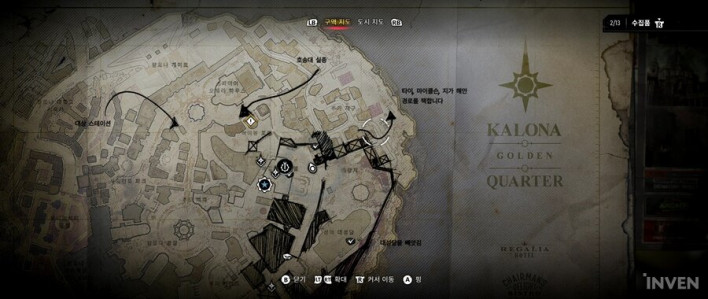
First and foremost, condensing the map size eliminates unnecessary traversal time. An expansive world can be a feature, but it is also a major drawback of open-world design. Since huge environments demand exploration, they risk feeling like artificial bloat to pad playtime—and that was precisely the issue with Gears 5.
By contrast, Gears E-Day's open field condenses space so that wandering aimlessly is unnecessary. As you naturally follow the main objective, a King Raven helicopter might crash in an adjacent sector, or you might hear gunfire from Gears holding off Locust forces, drawing you organically toward side events. This organic pacing stems directly from the reduced footprint; where an open world required tedious travel time, an open field lets you approach side content naturally.
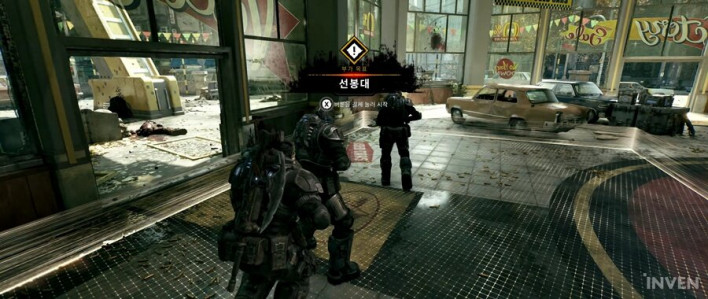
It is not just accessibility that improved; the balance between main and optional objectives is handled exceptionally well. Looking back at Gears 5's open world, optional objectives and hidden locations existed, but engaging with them felt unnecessary. Accessibility was poor, rewards were often limited to collectibles with little gameplay benefit, and they rarely enriched the main narrative.
This is a common issue in games where primary and secondary narratives feel disconnected, creating a disjointed experience. In severe cases, side content ends up overshadowing the main campaign in enjoyment.
Gears E-Day avoids this pitfall. Various events unfolding during the massive catastrophe of Emergence Day are naturally woven around the central objective. Optional side objectives serve as flavor that enriches Bravo Squad's struggle to complete their primary mission, adding narrative depth while heightening immersion. In every respect, it feels like the team learned valuable lessons from the previous game.
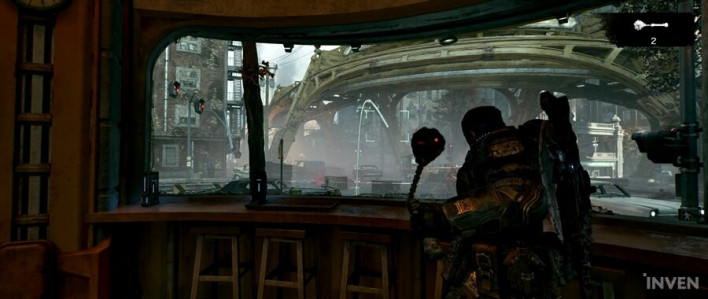
Yet these optional objectives are never forced upon the player. Entering a side objective area does not automatically trigger the activity; the choice remains entirely up to you. Completing them can unlock slots or reward equipment parts—as discussed below—but this remains optional. Players who wish to focus solely on the main mission can ignore them entirely. Side objectives serve strictly to complement the main campaign and narrative.
Refining Already Polished Combat Mechanics Enhanced Depth via Mod Customization and Tactical Gear

The combat mechanics adhere faithfully to the conventions established by the Gears franchise. Cover-based movement, Active Reloads, and iconic melee attacks like the chainsaw require no adjustment period for series veterans. That is not to say there are no changes. Just as the level design adapted from Gears 5's open world into an open field, the combat mechanics follow a similar trajectory—refining Gears 5's new systems into something that feels truer to the franchise's core identity.
Looking back at Gears 5, Jack's role underwent a major revamp. Prior to Gears 5, Jack served primarily as a door-opener in the narrative, but giving him active combat utility brought fresh variety to combat. Acting as a skill system, players could order Jack to scan and highlight enemies, execute stealth assassinations, unleash flashbangs, or lay traps. This added tactical variety without compromising the series' core identity as a cover-based TPS.
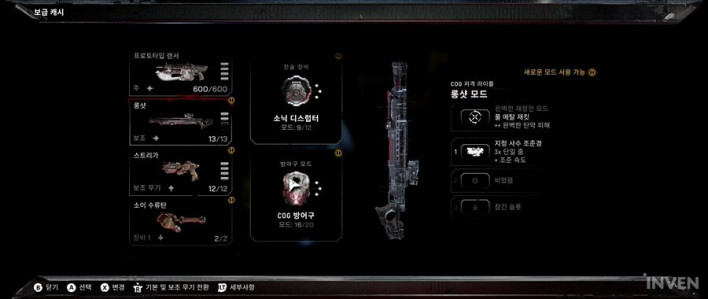
Gears E-Day builds upon this foundation. Equipment can now be customized with various attachment parts called Weapon Mods, while Tactical Gear steps in to replace Jack's skill functions. Personally, I found these changes highly satisfying. By equipping different mods, you can turn a weapon into a slow-firing, heavy-hitting powerhouse or keep its rate of fire while reducing recoil, offering genuine fun in tailoring weaponry to your playstyle.
Of course, you cannot install every mod right from the start. Initially, only one slot is unlocked and available mods are scarce. To customize weapons to your liking, you must unlock additional slots by completing optional objectives and scavenge hardcases scattered across the environment to acquire new mods.

The skill utilities previously assigned to Jack have transitioned into Tactical Gear. These gadgets offer a wide range of functions, including temporary defense and attack buffs, deployable devices that blast shockwaves to break enemy cover, tactical pulses that scan enemy locations like Jack once did, and healing equipment.
Naturally, Tactical Gear can also be customized with mods. For instance, the Sonic Disruptor can be modified to reduce cooldowns when executing enemies, or upgraded to ignite targets and deal burn damage alongside its shockwave. Depending on your loadout, combat pacing changes drastically, making this feature the most transformative addition to a combat system already considered refined.
Most importantly, these additions enrich combat variety without diluting the franchise's identity. The evolutionary ideas introduced in Gears 5 have finally come to full fruition in Gears E-Day.
Remembering What They Do Best Enough with the Past, Back to the Present


As mentioned at the outset, Gears E-Day is a return to the classic Gears experience that fans have eagerly awaited. With an unflinchingly dark tone, intense and gritty combat, a richer narrative, and well-measured gameplay tweaks, it delivers precisely what players expect from a new Gears entry. Experiencing Emergence Day firsthand—an event long steeped in lore but never fully played—adds compelling appeal for fans.
That said, a tiny lingering reservation remains. While witnessing E-Day in person is undeniably thrilling, it is still a story whose broad strokes are already known, leaving a subtle impression that the game relies heavily on the franchise's past glory.
After Gears 4 and Gears 5 faced criticism for shifting protagonists, introducing new enemies, and overhauling core systems, one cannot help but feel that returning to E-Day was a safe bet. While it is undoubtedly a welcome pivot, a small sense of regret remains.
Beyond gameplay, the stellar PC optimization was immensely satisfying. While the Gears series has traditionally boasted good optimization, concerns naturally arose given its development on Unreal Engine 5. Playing the game completely dispelled those worries; it delivers gorgeous visuals with flawless performance.
The shader compilation process was particularly impressive. Modern PC games often force players to wait anywhere from a couple of minutes to several minutes compiling shaders at startup. Gears E-Day applies Advanced Shader Delivery (ASD) technology to dramatically reduce this wait down to mere seconds. It demonstrates the developer's dedication to providing a smooth experience beyond core gameplay.
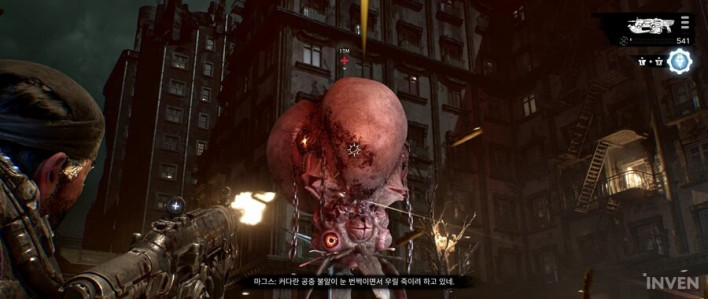
Does Gears E-Day offer nothing more than nostalgia? Far from it. The Gears story is far from over, both as a franchise and as a narrative, especially given that Gears 5's ending signaled a new beginning. Though the series stumbled while trying to write a new chapter, Gears E-Day provides a clear roadmap for where the franchise needs to go next—handing developers the exact blueprint for success.
It has been a long time since we experienced the visceral thrill of classic Gears of War. But dwelling on the past is no longer necessary. Gears E-Day does more than relive former glory—it reaffirms what makes the franchise great. The war against the Locust is not over. Armed with this proven blueprint, we look forward to the next evolution of the Gears series.
- Stunning visuals and stellar optimization
- Satisfying gunplay as ever, rich customization
- Solid playtime of around 15 hours
- Occasional awkwardness in dubbing
- Squadmate AI that remains unhelpful
Review Platform: PC (Pre-release Review Build)