Can a video game be completed entirely through remote work? In South Korea, this remains an unfamiliar question. Driven by the pandemic, remote work—which began almost forcibly in the spring of 2020—seemed poised to become the 'new normal' work style amid strong interest from office workers. However, within just a few years, many returned to the office. The belief among older generations that 'you need to see faces for work to get done' remained as firm as faith in Korea.
Around the same time, 8,000 kilometers away in Vienna, Austria, a developer was attempting something seemingly absurd: building a studio with no physical office at all. With no building to commute to and no conference room to gather in, the plan was to connect people scattered across the globe via internet cables to make a game. This reckless endeavor ended up being quite a success, and they expanded the scope even further for the sequel.
While making the sequel, the team grew to 80 employees scattered across 43 countries. The development period lengthened accordingly. The release, originally set for February 2020, was pushed back to March. Coincidentally, that March was the exact month the world was forced to learn remote work. Of course, not everything went smoothly. Controversies later surfaced over the founders' workplace conduct within the remote environment. In any case, 'Ori and the Will of the Wisps' was born that way.
| Time remaining until sale ends
|
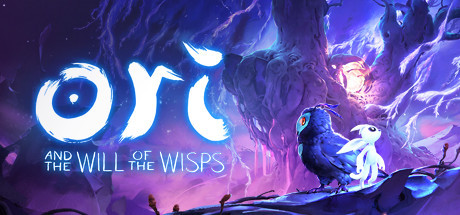
What was the motivation behind development?
Moon Studios was founded in Vienna, Austria, in 2010 by Thomas Mahler and Gennadiy Korol. Mahler studied traditional sculpture at the Academy of Fine Arts Vienna and worked as a cinematic artist at Blizzard Entertainment. The two did not rent an office from the start. Calling themselves a 'virtual studio,' they gathered talented individuals regardless of where they lived. Their first prototype was 'Warsoup,' a blend of FPS and real-time strategy, which was shelved following feedback from Microsoft. Their second proposal, a platformer prototype named 'Sein,' secured investment. Four years later, this prototype was released under the title 'Ori and the Blind Forest,' recouping its development costs within a week of release.
For the sequel, they overhauled many elements by referencing the development concepts of 'Super Mario Bros. 3.' Attacks, which were previously fired on Ori's behalf by the spirit Sein in the predecessor, were replaced with direct combat where Ori swings a sword and aims a bow. They abandoned the linear skill unlock progression in favor of equipping 'Shards'—inspired by Materia from 'Final Fantasy'—to combine abilities and stats. 'Soul Link,' which required players to manually create save points, was replaced with autosave.
How does it play?
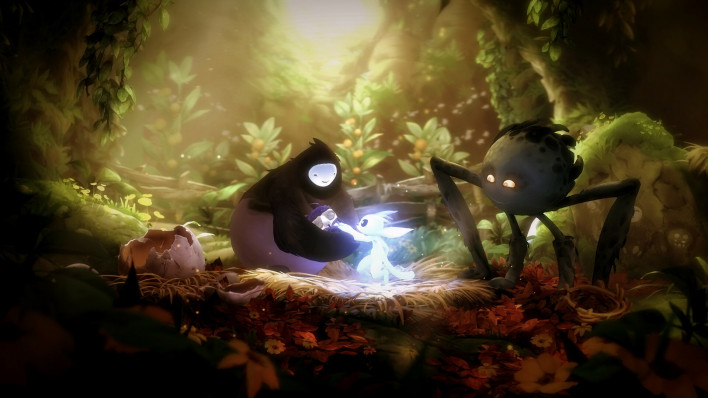
The core structure is a Metroidvania. Walls and gaps that were initially unreachable gradually turn into pathways as you gain new abilities. In this game, however, abilities are movement techniques before they are keys. As you seamlessly chain together 'Bash'—grabbing enemies or projectiles to launch yourself—'Burrow'—burrowing and swimming through sand—and 'Grapple'—attaching a hook to pull yourself forward—in mid-air, exploration flows like a musical performance. That performance reaches its most dramatic peak in the chase sequences. In these segments, you must navigate collapsing terrain without stopping while pursued by a massive enemy, where a single misstep forces you to restart the section. Yet, after several failures, when the music and controls lock into perfect harmony, you realize why this game continues to be talked about for so long.
A masterpiece that satisfied both critics and the public
The game won 'Xbox Game of the Year' at the 2020 Golden Joystick Awards, received 3 nominations at The Game Awards in the same year, and earned 5 nominations at the D.I.C.E. Awards the following year. Critical acclaim was equally strong. Its Metacritic score stands at 88 for PC and 93 for the Nintendo Switch version. On Steam, user reviews stand at 'Overwhelmingly Positive,' with 96% of 146,973 reviews being positive. By November of its release year, more than 2.8 million players had enjoyed the game.
Who this game might not be for
While the graphical tone and style are as warm and comforting as a picture book, the gameplay demands cold, unforgiving execution. Moments constantly arise where you must Bash through walls of spikes or combine dashes and double jumps over collapsing platforms. The chase sequences in particular require memorization, so if you cannot tolerate repeating the same section ten times, fatigue will build up before enjoyment. It is also not suited for those looking for a bright, lighthearted story.
From start to finish, this game is a story about letting go. As Kahlil Gibran wrote, "You are the bows from which your children as living arrows are sent forth"—if you are prepared to open your heart to a story about ultimately sending an injured owlet into the sky, it will be the farthest-flying arrow you can buy this week for 2,990 won.