Regardless of initial reviews, the ultimate success achieved by Cyberpunk 2077 gave CD Projekt Red (CDPR) the momentum to work on multiple projects simultaneously. And what built the foundation for CDPR's status today was 'The Witcher 3: Wild Hunt' (hereafter 'The Witcher 3'), which achieved global success even before Cyberpunk 2077. Without needing many words, The Witcher 3 was deeply loved for its immersive direction and quest design, which served as a benchmark for countless open-world action-adventure games.
And a decade has passed. First released during the PS4 and Xbox One generation, the game underwent an upgrade with a next-gen patch in 2022 that introduced improved graphics and various modern technologies. Having been heavily discounted countless times, it is a game that virtually everyone who wanted to play has played. Even so, CDPR is taking another step forward: a full remaster.
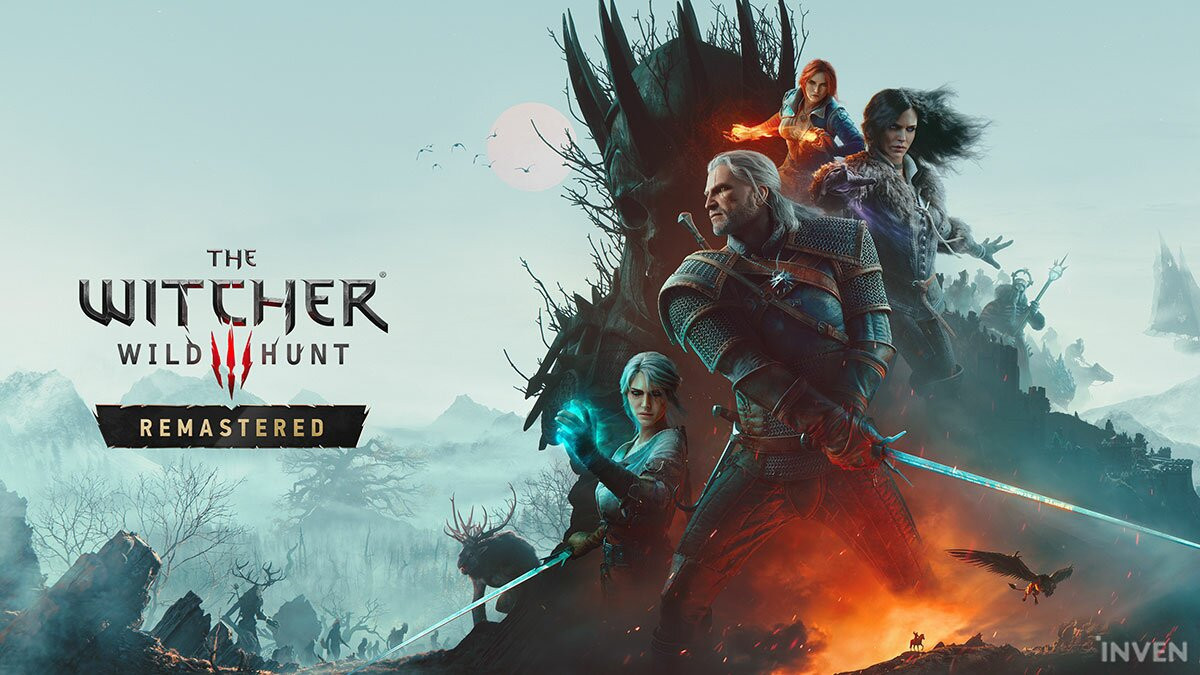
CDPR is releasing The Witcher 3 Remastered on September 29 of this year, marking the 10th anniversary of The Witcher 3. True to the name "remaster"—rather than a remake or an entirely new game—this release does not fundamentally alter the core experience of The Witcher 3. The scope of changes is somewhat limited, and some aspects are difficult to notice unless compared directly side-by-side with the pre-remaster version. However, it retains the game's timeless design alongside changes that make it feel natural by modern standards.
The Witcher 3 Remastered is not entirely brand new, but it effortlessly delivers the feeling of playing a current-generation game.
Refinements in Lighting and Detail Built on an already high baseline, changes visible only when side-by-side
The biggest change in The Witcher 3 Remastered is the visual upgrade. At the same time, this improvement is also the hardest for players to immediately notice. As mentioned earlier, The Witcher 3 received a next-gen upgrade for the PS5 and XSX era in 2022, and with this update—which included PC as well—the visual aspects had already undergone significant improvements.
By today's standards, that next-gen upgrade is essentially a current-gen upgrade. The fact that graphical improvements within the same hardware generation are hard to spot immediately goes to show how high the graphical quality already was at that time. With detailed ray tracing options already available back then, it would have been difficult to create a striking difference simply by introducing RT concepts.
However, when you place the pre-remaster version and the remastered version side-by-side at maximum settings, clear differences emerge.
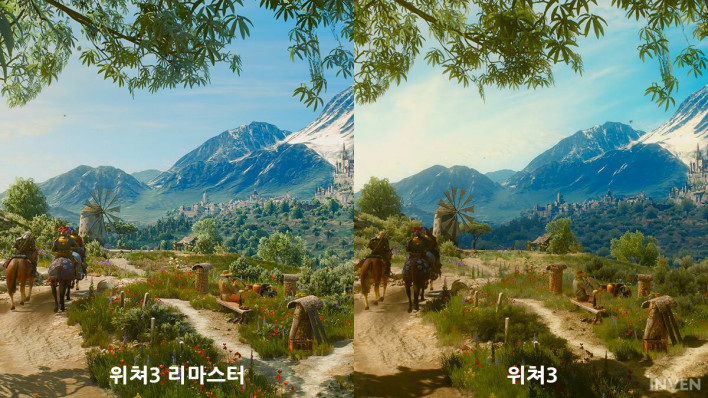
The most noticeable elements are the lighting and level of detail. The remaster's graphics do not simply make dark areas darker and bright areas brighter. By accurately distinguishing the contours and reflections of surrounding objects relative to light sources, it makes illuminated areas slightly brighter and unlit areas deeper, enhancing light contrast. While this could be interpreted as simply widening the dynamic range, in practice, it accurately depicts even the intricate shadows and bounce light cast across objects.
This is also connected to improvements in basic object quality. Where the original The Witcher 3 relied on heavy depth of field that left background landscapes blurry, the remaster emphasizes capturing fine details. From stones on the ground to distant trees and even facial wrinkles on characters, objects are rendered with greater detail and paired with matching lighting effects.
The Witcher 3 originally made frequent use of a shallow depth of field centered on characters, blurring the background. The remaster maintains the core structure of this cinematic style. What has changed is the amount of visual information preserved within those blurred zones. Even with the same shallow depth of field, silhouettes and objects remain recognizable, conveying spatial information more completely without detracting from The Witcher 3's signature presentation.
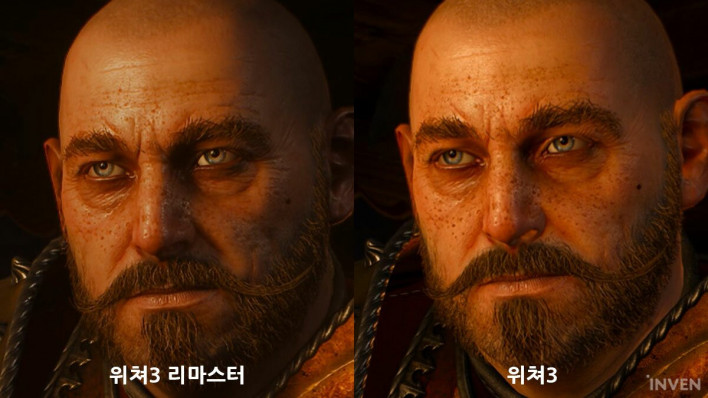
In certain segments or Photo Mode, rendering background details clearly allows both subject and scenery to be highlighted simultaneously, producing more realistic visuals. However, the overly saturated color palette occasionally feels like it diminishes some of the original's gloomy atmosphere. That said, there is no denying that the overall graphics have improved.
Sword Dance Intact, Wider Field of View Gameplay Refined via Camera and Skill Trees While Preserving Core Combat Framework
Although The Witcher 3 was beloved, its dance-like combat was distinct from modern action RPGs and often considered a polarizing element. Compared to action-focused games, feedback noted that impact feel and responsiveness fell short, while level-based balancing was somewhat inconsistent. The remaster leaves this combat skeleton—namely the core mechanics—untouched.
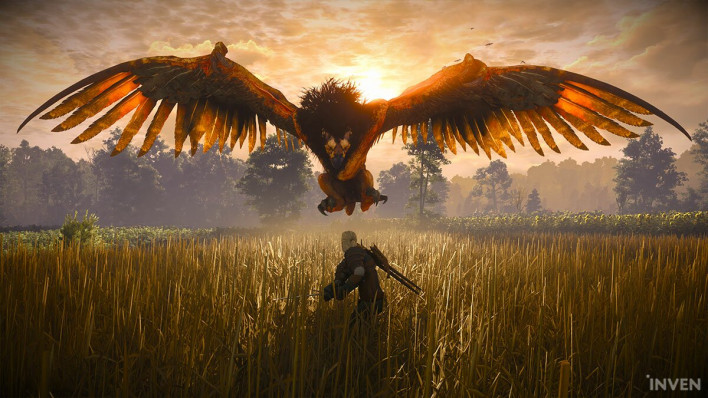
Geralt's swordsmanship in the game is not merely an action mechanic, but the result of dedicated effort to realistically adapt his portrayal from the novels. Since it aimed to capture the graceful elegance of a sword dance while adapting the source material for a game, fundamentally altering combat would have required a completely different approach to interpreting the original work.
Instead of overhauling combat mechanics, the remaster focuses on allowing players to approach combat with greater flexibility. The most noticeable change is the camera angle. The camera, which used to lock tightly onto Geralt at the center of the player's vision, now frames combat scenes from a few paces farther back.
The Witcher 3 does feature a lock-on function by default. However, it does not feature a seamless free-flow combat system that magnetically snaps onto targets, and players often face multiple enemies simultaneously. While the old camera angle was certainly dynamic, it frequently left players vulnerable to enemies charging in from right beside them. The new perspective provides a broader field of view, making it easier to track enemies and strike efficiently.

Some subtle changes can also be felt in the animations. Previously, Geralt's attacks had an awkward animation where his blade seemed to pass through enemies before an enemy hit reaction triggered afterward. Now, enemies react definitively according to the direction of the attack, creating a livelier—and more specifically, more satisfyingly tactile—slashing feel.
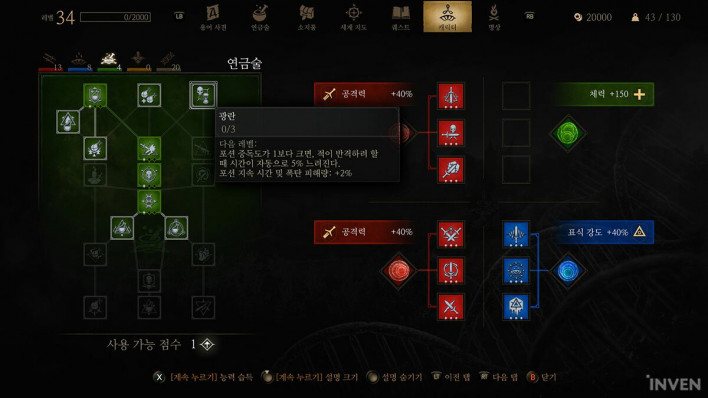
Another change within this existing framework is the skill system. The game retains The Witcher 3's unique character progression system, where players select up to 4 mutagen slots (combat, signs, alchemy, etc.) and equip matching perks to boost stats. The requirement to slot up to 12 perks—3 per mutagen slot—to activate them remains unchanged as well.
However, the method of acquiring perks has become much clearer in the form of a proper skill tree. Previously, players had to invest a certain number of points into a row before unlocking the next tier, forcing them to spend points on unwanted perks. Now, unlocking just one perk in a preceding tier is enough to advance to the next. With fewer wasted points, players can freely select desired perks across Combat, Signs, and Alchemy, broadening build diversity.
Fidelity Chosen by Switch 2 Still-Image Detail and Mod Support
Thus, the remaster was built with visual enhancement at its core, aimed at an overall polish across the board. And that direction applies identically to the Nintendo Switch 2 version.
Given the hardware capabilities of the Switch 2, the appearance of The Witcher 3 Remastered differs significantly from the PC version. Considering that the PC version is on par with current-gen consoles like the PS5 and XSX, the Switch 2 version looks closer to last-gen consoles at first glance. In particular, due to a lack of robust RT support that requires real-time calculations, lighting changes from light sources are barely noticeable even in dark indoor environments.
However, examining the finer details tells a different story. Object and landscape rendering appears remarkably sharp on still screens. The original Nintendo Switch version accomplished the near-impossible task of running an open world on limited hardware, but at the cost of heavily reducing resolution and object size. Even with those compromises, it failed to maintain a stable frame rate. The Switch 2 remaster chose visual fidelity over framerate focus.
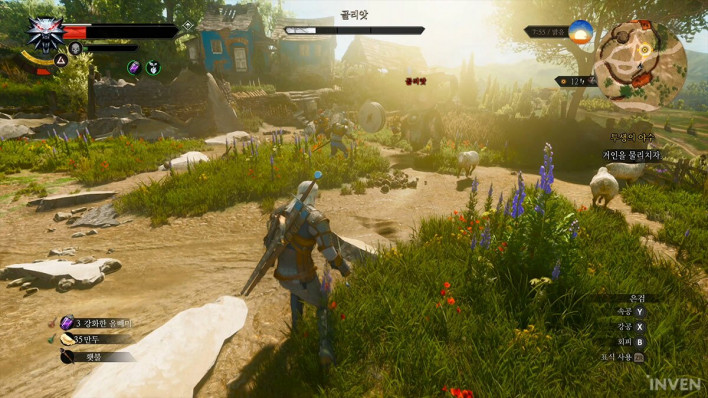
Since the launch of the Switch 2, as developers accumulate device-specific know-how, a growing number of games utilize DLSS to deliver visual presentation comparable to handheld gaming PCs like the Steam Deck at much lower power consumption. Games such as Assassin's Creed Odyssey, Star Wars Outlaws, and Elden Ring are prime examples. Among these, The Witcher 3 stands out for its object rendering and detail density. However, due to the nature of Switch 2's lightweight DLSS implementation, image output remains crisp while stationary but suffers from motion blur when moving. There are also occasional frame drops. Even so, the fact that it maintains frame rates in crowded urban areas reflects clear consideration for fundamental optimization.
Several console features unique to the Nintendo Switch 2 are also included. A variety of features are supported, including gyro sensors, motion controls, Joy-Con mouse controls, and touchscreen functionality. Using gyro sensors to control the camera via Joy-Con movement or using motion controls to call Roach or cast Signs can be quite useful depending on playstyle.
However, rather than feeling tailor-made for The Witcher 3, these controls feel more like a showcase of "what's possible," similar to Cyberpunk 2077. On the other hand, given the game's menu layout split into multiple sections, mouse controls and touchscreen support proved to be exceptionally useful in practice.
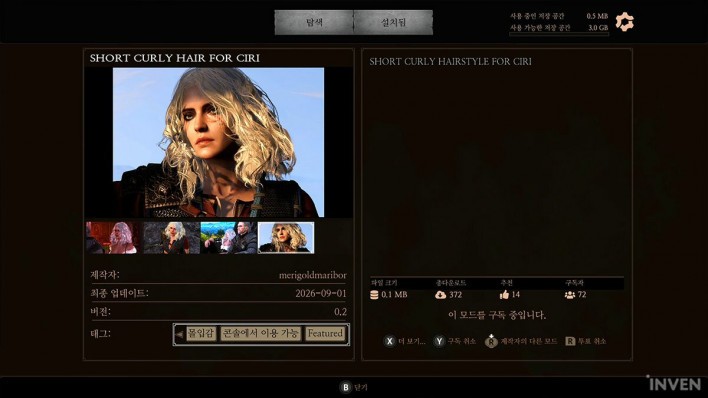
Another noteworthy feature on the Switch 2 is mod support. Previously, many games—even those with official mod support systems like Bethesda titles—did not support mods on Switch, leading to a widespread view that strict internal policies from Nintendo made modding impossible. However, The Witcher 3 Remastered incorporates mod support utilizing 3GB of storage space. Although the number of available mods was small prior to official release, the ability to easily subscribe to and apply them raises expectations for an expanded, freer content experience on the Switch 2.
An Honest Remaster, an Excellent Choice Free Update, and a Stepping Stone toward 'Songs of the Past'
The Witcher 3 Remastered is, literally, a remaster. While superb visual enhancements and system refinements make gameplay smoother, the core framework remains the same. Conversely, this means the core framework alone holds more than enough value as a game, and even incremental visual and systemic improvements are enough to make it feel like a modern, current-gen title.
Furthermore, this remaster is not just a standalone update. The upcoming expansion 'Songs of the Past', set for release next year, is the first new expansion in 11 years since Blood and Wine. Framed as a stepping stone for this expansion, the remaster takes on a different perspective.
Because it is provided as a free update even to existing The Witcher 3 players—after the game already achieved massive sales and passed through countless discounts—it carries a significance beyond a simple commercial product. Furthermore, for those who haven't played The Witcher yet or want to revisit The Witcher 3's story ahead of 'Songs of the Past', it offers a chance to rediscover a "current-gen-worthy" Witcher 3.
Thus, The Witcher 3 Remastered is both an honest remaster and a wonderful gift.