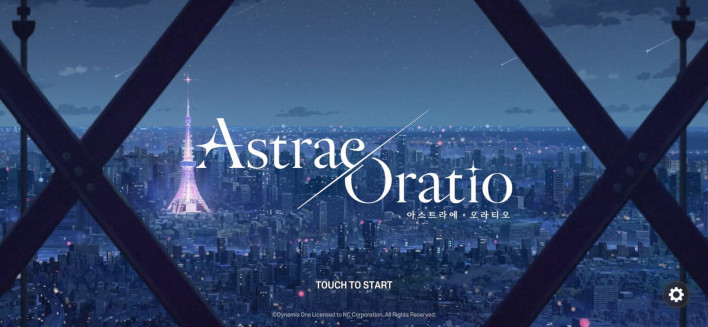
Published by NC and developed by Dynamis One, the new shindenki RPG *Astraea Oratio* is making its full debut at TGS 2026. While the title has drawn attention for various internal and external reasons and is currently recruiting CBT testers, this marks its first hands-on test through actual gameplay.
With the anime subculture community keeping a close eye on the game, some voiced lingering doubts. NC has historically had little presence in the subculture genre, and as if emphasizing the "shindenki" genre popular from the early '90s to the late 2000s, the noticeable variation in art style across different factions drew mixed reactions. In particular, whereas the 2020s subculture gaming landscape has shifted toward unifying art styles across a title—moving away from earlier trends of highlighting individual illustrators—this approach felt somewhat against the current.
Entering TGS 2026 amidst these concerns, *Astraea Oratio* gives the distinct impression of having sharpened its blade. From the hands-on demo alone, the developers' ambitions are clearly evident: riding the nostalgia of that era and the evolution of turn-based combat to tell a story about "dreams" rooted in what they truly love.
No Room for Carelessness: Real-Time Turn-Based Combat Accelerated with ATB, Combos, Parries, and Tagging
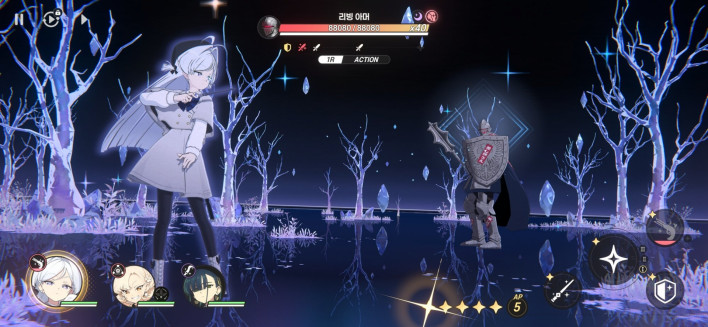
Since teaser PVs already revealed it as a turn-based RPG, readers will likely wonder how it sets itself apart from existing mobile turn-based RPGs. Modern mobile turn-based RPGs often draw from turn-based traditions to break away from simple back-and-forth trades and speed up the tempo, and *Astraea Oratio* follows a similar path. However, rather than relying on gaining extra turns, it references systems designed to deliver a more active, real-time feel.
To put it simply in familiar terms, much like Final Fantasy's Active Time Battle (ATB) system, an action gauge appears beneath the enemy's health bar. Once it fills, the enemy immediately acts and steals the initiative—even if it was your team's turn. Players must rapidly tap skills to preemptively suppress foes. Building on this, *Astraea Oratio* features a combo system that allows players to continuously unleash attacks within a single action until AP is exhausted, alongside mechanics that encourage dynamic responses to enemy moves. Basic enemy attacks can be suppressed with preemptive strikes, while heavy attacks signaled by a shield icon can be parried with well-timed counters to reclaim the turn. Unblockable red attacks cannot be counteracted directly, requiring players to tag in a tank or a healthier ally to absorb the blow.
Looking at the fundamentals, combat consists of three main actions, similar to other mobile turn-based games: Basic Attacks, Skill Attacks, and Ultimate Skills. Basic Attacks and Ultimate Skills consume AP—the game's skill point resource—while Skill Attacks also carry individual cooldowns. The flow involves unleashing consecutive Skill Attacks until they go on cooldown, then switching to Basic Attacks to reduce skill cooldowns and prepare for the next assault. Ultimate Skills can only be activated when their gauge is full; they consume AP and do not advance unit turn order like in some other turn-based titles.
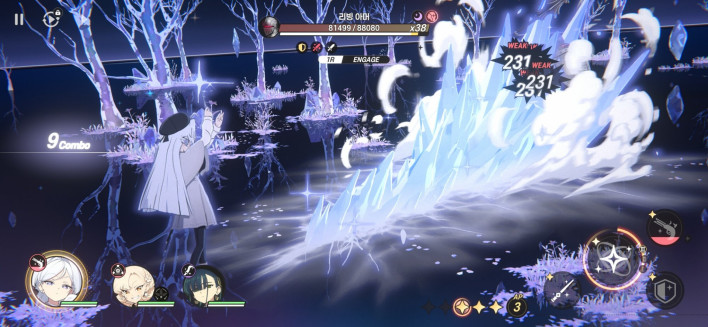
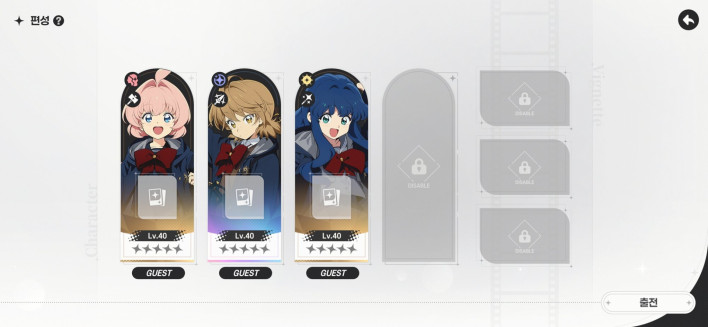
Another distinct feature is the three-character tag-team battle system. Combat takes place as a 1v1 duel on the field for both allies and enemies. Players can strategically swap characters on their turn to extend combos or pull back heavily damaged units. The special skills triggered during tags vary by character and class, though the brief demo duration and fast-paced combat made it difficult to inspect detailed effects. Nevertheless, the demo clearly showcased elements that demand constant awareness—such as using tags to withstand tougher foes and AoE attacks dealing damage even to off-field, benched characters.
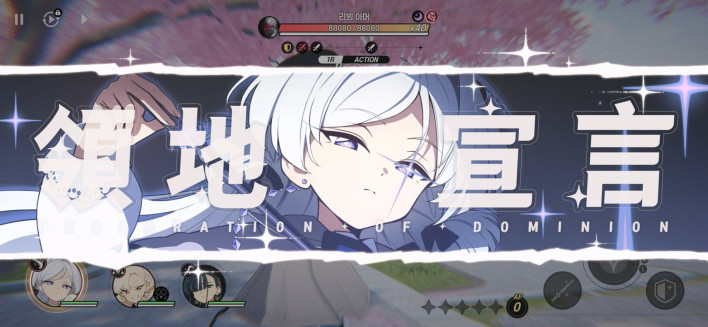
"Territory Declaration," highlighted since the early PVs, serves as a fever time system that refills AP and resets skill cooldowns. While activation conditions differ by character and role, depleting AP, activating Territory Declaration to completely refill it, and immediately stringing together Basic Attacks, Skill Attacks, and Ultimates provided a thrill reminiscent of Modern Control schemes in fighting games. Coupled with mechanics like targeting elemental weaknesses to break enemies faster for follow-up onslaughts, the demo delivered clear tactical depth despite its brief playtime.

Deep Retro Sensibility Infused with Visual Novel Flavor
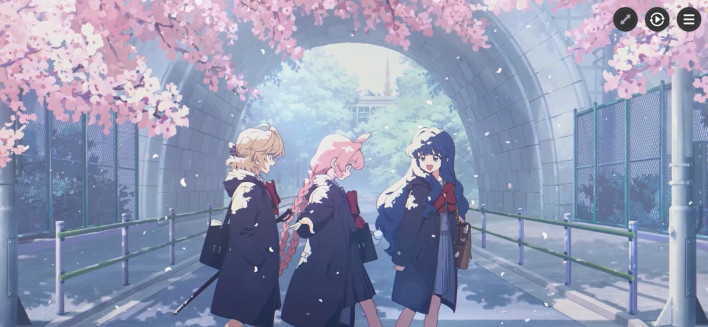
For an anime subculture RPG, while combat is crucial, how the game presents its story and characters is paramount. Given the nature of game show demos, showing full contextual depth is challenging; instead, demos usually offer a glimpse into the narrative style and presentation.
The TGS 2026 demo featured a story segment functioning as a combat tutorial alongside Chapter 1 of the main story's opening arc, "Magical Activities of the Minato Ward Girls". The tutorial section depicts Yuria Kujo, a Kyoto mage teased as a mastermind in early PVs, crashing a helicopter into a barrier to crash-land and clash with the Minato Ward girls. Following Yuria Kujo's dramatic entry after shattering the barrier, the demo transitions straight into a combat tutorial explaining *Astraea Oratio*'s basic systems, followed by standard dialogue scenes and cutscenes.
While the overarching structure might sound conventional, the detailed dialogue could feel unfamiliar depending on the player. Unique terminology like "Territory Declaration" is introduced alongside historical and cultural terms such as the Shinsengumi and Mimawarigumi without hesitation. Indeed, attendees less familiar with subculture tropes appeared somewhat puzzled during the demo. Given time constraints and the local Japanese venue, the build assumed prior familiarity rather than pausing to explain every detail, maintaining a rapid pace.
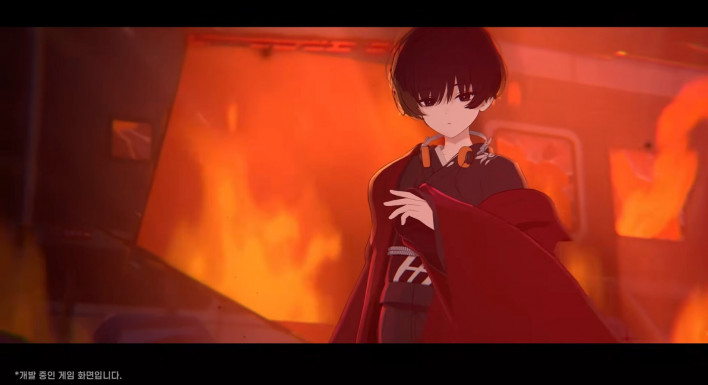
Still, the combat tutorial follows standard mobile game conventions—confronting a powerful foe early on, retreating, and transitioning into flashbacks or character intros—making the broader narrative arc easy to follow. What stood out more was the developers' intent to evoke deep nostalgia among anime fans. A prime example was the closing line, *"Goran no sponsa no teikyo de okurishimasu"* ("Presented by the following sponsors"), playing alongside developer and publisher logos—a quintessential anime touch.
The story mode following the combat tutorial maintained this retro flavor. Rather than using the typical dialog box overlay found in mobile RPGs, the interface presents full-screen visual novel text directly over background CGs, calling to mind classic titles like *Tsukihime* or *Fate/stay night*. While players fulfill the role of the "Chief" (Officer), opening the narrative not from the Chief's perspective but through a monologue by Erin Tanaka—one of the central figures of the Magical Activities of the Minato Ward Girls—was a striking choice.
Typically, hero-collector mobile RPGs center their narratives around a player avatar to systematically introduce the world to newcomers. The "shindenki" genre, however, operates differently. Occult lore and magic exist in secret, unknown to ordinary people like the protagonist, until escalating incidents unleash a flood of worldbuilding details and lore teasers. Rather than spoon-feeding explanations, players piece together the universe through unfolding events and interactions with companions. Set in realistic urban environments, these stories blend myths, legends, and occultism rather than pure high-fantasy constructs. Explaining every motif explicitly would be tedious and pedantic; thus, the genre compresses lore by weaving terms and motifs into narrative elements.
In short, the genre focuses on the journey of someone dragged into dynamic circumstances who must learn as they overcome crises, rather than catering to an outsider starting from zero. While sharing thematic ties with turn-of-the-millennium post-apocalyptic works, shindenki contrasts them by retaining an element of ordinary everyday life, allowing tone shifts toward brighter themes depending on the narrative execution.
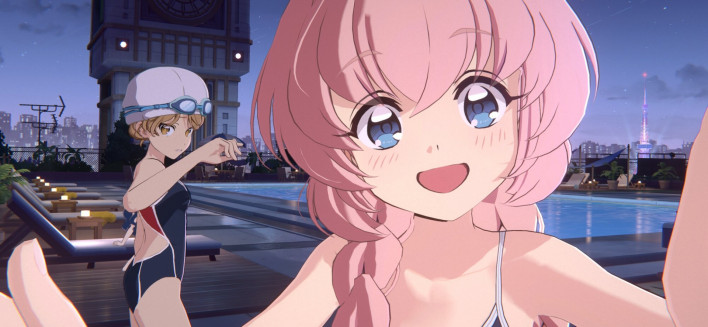
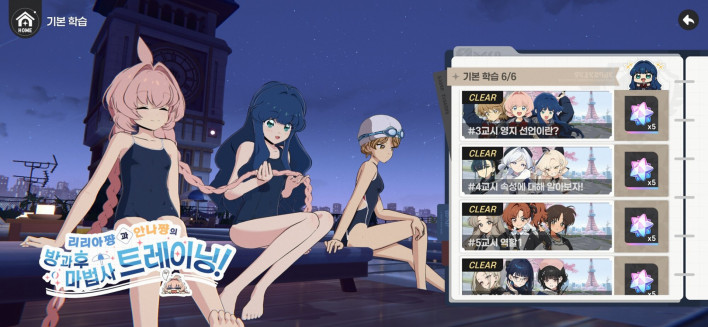
*Astraea Oratio* clearly demonstrated this charm even in its short demo build. From comic relief moments with Yuria Kujo to the tonal contrast between the battle tutorial and Chapter 0's quiet depiction of everyday life with Erin Tanaka and the Minato Ward girls, the shindenki formula was fully on display. Combining mobile RPG structures, classic anime tropes, visual novel narrative pacing, and an anime opening-style conclusion for Chapter 1, the game left a powerful first impression imbued with retro nostalgia.
'Astraea Oratio' Shows Otaku Passion and Sincerity—Refinement Will Be Key
*Astraea Oratio* reflects clear effort to rediscover elements from the '90s through the late 2000s, refining them for mobile while invoking deep nostalgia. Consequently, it feels warmly nostalgic yet carries a slight sense of uneasiness—much like a traditional bowl of Gukbap or rich Tonkotsu ramen that appeals strongly to specific tastes.
In actual gameplay, character modeling demonstrated strong visual cohesion, and the in-game CGs blended smoothly without stark contrasts to the character art. On the other hand, the UI/UX felt disappointing, even for a demo build. In prioritizing concept and overall presentation, text and UI elements were small and easily lost, while fast-paced combat left little time to discern buffs, debuffs, or skill effects. The game often assumed players were familiar with genre conventions and glossed over explanations—a factor whose reception during public testing will be crucial to monitor.
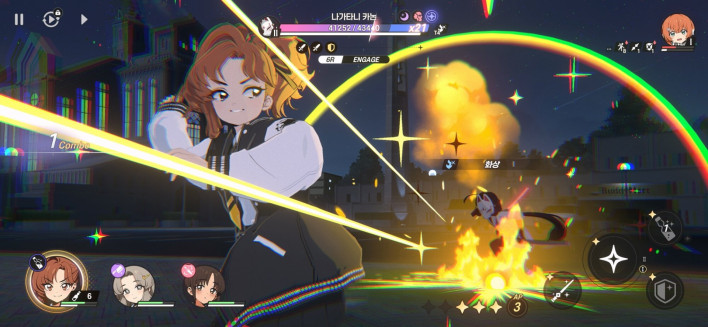
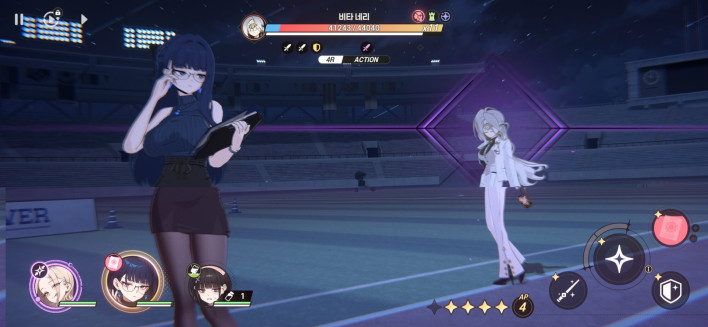
Such issues are not uncommon for developers conducting their first public test after extensive internal playtesting, where teams grow accustomed to the UI/UX and overlook usability hurdles. Games following mainstream formats face fewer of these growing pains, whereas *Astraea Oratio* stems from the developers' desire to build upon classic favorites they hold dear. While moments of confusion may occur, the game creates a desire to savor the experience once that familiar flavor hits. With CBT applications open through the conclusion of TGS 2026, it will be exciting to see how user feedback shapes the glimpse of dreams *Astraea Oratio* promises to deliver.