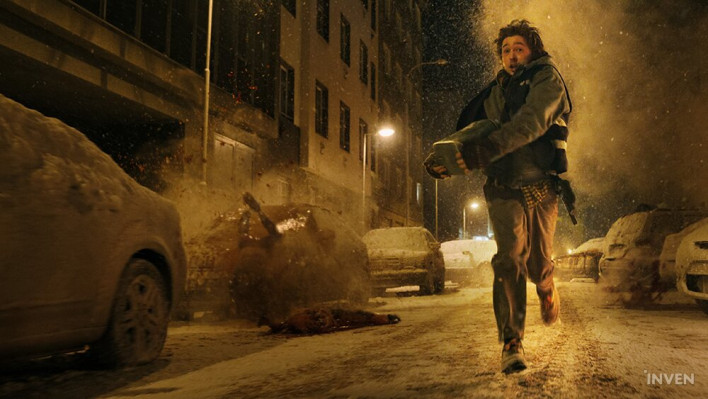
It is terrifying. Yet it is funny. And above all else, it is incredibly entertaining. 'Resident Evil: The Zeroth Night' feels more like playing a video game than any movie that came before it. Director Zach Cregger has crafted a film that moves like a game—fresh, unique, and relentlessly fast-paced.
The film is packed with countless elements from the franchise that any Resident Evil fan will instantly recognize. What is truly remarkable is that even non-gamers can easily get immersed, feel the frustration, and laugh out loud, as every element functions perfectly within the movie.
From its very first moment to the final scene, 'The Zeroth Night' is tightly woven together. You cannot look away for even a single second, nor can you lower your guard. Nor is there a single dull moment. Across its roughly 90-minute runtime, the movie moves at a breathtaking, breakneck speed. There is not a single wasted shot.
Scenes that could have felt cliché or overly heavy are cleverly twisted with cynical humor. As a result, absurd situations continuously unfold where the audience cannot help but burst into laughter while still feeling terrified. Yet even as you laugh, the movie remains genuinely frightening.
※ This review contains spoilers for the film.
Intense Horror Direction, Even Stronger Black Comedy Contradictory Yet Seamlessly Blended Horror and Humor
What is truly fascinating is that despite featuring incredibly intense horror sequences, the film as a whole feels remarkably brisk and humorous. Terrifying zombies, visceral gore, and jump scares are in full supply, yet the movie maintains a surprisingly breezy tone.
This is largely thanks to the humor that relentlessly drives the film from start to finish. In particular, the third act—which is undeniably tragic—is so expertly laced with dark humor that even as a viewer, it feels unbelievably lighthearted.
This makes Zach Cregger's signature twisted third-act twist all the more shocking, while simultaneously feeling almost 'surreal.' The climax certainly subverts our expectations, yet somehow fits right in.
While the events are tragic and unfortunate, the film—true to form—refuses to wallow in negativity or sorrow. Black humor pours out of every catastrophic turn. As these elements fuse together, the scenes unfolding before your eyes feel delightfully paradoxical and surreal.
Every part of the film, including the climax, evokes this sense of ambivalence. While fully committed to horror, it injects enough humor so that the scares and gore never exhaust the audience or devolve into gratuitous violence.
As a result, when the credits roll, your immediate reaction isn't 'that was scary,' but an excited 'wow, that was fun!' Despite enduring heavy gore and horror elements, the aftertaste is unrealistically refreshing. It feels strange to describe a horror movie as refreshing, but that is precisely what it is.
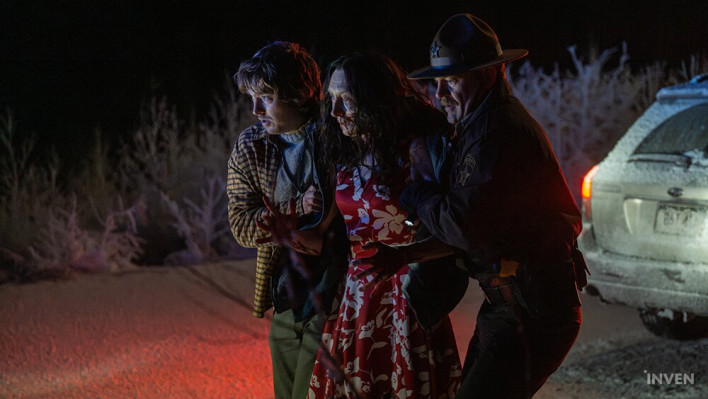
The Fate of an 'Ordinary Guy' Thrown into Raccoon City Not Leon, Chris, or Ethan—Just an Ordinary Guy Named 'Bryan'
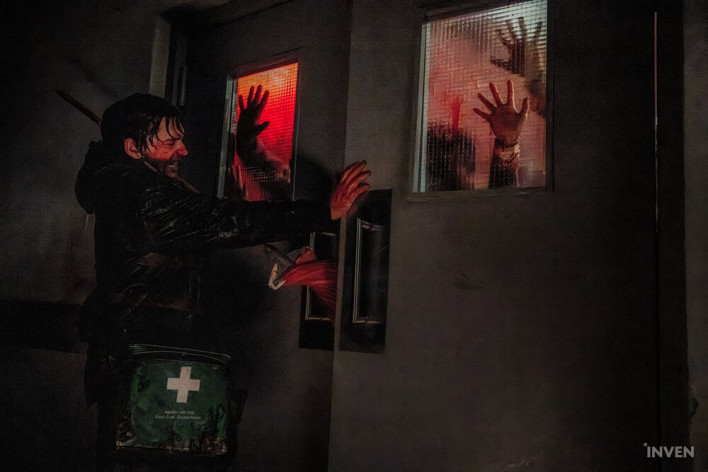
Austin Abrams' portrayal of protagonist Bryan brings genuinely 'everyman' moments that fit seamlessly into the film. Unlike Ethan, who showed superhuman resilience despite being a civilian, Bryan is truly an average guy who doesn't even know how to properly shoot a gun.
Quite by chance, Bryan takes a delivery job to Raccoon City that fateful night. His goal isn't to save his family or save the world. The sole reason he enters Raccoon City on that fateful day is high pay—a motivation every worker can painfully relate to: money.
Unfolding from Bryan's perspective, the 90-minute play time—er, runtime—is more gripping and thrilling than almost any movie or game. Bryan is just an ordinary guy whose only experience shooting guns comes from video games. In a way, watching him feels like watching yourself.
He acts with an ordinary person's helplessness that makes you cringe. He exposes his neck to zombies, forgets to take the safety off his gun, and while he attempts every quest given by other characters (who act like in-game NPCs), he quickly gives up and looks for an easier way out.
Throughout the ordeal, he curses constantly, gets angry, panics in fear, and questions the ridiculous demands of others. He reacts exactly as any ordinary person would if thrown into that situation. His actions never feel infuriatingly incompetent, nor does he suddenly become a superhero. He is simply a regular guy doing everything in his power to survive an unbelievable situation thrust upon him.
This allows viewers to fully immerse themselves in Bryan's decisions, empathize with him, feel the tension, and laugh along. To give a mild spoiler, it feels as though we are watching the story of a random NPC or Mob #1 that we would normally brush past in a video game—a reminder that even those throwaway characters had their own long journey.
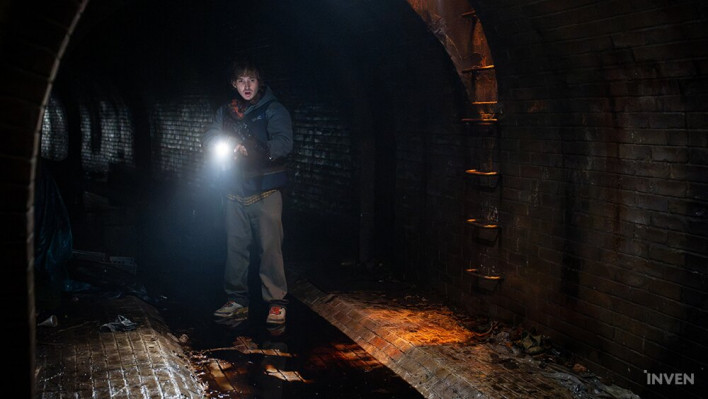
A Movie That Feels Like Playing a Game Translating Game Flow and Perspective Perfectly into Cinema
The most intriguing aspect of 'The Zeroth Night' is undoubtedly its direction. It translates the flow of a video game to film so perfectly that you wonder how they pulled it off.
The plot is straightforward. On that fateful night, an unsuspecting Bryan sets off to deliver medical supplies to Raccoon City. Despite countless obstacles along the way, he ultimately reaches Umbrella's laboratory at the top of Raccoon City General Hospital to finish his delivery.
Zach Cregger structures this simple plot as if clearing stages in a game or charging toward a main quest. The transitions between scenes are executed brilliantly. Just as playing a game shifts you to new environments chapter by chapter, the movie follows the exact same progression.
After accepting a quest at the first hospital to head to Raccoon City through a blizzard, the scene shifts to a dark, snow-covered road. When Bryan accidentally hits a zombie and drives off with it stuck in his car, he encounters a police officer and receives a new quest. Following the officer leads directly to yet another quest.
These transitions feel genuine because the progression mimics the rhythm of video games: moving between chapters, receiving quests, and completing them. Once the main objective of Chapter 1 is cleared, you move on to the next chapter, where a new NPC naturally appears to hand out the next quest.
To prevent this process from feeling too repetitive or overly gamey, 'The Zeroth Night' incorporates dynamic camera perspective shifts that only cinematic media can pull off.
Overall, the film makes heavy use of tracking shots that resemble a classic third-person camera angle. Following closely behind Bryan, this familiar gaming angle heightens the feeling of playing a game. Meanwhile, key moments seamlessly shift perspectives like in-game cutscenes.
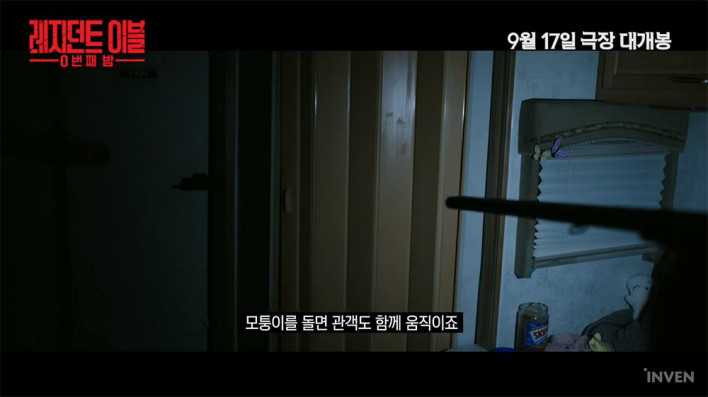
Most entertaining are the occasional first-person camera sequences. Reminiscent of Resident Evil 7 and Village, the film briefly adopts a first-person perspective in select moments—such as cautiously peeking around corners with a weapon drawn or navigating dangerous hazards. These shifts quickly refresh the movie's pacing and atmosphere.
Mirroring the single-player structure of Resident Evil, the film strictly centers its story on a single protagonist, Bryan. It feels almost like watching a player control their playable character.
A surprisingly diverse cast of characters appears throughout the film, but they all function like NPCs—handing Bryan new quests or explaining the situation. Yet unlike disposable game NPCs, each character leaves a distinct impression before exiting.
While you might not remember their names after the movie ends, you can instantly recall their defining traits. The film playfully satirizes game tropes—exaggerating how NPCs self-centeredly blurt out their own demands for help without caring about the protagonist's plight, leaving a memorable mark in just a few moments of screen time.
The trope of NPCs refusing to budge while casually tasking the protagonist with tedious chores is captured brilliantly.
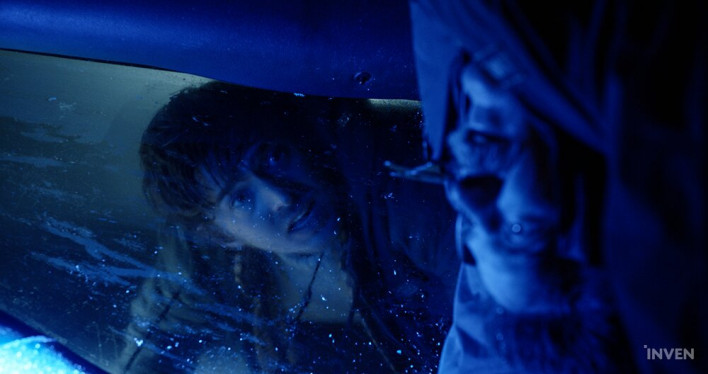
'Resident Evil' Evoked in Every Aspect Countless Easter Eggs, Accessible Even for Non-Gamers
Although the film tells an original story, it feels strikingly faithful to the Resident Evil franchise. Even if Bryan is a far cry from the series' veteran protagonists... the atmospheric feel of each scene captures the essence perfectly.
The sequence where Bryan hits a zombie while driving through a dark, snowy night immediately evokes the opening truck scene of Resident Evil 2. The clueless protagonist reacting with human vulnerability, bullet-sponge zombies, and sudden zombie dog attacks all echo the games.
Beyond that, the film is packed with game elements that will bring a smile to any fan's face. The protagonist starts with a basic handgun, scavenges better firearms as the night progresses, and constantly suffers from a chronic lack of ammo. The tension of navigating pitch-black corridors using only a smartphone flashlight instead of a proper flashlight is palpable.
That is not all. Right when urgency is highest, padlocks block key pathways—and, of course, these chain-bound locks cannot simply be shot open. Watching Bryan curse while desperately searching for a key as zombies close in triggers nostalgic gaming PTSD and laughs for fans, and chuckles from general audience members.
Just as padlocks plague players throughout the games, they block key paths throughout the film. Zach Cregger doesn't treat them merely as obstacles, but leverages them as comedy. Bryan's marksmanship gets similar treatment: as a civilian, his shooting is terrible. One stray bullet disables his own car engine, while another ricochets right past his head.
These elements of padlocks and gunplay preserve the feel of the games while serving as distinct comedic highlights for the film. Thanks to this, both hardcore franchise fans and casual moviegoers can walk away fully satisfied.
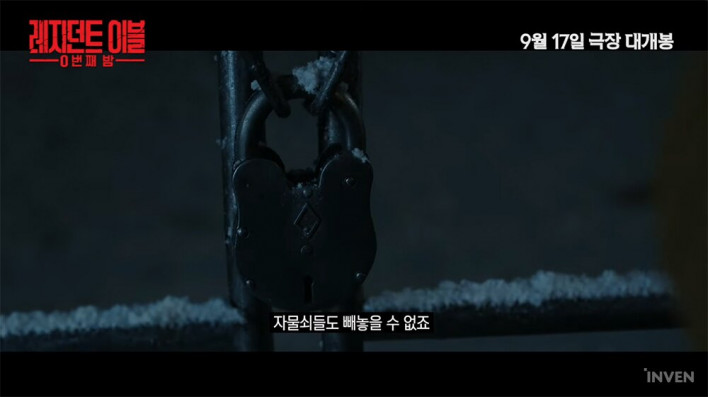
An Outstanding Piece of Survival Horror in Its Own Right A Movie That Immerses Both Game Fans and Horror Movie Buffs
'Resident Evil: The Zeroth Night' captures the essence of the franchise while standing as something entirely distinct from both the games and previous film adaptations.
The film faithfully captures Resident Evil's signature world, game progression, and zombie horror. At the same time, it streamlines the narrative so that anyone completely unfamiliar with the game's lore can enjoy it purely as a standalone horror film.
The movie avoids tedious exposition. It doesn't spend long stretches explaining what Umbrella is, why Raccoon City fell into chaos, or even that the monsters are T-Virus infected zombies. A brief appearance by an Umbrella researcher offers some context, but it remains concise and minimal.
Instead, the film relies on visual storytelling. A woman who won't die after being hit by a car or shot, dead phone lines and radios, Raccoon City devastated in a matter of hours, tentacles sprouting from infected bodies, and physical mutations following bites—all these visual cues allow the audience to grasp the stakes immediately.
By avoiding complex subplots and focusing purely on survival horror, the film lets viewers experience the terror without needing to memorize background lore. Even as a game adaptation, it functions as a thrilling horror experience on its own merit.
Moreover, as expected from Zach Cregger, horror elements are present in abundance. Beyond jump scares, the film delivers visceral gore with heavy bloodshed, dismemberment, and grotesque monster designs. Sound design is equally impressive, maximizing impact through restrained audio effects. It feels classic in design, yet executes with brilliant effectiveness.
In fact, the fellow journalist sitting next to me jumped so violently multiple times that my chair shook, eventually cowering in terror as the film progressed.
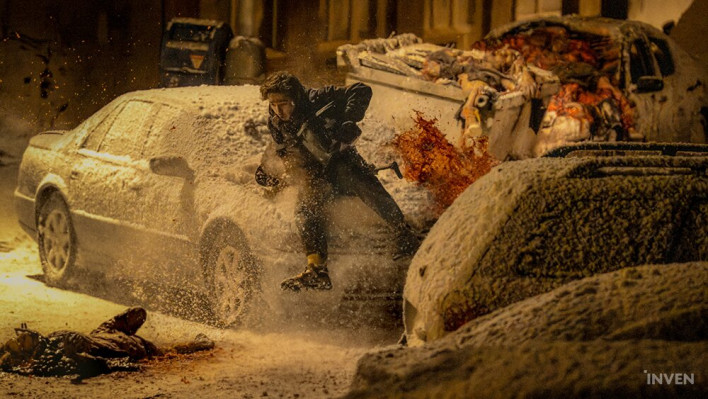
Having enjoyed director Zach Cregger's previous works, I feel this film pushes his signature style even further. What impressed me most was that the movie doesn't attempt to overcomplicate itself. 'The Zeroth Night' focuses single-mindedly on one thing: 'the protagonist's desperate struggle to deliver medical supplies to Raccoon City General Hospital.'
And it seamlessly weaves that struggle into the fabric of the Resident Evil video game and pure survival horror. Unlike typical game adaptations that focus on translating lore and storylines to screen, 'The Zeroth Night' adapts the actual gameplay experience—how Resident Evil plays, feels, and moves.
This makes the 90-minute runtime fly by like an unstoppable freight train—thrilling, engaging, and relentless. It achieves an ideal balance between cinematic fear and the interactive immersion of gaming.
A horror movie that fully immerses both gamers and cinephiles alike. A hard-hitting terror ride filled with dark comedy, yet uncompromising on scares. 'Resident Evil: The Zeroth Night' arrives in theaters on September 17.