German President Frank-Walter Steinmeier stated during his opening address at the gamescom congress in Cologne on August 27 that video games are "culturally meaningful as a whole, and therefore meaningful—for better or worse—to our democracy as well." This marks the first time a German head of state has visited gamescom.
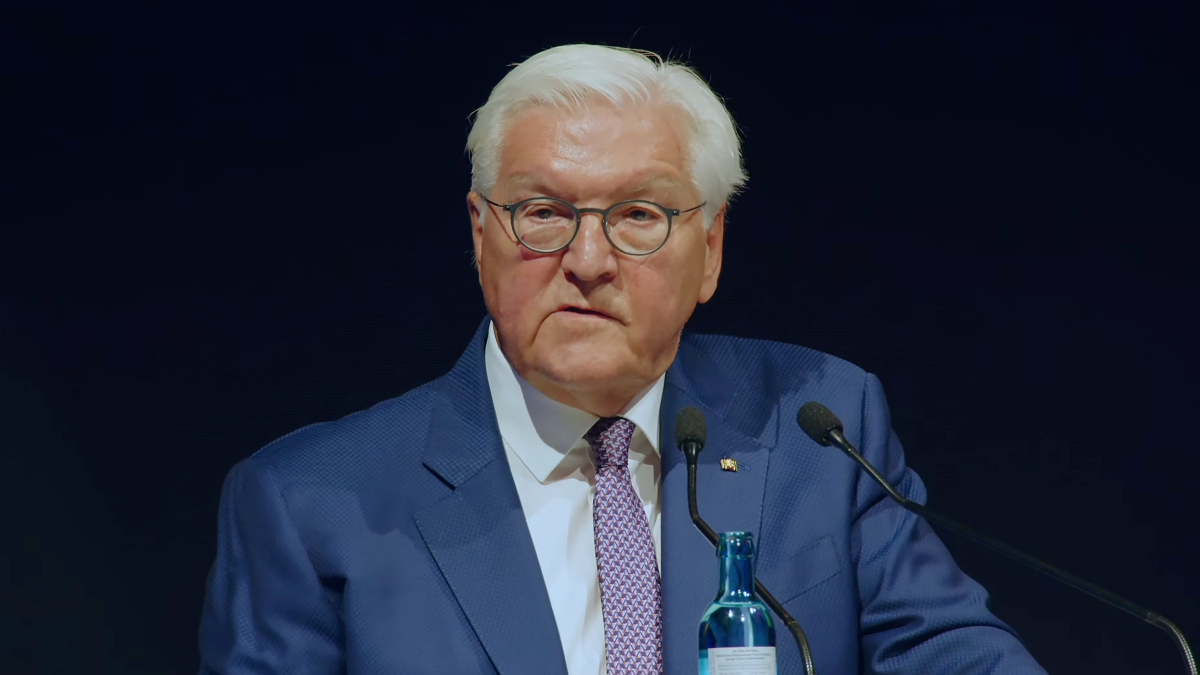
President Steinmeier noted that the number of gamers in Germany has surpassed 40 million, meaning "nearly one in two people," and added that "games are already right at the center of society." Regarding the cliché of a teenager eating junk food all night in a dark room, he called it "inconsistent with reality," explaining that women and men enjoy gaming in equal measure and that the generation that grew up with games has already entered middle age.
As an example of this shift in cultural status, he cited the German Games Industry Association joining the German Cultural Council. He also pointed out that new game releases are reviewed in the cultural sections of major broadsheets, that games resonate across broadcasting, film, and literature, and that gaming functions as a competitive arena complete with its own stars, leagues, and tournaments.
Defining games as a "young and dynamic medium that combines visuals and sound, dialogue and dramaturgy, with themes and messages addressing political questions," he nevertheless drew a clear line, stating, "However, that does not automatically make digital games high-level works of art." This is because the gaming industry also relies on commercial success, tailoring its supply to what succeeds in the market.
His assessment of gaming's benefits was concrete. President Steinmeier said games can serve as an outlet for stress relief, a bridge to build relationships and overcome isolation, and a tool to train cognitive abilities to lower the risk of functional decline. He also mentioned games' role in conveying historical knowledge and political education, as well as their contribution to the culture of remembrance. Quoting a Bertelsmann Foundation study, he introduced findings showing that people who consider themselves avid gamers have an above-average willingness to engage socially—such as through debates, protests, and petitions—and feel a stronger identification with democracy.
He urged the audience to "bring the power of connection, creativity, and energy found in games into the real world—into volunteering, civil society initiatives, and democratic political parties."
For the same reason, he held the industry accountable. "Because games have become so commonplace, we must also talk about their dark side honestly, thoroughly, and based on facts," he said. While evaluating past debates in Germany over so-called "killer games" (Killerspiele) as "one-sided and sweeping categorizations," he cited the World Health Organization's (WHO) recognition of gaming disorder as a disease, as well as instances where youth are exposed to extreme violence, sexism, racism, and extremist ideology in certain games.
Citing a recent report by the Federal Criminal Police Office (BKA), he noted that "there are an increasing number of cases where perpetrators approach children and adolescents on digital platforms to commit sexual violence or extortion, and many online games qualify as such platforms." He added that the previously cited Bertelsmann Foundation study also showed particularly high agreement with antisemitic, sexist, and homophobic statements among young men who game heavily.
This served as the basis for his call for regulation. President Steinmeier said, "Age ratings are helpful, but they are not enough," adding, "Clear rules are needed to prevent the glorification of violence and the spread of extremist and anti-democratic content, and if necessary, these must be enforced through legal means." He asserted that "endangering people or inciting them to radicalize must never become a competitive location advantage (Standortvorteil)."
However, he added that self-responsibility within the industry is just as vital as rules, stating, "It is up to the industry itself to ensure that agreed standards are upheld and users are protected from harm, and it is the industry that can actually do better." He cited user data, money, health, and the risk of radicalization side by side.
As a benchmark, he pointed to European Union (EU) legislation. Referencing the Digital Services Act (DSA), which came into full effect in 2024, and the Digital Fairness Act currently being prepared by the European Commission, he said, "Europe is on the right path, and we must confidently continue down this road for operators outside Europe as well." The Digital Fairness Act is a consumer protection bill for which the Commission announced a legislative proposal target of Q4 this year, with dark patterns, addictive design, minor protection, and in-game items under review. Although the draft has not yet been released, once the legislative process is complete, Korean game companies operating in Europe will also be subject to its regulations.
This year's gamescom congress is held under the themes "Playing Field Democracy" and "The Games Effect." Following his opening address, President Steinmeier is scheduled to participate in a panel discussion on games and democracy before touring the exhibition halls. Gamescom 2026 runs from August 26 to 30 at Koelnmesse.

Sort by:
Comments :0