Korean was spoken on stage at "Opening Night Live (ONL)." It came from the trailer for "Like or Die," which NCSOFT unveiled as the official title for its game previously known under the working title "Project Bonfire."
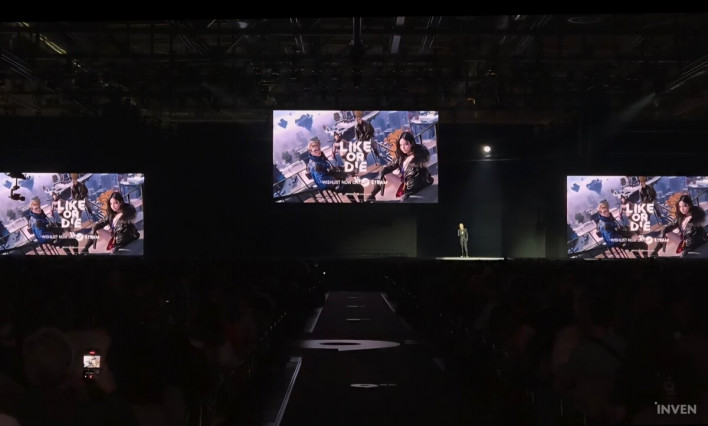
ONL is an English-speaking stage. Hosted by Geoff Keighley and broadcast live around the world, developers from various countries upload videos tailored to English voiceovers. For Korean game studios participating in global showcases, adding English dubbing was practically standard practice. Erasing the mark of being a Korean game to present themselves as a "global product" was a long-standing norm.
The background that made this choice possible exists outside of gaming as well. Resistance to subtitles among Western players has dropped noticeably over the past few years, and Japanese subculture games have embraced Japanese voice acting as their core identity rather than hiding it, attracting global players. Chinese developers followed the same path. Game Science introduced "Black Myth: Wukong" with Chinese voice trailers, and followed suit with "Black Myth: Zhong Kui." Cases proving that keeping the native language is not an obstacle to global expansion have already accumulated. Native voice acting has become a matter of texture, not a handicap.
Looking at the game's concept makes this choice even clearer. "Like or Die" is a team-based survival FPS where players become streamers on "Quaya Stream," a pan-cosmic platform, broadcasting their battles live. In a game framed around streaming, spoken intonation and rhythm are not background noise—they are part of the content itself. Instead of replacing that layer with English dubbing, the developers chose to overlay subtitles.
The lineup presented at Gamescom sends an even clearer signal. Companies usually showcase what they do best. For NCSOFT, that is the MMORPG genre. Yet both of its new titles were shooters, and at the Gamescom B2B hall that opened on the 26th, another key pillar put forward by the company was mobile casual games. It was a stage to show not what they are already good at, but what they intend to master.
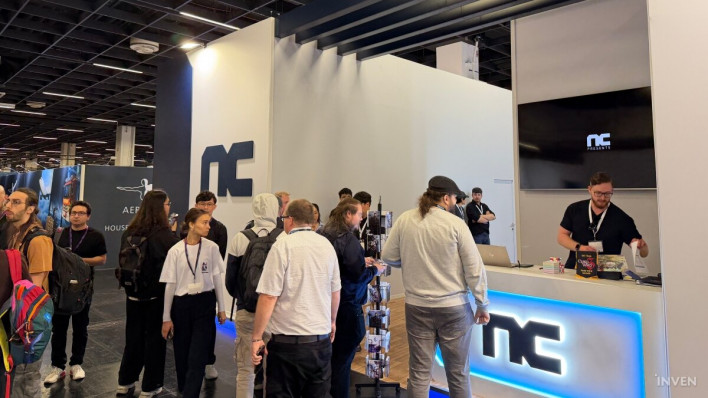
Shooters are already forming a distinct cluster. "Time Takers," a third-person shooter developed by Mistil Games and published by NCSOFT, is gearing up for a Steam global playtest on September 5. "Cinder City" is an open-world cinematic third-person shooter, while "Like or Die" is a team-based survival FPS. Even within the same overall genre, their perspectives, structures, and mechanics differ. The "shooter cluster" concept that Co-CEO Park Byung-moo outlined during an earnings call early last year has materialized into a tangible lineup.
Shooters and mobile casual games share one thing in common: neither is an area where NCSOFT was traditionally dominant domestically, but both represent major pillars globally. In designating mobile casual games as a new growth driver, NCSOFT cited that this sector accounts for over 30% of the global gaming market. This signifies a strategy aimed at targeting demand that cannot be reached using the playbook of the domestic market.
The mobile casual business moves fast. In August of last year, NCSOFT established the Mobile Casual Center and recruited Anel Ceman. It then acquired a 67% stake in Indygo Group—the parent company of Vietnam's Lihuhu—for 153.4 billion won, and in March of this year bought a 70% stake in German rewards platform JustPlay for $202 million. This structure secures organization, talent, and platforms sourced entirely from Europe and Southeast Asia.
Nor is the company relying solely on its traditional strengths without changes. "AION 2" will enter Early Access on September 30 before launching simultaneously across North America, South America, Europe, and Asia on October 5 via Steam and PURPLE. Unlike its domestic service, it drops mobile support to go PC-exclusive and will operate regional servers. In terms of business model, it eliminates paid loot boxes in favor of a structure focused on memberships and battle passes, directly addressing Western players' aversion to pay-to-win mechanics. This means NCSOFT is voluntarily shedding the battle-tested monetization formula of Korean MMORPGs.
The language chosen at ONL, the genres brought to the stage, the organization highlighted at B2B, and the business model trimmed from AION 2—what NCSOFT showed at this Gamescom may seem like separate matters, but they all point in the same direction. Rather than merely translating products made for the Korean market and exporting them, the company is restructuring itself with global as the default setting. NCSOFT is going global.

Sort by:
Comments :0