The Mega Man series, reaching its 40th anniversary next year, has endured a history full of twists and turns. The mainline series alone has been beloved as an iconic run-and-gun platformer since the Famicom days, alongside spin-off series and storylines like X, Zero, ZX, and Battle Network that captured fans' hearts. At the same time, it is a franchise that once left fans waiting years without a proper new entry.
Now, Mega Man returns with a long-awaited new mainline title. That game is Mega Man: Dual Override, slated for release in 2027 to mark the franchise's 40th anniversary. The game promises a transition to Capcom’s flagship RE Engine, brand-new mechanics incorporating custom chips and the titular Override system, and significantly upgraded presentation.
And indeed, the hands-on demo of Mega Man: Dual Override played during Gamescom 2026 media sessions showcased all of those promises. Going a step further, it also proved that the game fully retains the quintessential elements of classic Mega Man.
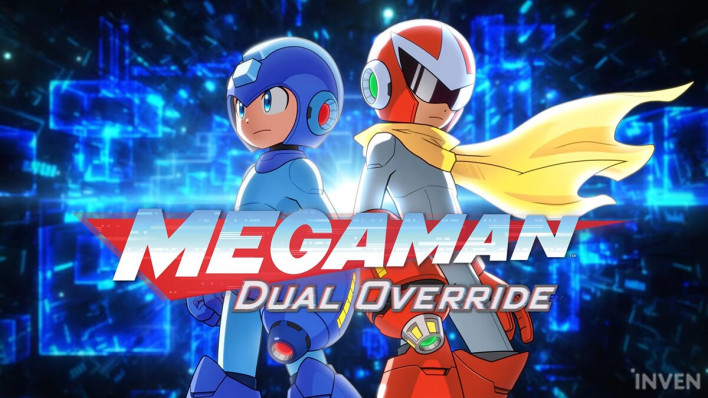
Game Title: Mega Man: Dual Override Developer: CAPCOM Co., Ltd. Main Tags: #Action #Platformer #SideScroller #Robots #SinglePlayer+ The 40th-anniversary title Mega Man: Dual Override is an RE Engine-based mainline run-and-gun platformer. By splitting stages into three areas, it offers compact level progression and allows for more boss encounters. Featuring a difficulty-adjusting Custom Chip system and a powerful high-risk Override mechanic, the game maintains its classic identity while delivering diverse build options and dramatically enhanced presentation.
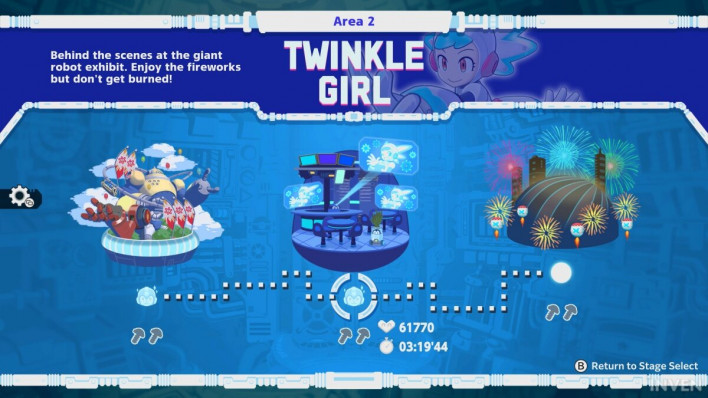
The fundamentals of Mega Man: Dual Override remain true to the mainline Mega Man formula. Players select from eight main bosses and tackle their respective stages. However, there is one major twist: stages are now split into three distinct areas.
An individual area within a stage isn't as large as a full standalone stage from previous entries, making it difficult to claim that the overall volume is simply "three times larger." Moreover, with only one stage playable in the demo and limited content unlocked, judging the full scope of the game from this demo alone remains tough.
What is clear, however, is that each individual area offers a relatively short yet compact progression experience. While all three areas share the overarching theme and mechanics of a stage, each segment introduces distinct gameplay gimmicks. In a sense, this reduces fatigue and prevents players from giving up midway through an overly long level, providing an accessible stepping stone for newcomers to adapt to Mega Man’s notoriously high difficulty.
Another system seemingly designed with new players in mind is the Custom Chip system.
In this demo, players could choose from three different chip loadouts before entering a stage. One offered a defensive support chip that creates a shield, another provided an offensive setup, and the last allowed players to play without support chips. The defensive support creates a shield capable of blocking incoming enemy projectiles. This was particularly effective against Twinkle Girl—the only boss featured in the demo—whose attacks primarily consisted of unleashing barrage-like fireworks.
However, the offensive support chip set proved even more effective. It automatically charges up without needing to hold down a button, allowing for a relentless barrage of powerful attacks. Activating the support ability with the RB (R1) button lets you unleash double attacks for a limited time. Charge shots are fired twice in a fully charged state, which easily dispatched standard stage enemies. Once the effect wears off, it enters a cooldown before it can be activated again. The surprisingly short cooldown encouraged an aggressive playstyle.
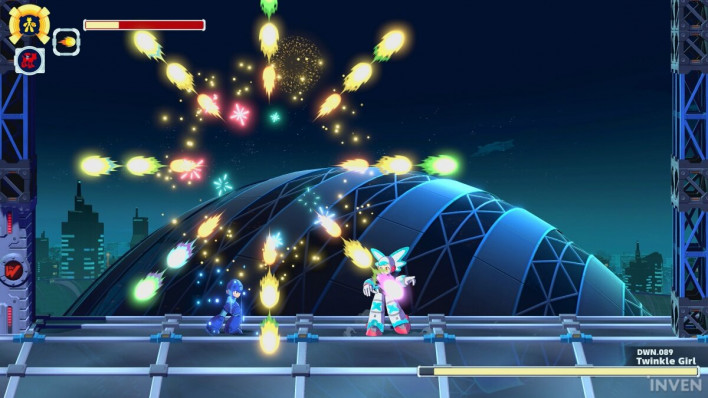
Selecting the loadout with no special chip abilities strips away defensive and offensive support, but summons Rush instead. Players can use the Rush Coil to launch high into the air, and its extremely short cooldown allows for frequent use. Twinkle Girl’s stage features many platforming hazards that rely on knockback hitstun to knock Mega Man into pits or force him down to lower areas, but the Rush Coil makes it relatively easy to bypass these tricky sections.
Of course, playing without offensive or defensive chips makes the game significantly harder. In fact, many members of the press failed to defeat Twinkle Girl during the demo. While her attack patterns are clearly telegraphed and manageable once memorized, failing to fully grasp the game mechanics and structure of Mega Man can easily send players into a loop of endless deaths.
In other words, the Custom Chip system functions as a self-imposed difficulty modifier, allowing players to make the game more manageable at their own pace.
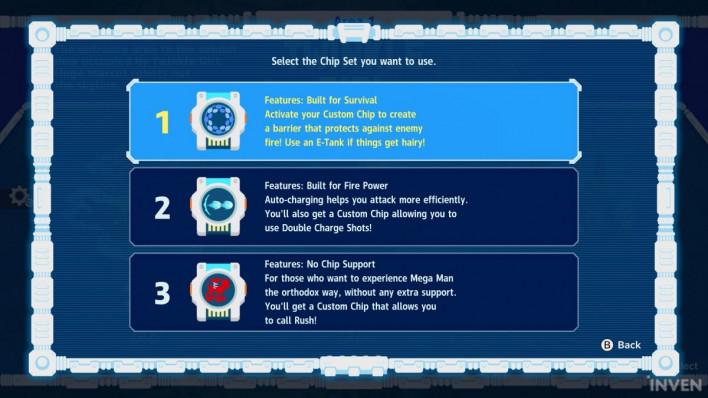
Although the demo only allowed for preset chip configurations, as shown in previous trailers, mixing and matching various custom chips in the full game will offer far more options for offense, defense, and survival.
Opposite the support chip activation button, pressing LB (L1) triggers the game's titular Override mode. Taking damage during gameplay builds up the gauge, and activating it empowers Mega Man. Opening internal mechanics across his body like a transforming mech, Override grants temporary burst damage capabilities, letting players unload rapid attacks to deal massive damage.
However, just because the gauge is full doesn't mean Override should be used recklessly. Once the Override state ends or the gauge depletes, Mega Man’s capabilities drop significantly. Charge attacks become unavailable, and his rate of fire slows down dramatically, making sustained damage difficult. It acts as a double-edged sword, balancing immense power with a noticeable drawback.
Furthermore, dividing stages into areas makes it much easier to incorporate more than the standard eight bosses. Case in point: Astro Man—referred to here as a copy—appeared as a mid-boss in the second area. Given Capcom's promises to bring back legacy bosses to celebrate the 40th anniversary, the multi-area system serves as the ideal framework for placing additional boss encounters throughout the game.
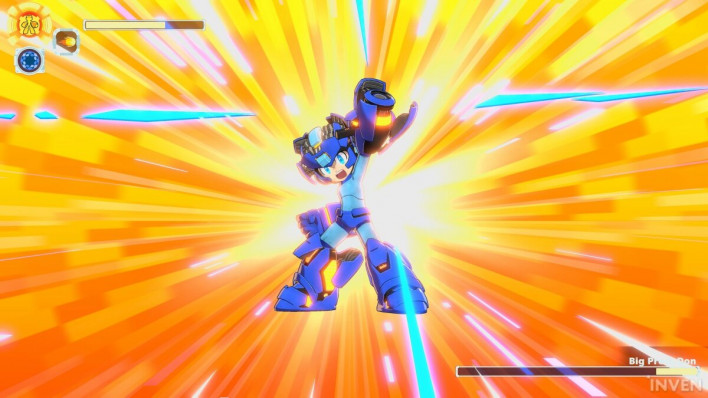
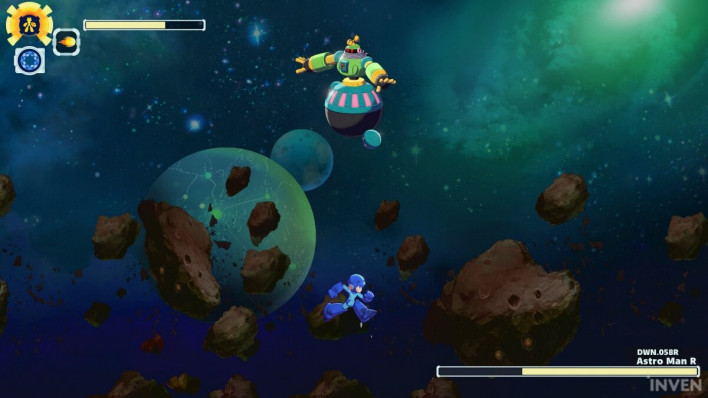
Additionally, visual effects show battle damage on enemies and allies alike as their health drops, enhancing immersion. Visual upgrades are evident throughout, notably in the seamless blending of 3D-modeled characters with detailed background environments.
Ultimately, this demo offered only a glimpse of Mega Man: Dual Override's core mechanics. Yet, even in this brief hands-on session, the gameplay proved satisfying. The potential for more stages, more returning bosses, and expanded scope is clear. If the Custom Chip system delivers deep customization to let players forge their own builds, it could eliminate the repetitive nature that sometimes constrained previous mainline Mega Man games.

Sort by:
Comments :0