I came to appreciate the real fun of the Total War series only after working as a gaming journalist for quite a while, but I had been a fan of 'Warhammer 40K' long before that. How could the marriage of the two not make my heart race? I always thought this game would show up eventually, but I never imagined it would take this long. I certainly didn't expect I'd be approaching 40 by the time I finally got my hands on it...
Anyway, I couldn't miss such a precious opportunity, and after jumping through a few hoops, I sat down in front of the PC. Playing 'Total War: Warhammer 40K' for the very first time... Heh, those Greenskins are dead meat.
The demo lasted an hour, and before diving into the hands-on preview, there is one thing that needs to be made clear: this demo build is an early alpha among alphas. While it's hard to say how long it will take, it looked like it would need at least a year or more before a proper release-ready build is ready. Naturally, the playable content was quite limited. The Space Marines were the only playable faction, along with a brief campaign segment where player freedom was restricted, and three battles including the tutorial.
This is literally a 'first impression.' Here is how 'Total War: Warhammer 40K' felt during my time with it.
Space Marines carry a lot of weapons
Although the demo build offered three modes—Tutorial, Campaign, and Battle Simulation—it's difficult to explain the differences between them. The build focused almost exclusively on 'combat,' with virtually no other elements available to explore, and the hostile faction was strictly set to 'Orks.'
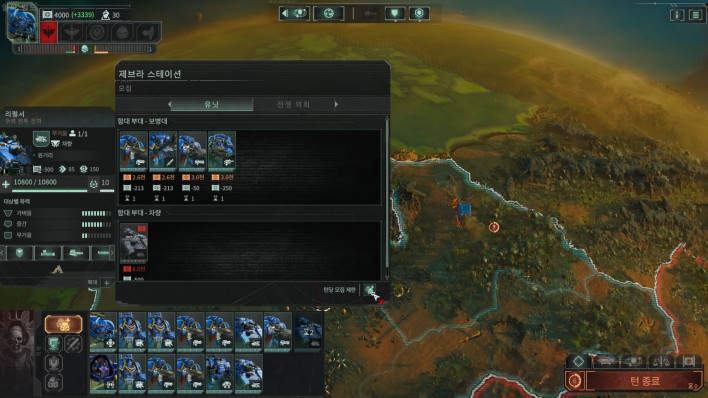
What immediately catches the eye in combat is the diversification of 'weaponry.' In the previous Total War: Warhammer games, there was a clear rock-paper-scissors dynamic: 'Great Weapons' provided armor-piercing damage effective against heavily armored units, 'Dual Weapons' targeted low-tier infantry with weak armor but high unit counts and health, and 'Anti-Large Weapons' were meant for dealing with cavalry or larger monsters.
This meant that building an army roster—which allows up to 19 unit cards excluding the Lord—required a good balance. In campaign mode, you could stack your roster with overpowered units that ignore hard counters, but that wasn't the standard approach. You needed ranged units or artillery to clear enemy meatshields, armor-openers to deal with elite infantry, and a few cards of spearmen to counter cavalry or monsters. Having cavalry to break enemy battle lines was also ideal.
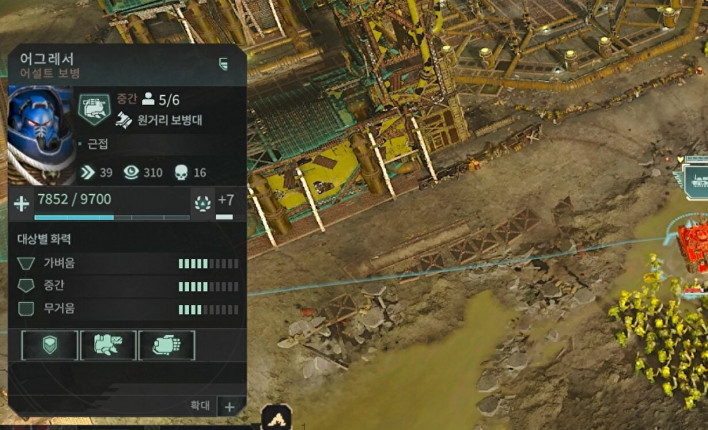
However, the Space Marines do it all. A single squad can engage at range, pierce heavy armor, excel at anti-infantry melee, and smash large targets. Matchup counters are practically nonexistent. This is because a single unit carries such a wide variety of weaponry that it almost feels absurd.
Granted, specialized unit types like Aggressors—designed to soak up frontline damage and crush melee attackers—don't carry endless assortments of weapons. But versatile, jack-of-all-trades units like Intercessors carry everything from multiple grenade launchers, Bolt Rifles, and Bolt Pistols to Chainswords and Combat Knives, covering both ranged and melee combat. This means most unit types perform above average in virtually any situation.
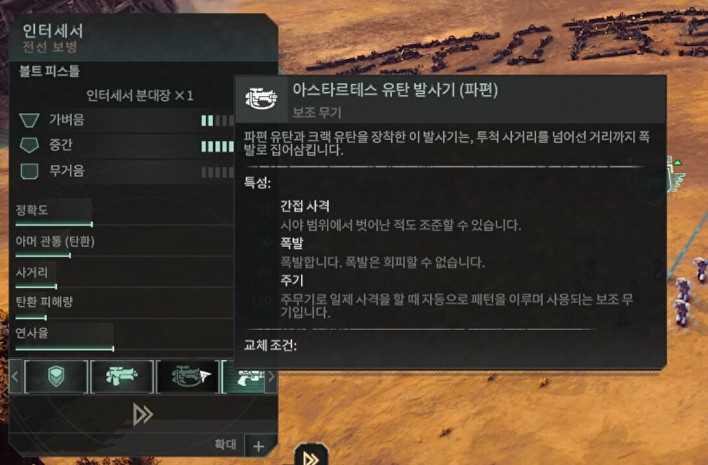
Space Marines are terrifyingly good at fighting
What subtly reveals itself here is the 'asymmetry' of Total War: Warhammer 40K.
The previous Total War: Warhammer games also featured a degree of faction asymmetry based on design concepts. Relatively balanced factions like The Empire, Kislev, and Cathay can field a well-rounded mix of melee and ranged units. In contrast, the Vampire Counts lack ranged units (aside from Sylvanian Crossbowmen) and artillery entirely, while the Ogre Kingdoms can fill their main lines with giant monsters beyond the very early game. Instead of a symmetric match like chess, it feels more like chess pieces playing against Xiangqi pieces on the same board.
Looking back at 'weapon diversity,' the Orks—the hostile faction in the demo—aren't that different on paper. Even their basic infantry, Slugga Boyz, come equipped with both Slugga pistols and Choppas. However, Shoota Boyz primarily rely on their Shootas, and while Slugga Boyz can fire at range, their core focus remains melee.
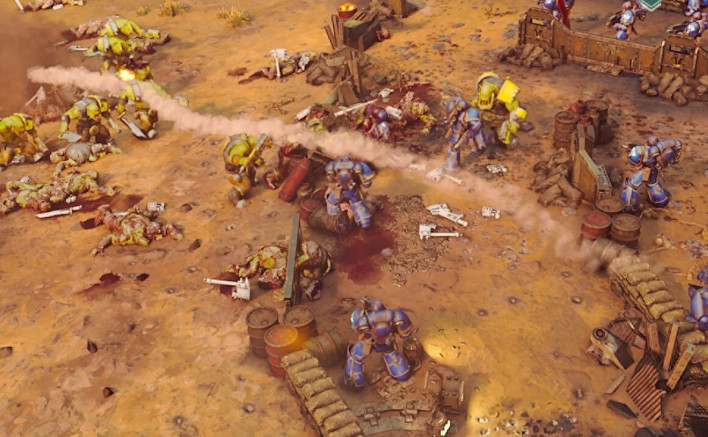
Space Marines have no such trade-offs. Whether ranged or melee, once they engage, they demolish everything. The reputation of being the universe's ultimate warriors, living for centuries or millennia, isn't just lore flavor. Even standard Intercessor squads can handle two cards of Ork infantry with ease, and grouping three or four cards together creates an entire battle line on its own.
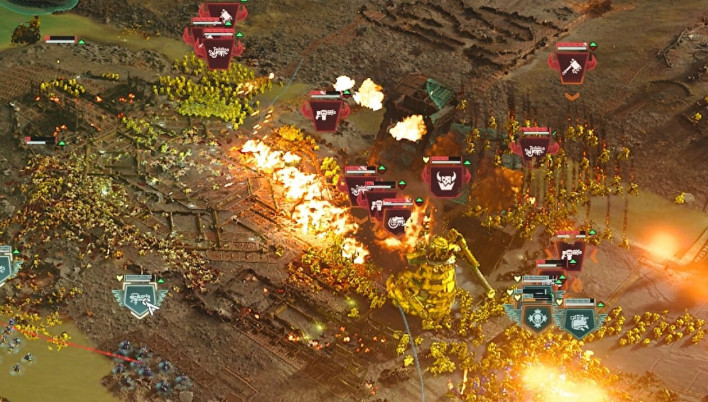
One key detail to note is that the Space Marines as a faction field very few numbers. In the demo build's parameters, a Captain or Librarian squad consists of just 5 models, including retainers. Aggressors and Terminators consist of only 6 models, while standard Intercessors and Hellblasters have just 10 models, including the squad leader. Smaller squad sizes mean fewer attacks overall, which theoretically reduces overall damage output, but they are so ridiculously strong that this never feels like a drawback.
On top of that, Space Marines do not route. As if every unit possesses the Unbreakable trait, their morale never breaks. They may perform a strategic retreat to reposition, but they will never commit the disgrace of fleeing in panic during a losing battle.
As a result, battles between Space Marines and Orks resemble throws of eggs against a stone wall, as waves of Orks hurl themselves against an elite iron barrier. Orks do have high-tier units like Stompas or Meganobz, so if a Space Marine squad mispositions against them, they will take casualties—and accumulating damage can wipe out a squad. But before reaching that point, hundreds of Orks are usually slaughtered. Looking at the post-battle kill ratios, the asymmetry feels almost absurd.
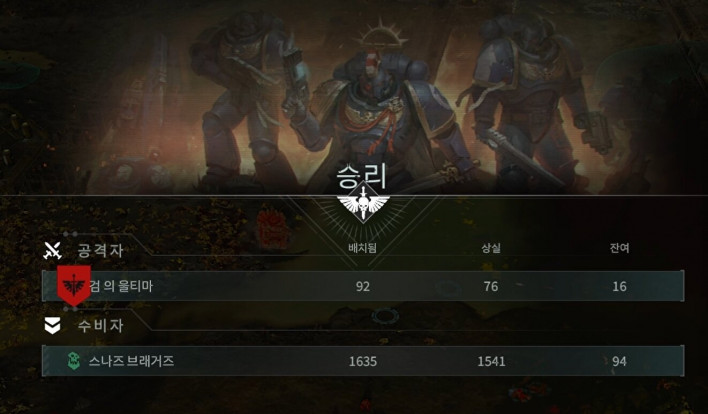
Space Marines know how to adapt
Another notable element is the utilization of 'terrain.' In previous Total War: Warhammer titles, terrain played a significant role on the battlefield—shallow water slowed unit movement, and forests blocked line of sight. How you leveraged these elements often decided victory, and Elf units stacked with terrain bonuses like 'Forest Strider' were absolute nightmares in dense woods.
In Total War: Warhammer 40K, terrain is equally vital. Cover left behind by (likely) fallen Astra Militarum troopers becomes critical strongpoints, and in a 40K setting where most units possess ranged attacks, elevation differences produce a far bigger impact than in past titles. Space Marines are indeed the galaxy's ultimate warriors, but they aren't brainless berserkers who will charge blindly into unfavorable environments.
Space Marines also possess their own unique 'game-changers': Orbital Bombardments rained down from orbit, and 'Deep Strike', which drops reserve forces directly onto the battlefield.
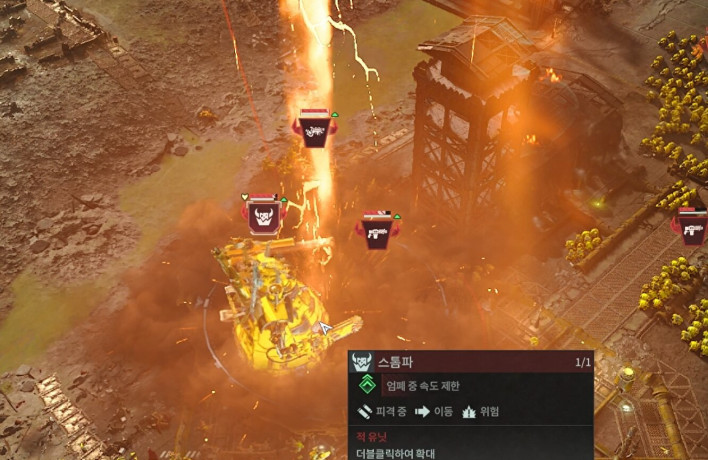
Orbital Bombardment isn't fundamentally different from artillery support in past titles and feels somewhat similar to casting magic. However, since 'Magic' is categorized separately, it feels closer to a Black Ark Bombardment. Given the massive numbers of the Orks, a well-placed strike can wipe out hundreds of models in a single blast—though, of course, just as many will keep coming.
'Deep Strike' is an even more powerful ability, dropping pre-assigned reserve units via Drop Pods directly into a target area. The Drop Pods themselves inflict area-of-effect damage on landing, functioning as a strike of their own, and more importantly, the troops emerging from them are Space Marines, each worth a hundred ordinary soldiers. You can only drop four cards at a time, but four cards of Space Marines are enough to shatter almost any enemy formation.
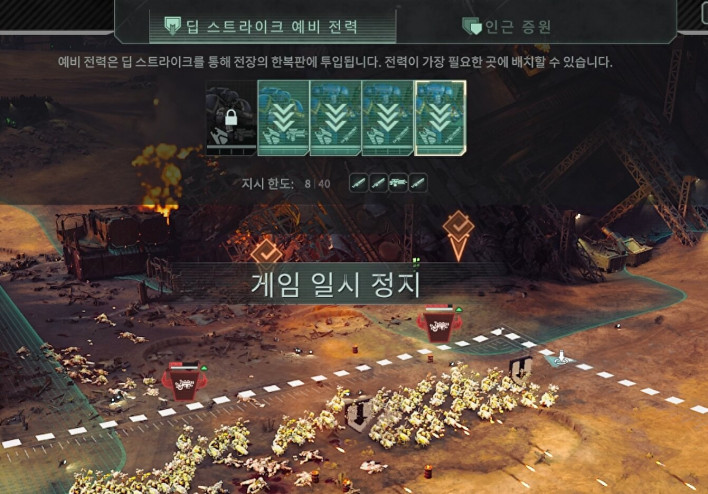
Combat is fun, but what about the campaign?
For now, that was all the demo had to offer. There was simply nothing more to see. I was able to customize Space Marine paint schemes and assign names, and I saw that battles take place in orbit as well as on planetary surfaces, but even those orbital battles resolved automatically without giving me hands-on control.
Because of this, it feels too early to make a definitive judgment on whether to be hyped for the game or not. As a fan of both the Total War series and both Warhammer Fantasy and Warhammer 40K, my fandom shouldn't blind me into hyping up a game prematurely. To be precise, it's not that the game won't turn out well, but rather that it's still an unknown quantity.
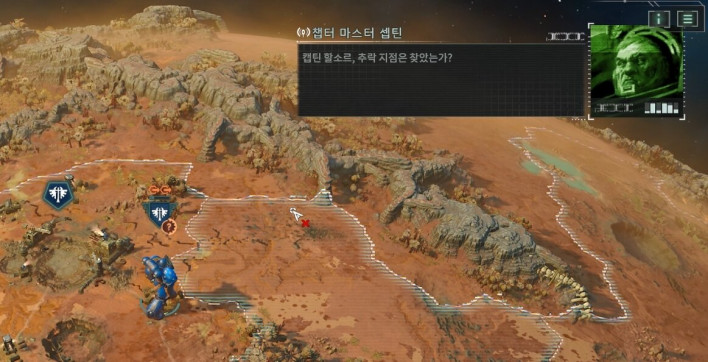
In the follow-up interview, I heard about thrilling features—battles spanning multiple planetary sectors, introductions to the Aeldari and Astra Militarum, a unique domain management system, and the ability to create custom Chapters—but as everyone knows, anything can sound great on paper. The truth will only become clear once the game launches.
Still, as far as 'Space Marines vs. Orks combat'—the sole element available in this demo build—the gameplay experience was deeply satisfying. If the rest of the game can match this level of quality, Total War: Warhammer 40K should, at the very least, live up to expectations.

Sort by:
Comments :0