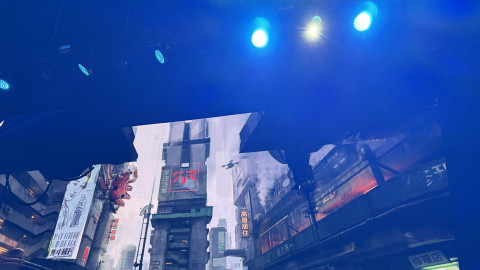
Insomniac Games, which has established itself as one of PlayStation's flagship developers through the Marvel's Spider-Man series, has returned with a new Marvel hero: 'Marvel's Wolverine.'
First revealed during State of Play in September 2025, 'Marvel's Wolverine' immediately captured the attention of gamers worldwide. Part of the hype stemmed from it being a new title from Insomniac Games, the trusted developer behind Marvel's Spider-Man, but it quickly became a highly anticipated game by showcasing Wolverine's intense action and presentation, literally tearing enemies apart. Since then, anticipation has grown with every new detail released.
After a long development cycle, 'Marvel's Wolverine' is set for official release on September 15. Can 'Marvel's Wolverine' live up to the legacy of 'Marvel's Spider-Man'? I had the opportunity to play 'Marvel's Wolverine' for about 2 hours at a recent preview event. Although I only experienced a small fraction of the game in that limited time, one thing was clear: it faithfully delivers the violent, blood-soaked Wolverine gamers have been waiting for.

Before the X-Men, There Was Team X
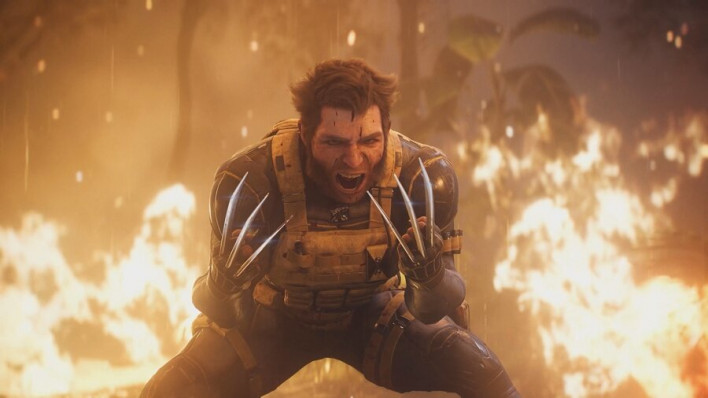
One unique detail regarding the character and story is Wolverine's (Logan's) background. Wolverine is typically recognized as an iconic X-Men member, usually appearing as an active or former member in most media. However, 'Marvel's Wolverine' tells a somewhat different story. It focuses on Wolverine during his time with Team X, prior to the formation of the X-Men.
That said, 'Marvel's Wolverine' is not an origin story. Much like Spider-Man in Insomniac's previous title, Wolverine is portrayed as a seasoned mutant who has survived dozens, if not hundreds, of life-or-death situations. While he occasionally clashes with teammates and shows weariness from interpersonal relationships, these are merely Logan's personal struggles. As Wolverine, he serves as a key asset and dedicated member of Team X, striving to protect mutants around the world.
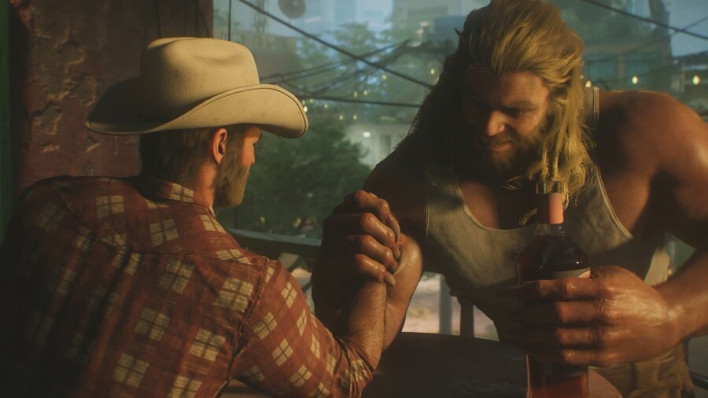
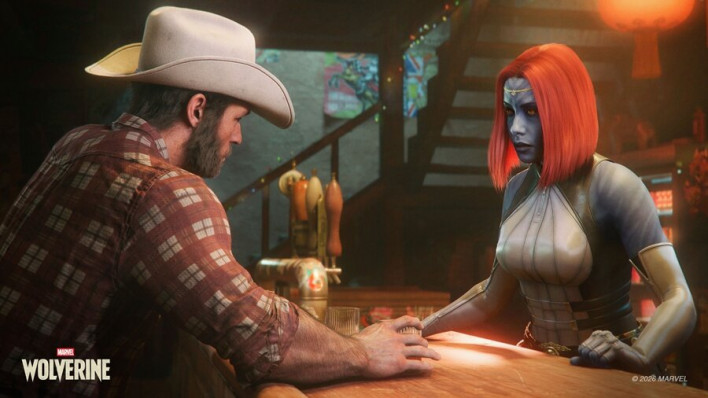
Since this is not the X-Men, his team roster is also different. Sabretooth and Mystique, who usually appear as villainous adversaries to Wolverine and the X-Men in most adaptations, serve as dependable allies in 'Marvel's Wolverine.' Sabretooth and Wolverine butt heads whenever they meet, yet share a genuine sense of camaraderie, while Mystique shares personal concerns with Logan, showing a bond deeper than simple teammates.
This storyline will likely feel fresh to players familiar with the Marvel Cinematic Universe. In Korea, where original Marvel comic storylines remain unfamiliar to many, most fans view Marvel through the lens of the MCU. From that perspective, seeing Sabretooth and Mystique—traditionally portrayed as enemies of the X-Men—acting as allies proved intriguing in many ways.
Naturally, it should be noted that these story details and character dynamics are based strictly on the preview build. The preview ran for approximately 2 hours, with the first hour covering the opening section of the game and the second hour jumping ahead to a later segment. Therefore, it was impossible to tell how these relationships might shift as the full narrative unfolds. Nevertheless, it was more than enough to spark curiosity about how their dynamic will evolve.
The Bloody Catharsis of Feral Action

Personally, I consider the DualSense controller to be the greatest strength of the PS5. For PS5 exclusives, the tactile haptics offered by the DualSense are hard to match on other platforms or controllers. Haptic feedback delivers a wide range of vibrations—sometimes heavy, sometimes snappy—while adaptive triggers dynamically adjust resistance to heighten immersion. In 'Marvel's Wolverine,' where combat frequently unleashes a storm of feral action like a wild beast, the tactile feedback of the DualSense shines all the brighter.
Although both are developed by Insomniac Games and set within the Marvel universe, 'Marvel's Wolverine' delivers a vastly different gameplay feel compared to Insomniac's previous work on 'Marvel's Spider-Man.'
Granted, the two titles share common ground. Both games utilize a freeflow combat system where players execute attacks, parries (counterattacks), and dodges through rhythmic button inputs, seamlessly flowing toward nearby enemies when attacking. Apart from sharing that freeflow foundation, however, their combat systems are quite distinct.

For starters, the attack range is much narrower. While Spider-Man can fight an enemy in front of him and effortlessly zip to foes several meters away, Wolverine's reach is limited to targets within 1 to 2 meters. This stems from character design as much as combat mechanics. Spider-Man freely navigates large spaces with acrobatic movement and web-swinging, whereas Wolverine relies on raw power, making that same mobility unfeasible.
That doesn't mean you have to slowly walk up to distant enemies, though. Where Spider-Man has web-swinging, Wolverine has a trump card in his leap attack. The leap attack allows Wolverine to instantly close the gap on targets. Once up close, it's time to shred enemies to pieces with his claws.


Of course, some enemies will block claw strikes. In those cases, you must break their guard using kicks. Ultimately, the core combat loop involves weaving light attacks, combos, finishers, and kicks to handle foes up close, while closing distance on far-off targets using leap attacks.
Among these mechanics, kicks serve as a core element in 'Marvel's Wolverine.' Beyond breaking enemy guards as mentioned earlier, kicks can knock foes off ledges or launch them into environmental debris. Players can also leverage surrounding geometry to slam enemies into walls and stun them, triggering execution moves that violently slice foes apart to finish them off.
Defensive options primarily come in two forms: standard blocking and dodging. However, even with blocking available, 'Marvel's Wolverine' doesn't encourage passive defense. Instead, combat revolves around parrying, which triggers when you time your block right as an enemy attacks.

Calling it a parry might sound daunting, but it isn't overly demanding. While the timing is tighter than in the Marvel's Spider-Man series, that is only relative to Insomniac's previous title. Compared to standard action games with parry mechanics, it feels approachable enough to pull off reliably even in chaotic melees. Parrying not only repels enemy strikes but also breaks guard much like kicks do, actively encouraging players to incorporate it into their flow.

However, not all attacks can be parried. Unparryable strikes, such as heavy attacks and incoming gunfire, glow red and must be avoided via dodging. Through the interplay of these various combat mechanics, 'Marvel's Wolverine' delivers a visceral, blood-drenched combat experience.
A variety of skills adds extra depth to combat. Skills do not cost dedicated resources to cast, operating purely on individual cooldowns. The roster includes area-of-effect attacks, single-target moves suited for bosses, and self-buffs. Combining these skills with basic mechanics enables even more stylish encounters.

Wolverine's unique resource and signature feature is his Rage Gauge. True to its name, the Rage Gauge fills as you attack enemies and slowly drains when you stop fighting. Consequently, building and maintaining Rage requires relentless aggression.
The Rage Gauge consists of up to 3 bars, granting distinct buffs depending on the level reached. Stage 1 grants no direct buff, but as long as at least 1 bar of Rage remains, losing all health triggers a 'Last Stand' state. Put simply, it grants a second chance at life—cleverly translating Wolverine's near-immortal healing factor into a core gameplay mechanic.
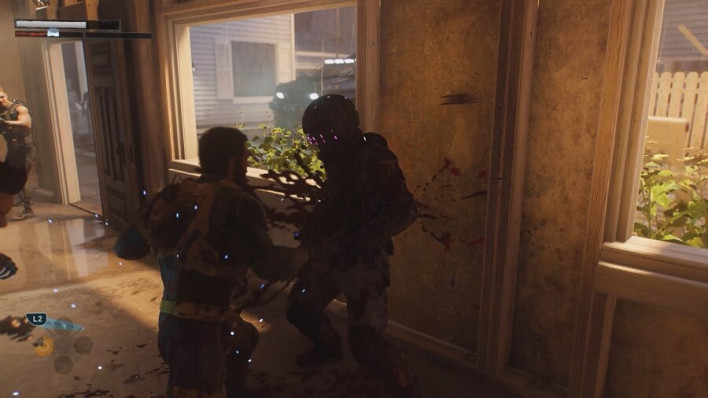
Stage 2 is equally straightforward, increasing attack power. While this might sound modest, the Rage Gauge shows its true worth at Stage 3. Upon reaching Stage 3, Wolverine enters a full-fledged Rage Mode, unleashing complete carnage on hostiles.
The environment desaturates to ash gray while enemies glow blood-red, and Wolverine's attack power skyrockets. Furthermore, weaker foes can be instantly finished off with execution moves by pressing L2+R2. Health becomes a non-issue in this state. Instead of worrying about parrying or dodging enemy strikes, players can dive straight into the horde and savor pure slaughter. It is no exaggeration to say this is the pinnacle of action catharsis that 'Marvel's Wolverine' aims to achieve.

Overall, the combat system in 'Marvel's Wolverine' feels authentically Wolverine. The bloody, feral action provides extreme satisfaction, while thoughtful design touches—such as using kicks to break defense or leap attacks to quickly close distance—prevent mindless button-mashing. It feels well-balanced between flashy action and maintaining a healthy level of challenge.
However, combat could potentially feel somewhat repetitive. Granted, this was a brief 2-hour preview where Wolverine's abilities were far from fully unlocked. Even so, considering how 'Marvel's Spider-Man' created endless battle variations—leaping between foes, diving under bridges, binding enemies with web-shooters, or throwing and pulling targets—Wolverine's broad loop of charging into the fray and shredding enemies might feel slightly monotonous over time.
Only the Tip of the Iceberg, Yet Thoroughly Satisfying
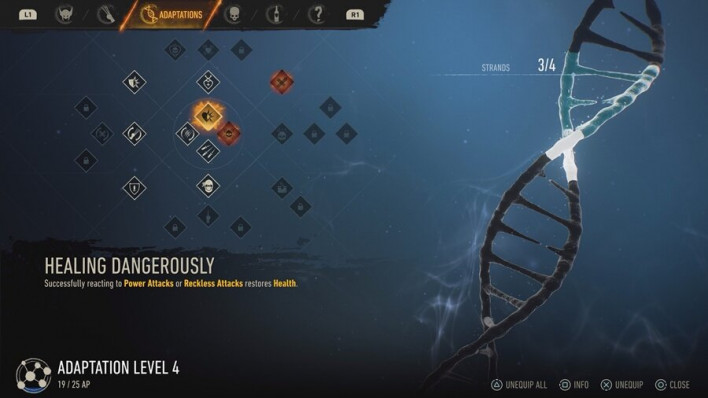
What was shown in this preview was merely the tip of the iceberg. Beyond story developments, plenty of combat skills remained locked. The slight monotony mentioned earlier could easily give way to far greater combat variety once new skills are unlocked.
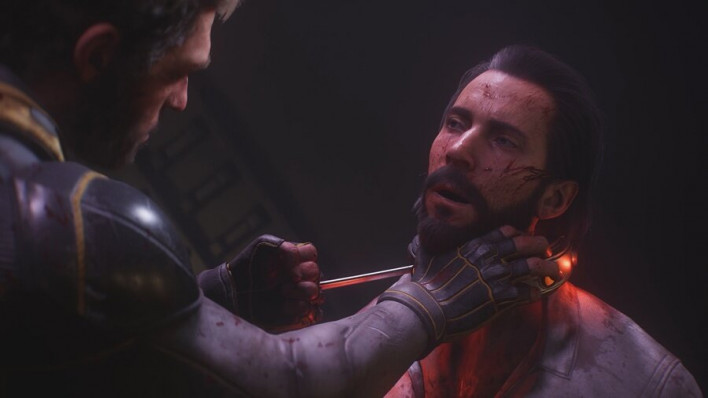
Even so, the preview succeeded in raising expectations for 'Marvel's Wolverine.' From setting the narrative prior to the formation of the X-Men to featuring compelling characters like Mystique, Sabretooth, Jean Grey, and Nathaniel Essex—who acts as something of a mentor figure to Wolverine during his Team X days—the narrative potential was palpable. While the hands-on session barely scratched the surface, the brief experience was more than enough to hook players.

High marks are also due for how effectively the game builds curiosity about where the story is headed. Sabretooth snarls at Wolverine at every turn; Mystique acknowledges that despite their friction, the team needs Wolverine; and Wolverine himself exhibits brutal savagery on the battlefield while remaining cynical in quiet moments. Anticipation is already high for where their narrative will lead.
Based on this preview, 'Marvel's Wolverine' shapes up to be a well-rounded title. From visuals and cinematic flair to raw action, Insomniac Games has skillfully blended everything synonymous with Wolverine into a tactile experience. The remaining question is whether it can sustain this compelling momentum beyond the 2 hours experienced in the preview.
What is certain is that, in this preview at least, the game delivered precisely the Wolverine experience players hoped for. On September 15, we will see if Insomniac Games can capture lightning in a bottle once again following the Marvel's Spider-Man series.