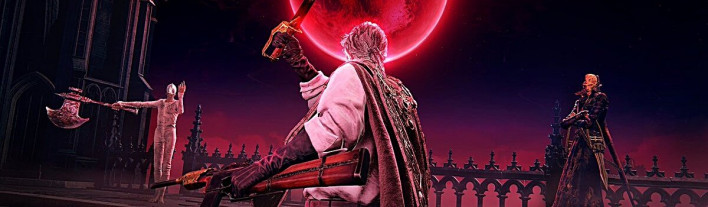
First revealed during Nintendo Direct on April 2, 2025, FromSoftware's new title 'The Duskbloods' caught the attention of many gamers at the time. While part of the buzz was due to it being a new project from FromSoftware, which had reached the absolute peak of its popularity with Elden Ring, what truly captured players' interest was the unique concept 'The Duskbloods' showcased. From its gothic architecture setting to blood and the lore of the Bloodsworn, the revealed information alone was enough to evoke FromSoftware's flagship title, Bloodborne.
Although subsequent details revealed that 'The Duskbloods' was a completely separate game unrelated to Bloodborne, interest in the game remained high. Those who showed particular enthusiasm were players enjoying Elden Ring: Nightreign (hereafter Nightreign). While Nightreign offered its own fun as FromSoftware's first Soulslike-based multiplayer game, it left a slight sense of regret due to the absence of PvP. In contrast, with 'The Duskbloods' placing PvPvE at the forefront, expectations grew that it would deliver a different kind of thrill from Nightreign.
Despite these expectations, information about the game had been kept strictly under wraps. Specific details remained unknown—such as what characteristics each Bloodsworn possesses, how they fight, or what players compete for within the PvPvE structure. Consequently, the closed network test starting on August 21 is drawing even greater attention as the very first opportunity to experience firsthand what kind of game 'The Duskbloods' is.
While waiting for the game, a welcome invitation arrived from FromSoftware. An opportunity was arranged to visit FromSoftware's headquarters in Tokyo, Japan, to play the game ahead of the network test and speak with the development team.
Even for FromSoftware, which has steadily expanded its reach and achieved continuous success starting from Demon's Souls through to the recent Elden Ring: Nightreign, 'The Duskbloods' is a challenging game in many respects. It is no exaggeration to say that it consolidates all the know-how FromSoftware has accumulated over the years. So, what kind of game is 'The Duskbloods'? The title that had been veiled for so long has finally lifted its curtain.
Playable Characters with Diverse Appeal: The Bloodsworn
The presentation before the hands-on session was led by Producer Yasuhiro Kitao. He first introduced Lowanro City, which serves as the stage for this hands-on test and the upcoming network test. Overseen by a massive clock tower, the city features various districts with entirely different environments and characteristics, ranging from sewers at the lowest level of the city center to a cathedral, the clock tower, and a lake on the outskirts.
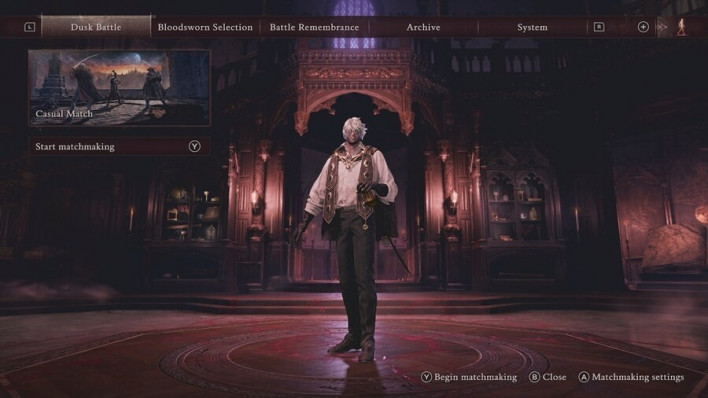
The players' lobby is called the House of Night. In the House of Night, players can practice with playable characters called Bloodsworn or customize their appearance. However, in this preview, most features—including appearance customization—were locked, allowing players only to swap characters and practice skills.
The Bloodsworn are beings who have gained powers transcending humans through special blood—so-called vampires. However, they are far from the traditional horrifying impression of vampires. If anything, they are closer to the concept of superhumans powered by blood. Their movements, accordingly, are quite distinct from those of ordinary humans.


The biggest feature is the diverse jump actions. Even basic jumps easily clear several meters, while a high jump performed by charging power leaps 2 to 3 times higher than a normal jump. Furthermore, jumping is not limited to a single leap; players can jump up to 3 times consecutively, making it possible to navigate from the sewers to the top of the clock tower with virtually no hindrance if they so choose. In addition, players can execute dash dodges while airborne, demonstrating movement impossible for ordinary humans. On top of that, there is no fall damage, allowing players to roam freely without worrying about landing incorrectly.
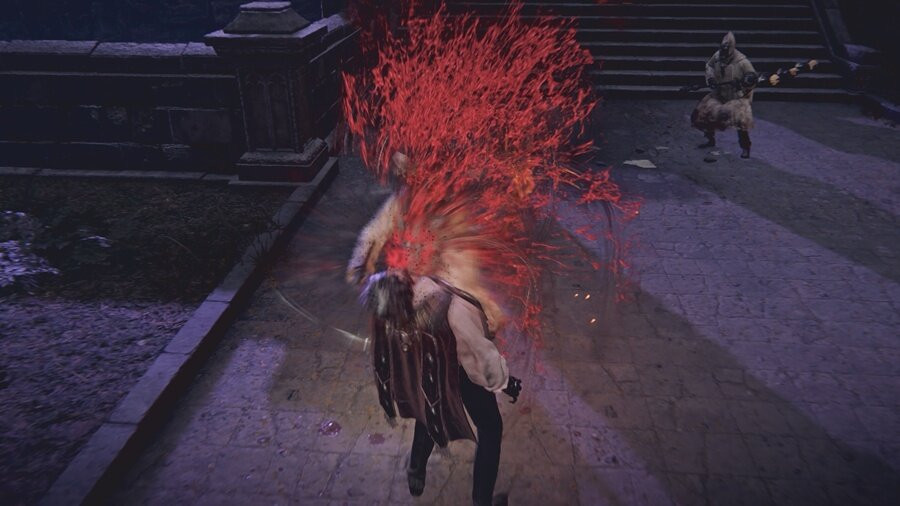
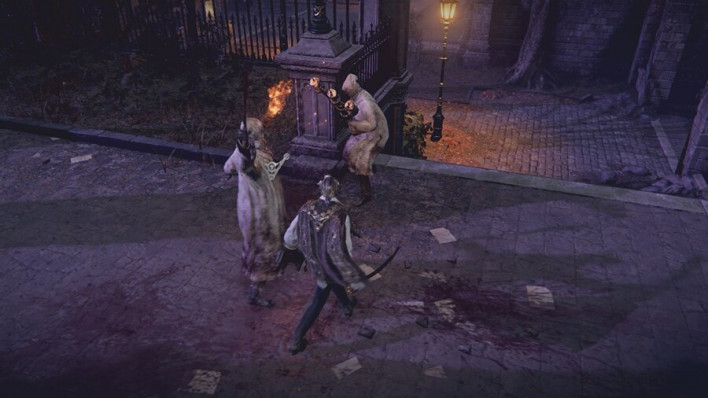
Another key feature is bloodsucking, the iconic hallmark of a vampire. Attacking enemies fills their incapacitation gauge to maximum, causing their stance to break and entering a groggy state; attacking them at this moment triggers bloodsucking. This deals heavy damage while recovering health, and in the case of regular mobs, bloodsucking can turn them into minions.
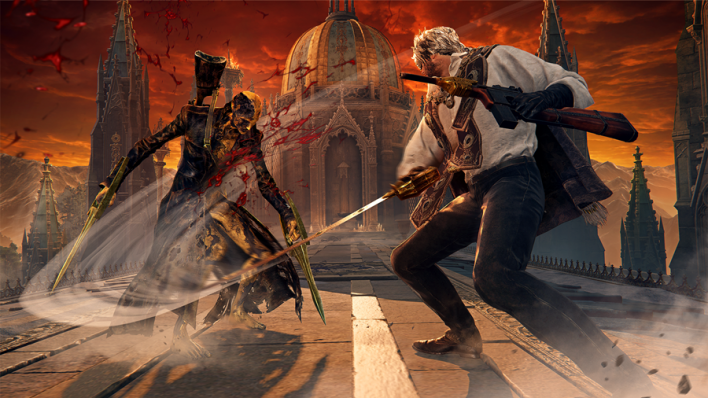
Each Bloodsworn features a distinct appearance, Bloodsworn Skill, weapon, and combat style. Albert is an all-rounder character with no notable flaws, spanning melee attacks, ranged attacks, and Bloodsworn Skills. He uses a sword up close and a submachine gun at range to attack enemies.
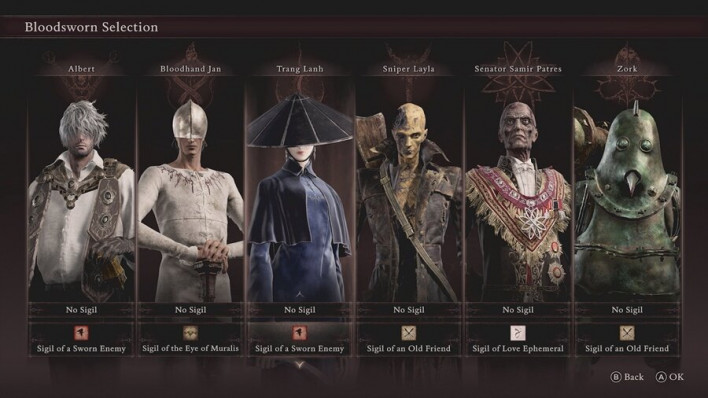
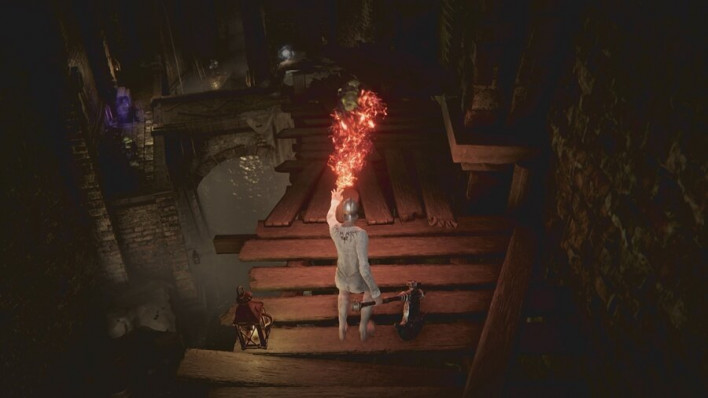
Jan is a character specialized in melee attacks. He wields a large axe and uses a magic stone embedded in his hand to shoot flames at range. While his attack speed is somewhat slow, his heavy attack slightly restores health, and despite his short attack range, he can inflict the Burn status effect up close using a flamethrower ability. Beyond him, various other Bloodsworn exist, including characters specialized in ranged attacks or those focused on expanding their minion count through bloodsucking.
Bloodsworn Skills are character-exclusive abilities. Each Bloodsworn possesses different skills that do not consume secondary resources like mana. Leveling up unlocks a second skill, and skills vary in how many consecutive uses they allow. The biggest feature is that resource management is unnecessary—skills can be reused as soon as their cooldown expires. Cooldowns recharge quickly enough to use every few seconds, making effective skill usage alongside melee and ranged attacks a key factor in deciding victory.

Meanwhile, Producer Kitao added while introducing the Bloodsworn, "A total of 6 Bloodsworn will be playable in the network test, and more than 10 Bloodsworn are planned to appear in the official launch version."
8-Player Battle Royale: Battle of Twilight
The primary mode in 'The Duskbloods' is Battle of Twilight, where 8 players compete against each other before the final 3 face off in an arena to determine the ultimate victor. At first glance, it might bring a battle royale to mind, but its detailed mechanics are quite different.
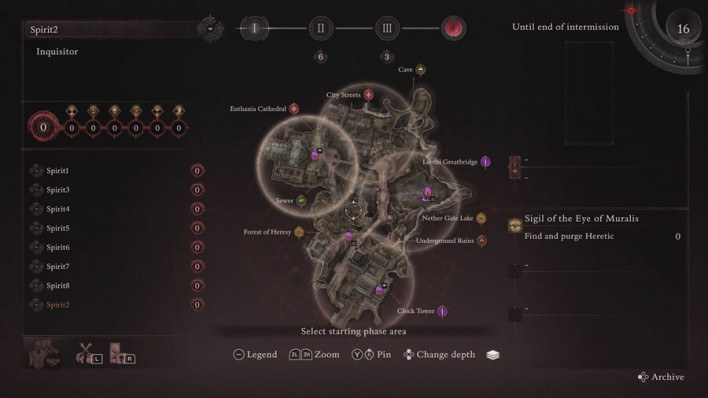
The most prominent feature is the Phase system. In typical battle royale or multiplayer games, a match consists of a single continuous session from start to finish. However, 'The Duskbloods' operates differently. A single session is divided into 4 phases, each with its own time limit. Once time expires, elements like the map reset, and the match transitions to the next phase.
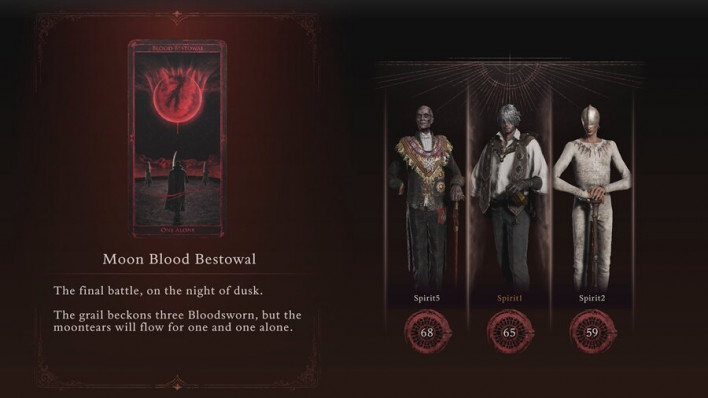
While 8 players compete through Phase 1 and Phase 2, entering Phase 3 eliminates the bottom 2 players, narrowing the field to 6. In the final phase, the top 3 surviving players move to a dedicated arena to determine the ultimate victor.
In conventional battle royales, player deaths naturally reduce the count until the last survivor remains, but 'The Duskbloods' differs. Aside from eliminations between phase transitions, players can respawn infinitely without limit or penalties like losing looted items.
Player rankings are therefore tracked not by survival, but through a point system called 'Virtue.' Players accumulate Virtue through various in-game activities.
The most straightforward type is Virtue of Subjugation, earned by defeating elite foes (mini-bosses) or Invaders (main bosses). However, while straightforward, it is by no means easy. In the early game, defeating them takes considerable time and risks death, which can ultimately end up wasting time.
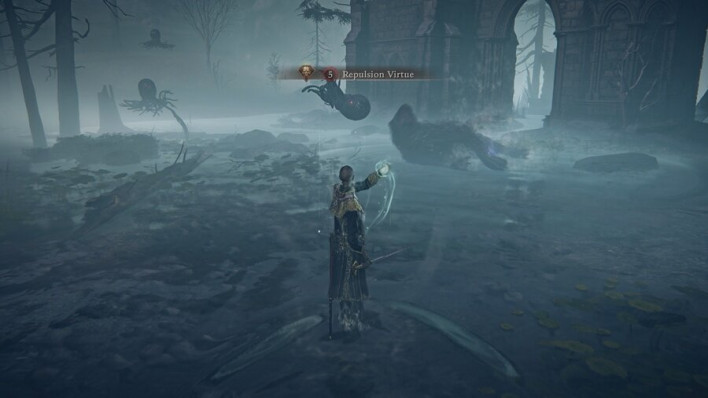
If facing elite foes or Invaders feels too burdensome early on, another option is killing regular mobs to earn Virtue of Praise. There are two ways to earn Virtue of Praise: by slaying large numbers of enemies regardless of type, or by collecting many items. In both cases, Virtue of Praise is awarded to the top 2 performers.
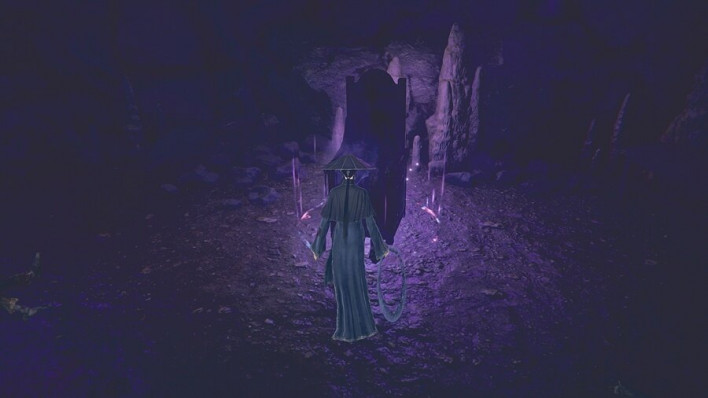
Virtue can also be earned without entering combat. Virtue of Lanterns is obtained by interacting with remains (interactable objects) scattered across the map. However, since it requires traveling all over the field, raising Virtue solely through this method is difficult. It works better as a supplementary tactic—interacting with known remain locations while simultaneously defeating regular mobs or elite foes.
An interesting detail is that defeating other players does not yield Virtue by default. This does not mean PvP is pointless, however. Defeating an opponent forces a respawn delay, which directly benefits you by hindering their ability to score.
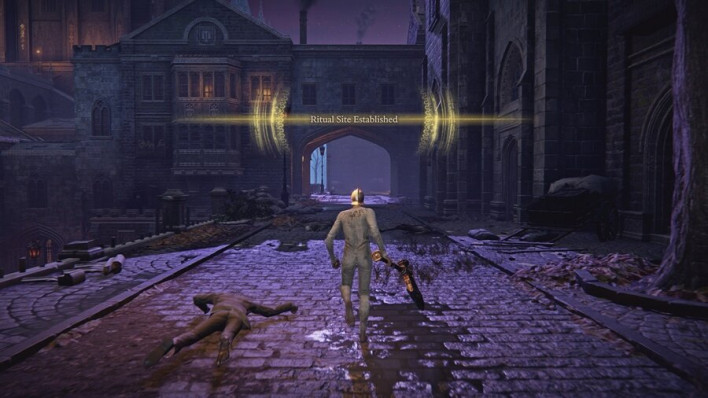
Ritual Grounds serve as an element that draws players—who are otherwise freely roaming and gathering Virtue—into a single location. Spawning from Phase 2 onward, a specific area is designated as the Ritual Ground, offering opportunities to earn significantly more Virtue than usual.
Two types of Virtue can be gathered within Ritual Grounds. One is Virtue of the Blade. While defeating other players normally provides no Virtue, the rule changes inside Ritual Grounds—here, killing opponents increases your Virtue.
For those hesitant to engage in PvP, aiming for Virtue of Covenant is an alternative. It is obtained by making a covenant at Covenant Pillars that appear inside Ritual Grounds. While it offers a more comfortable and reliable way to gain Virtue than Virtue of the Blade, it carries the risk of requiring uninterrupted interaction for several seconds.
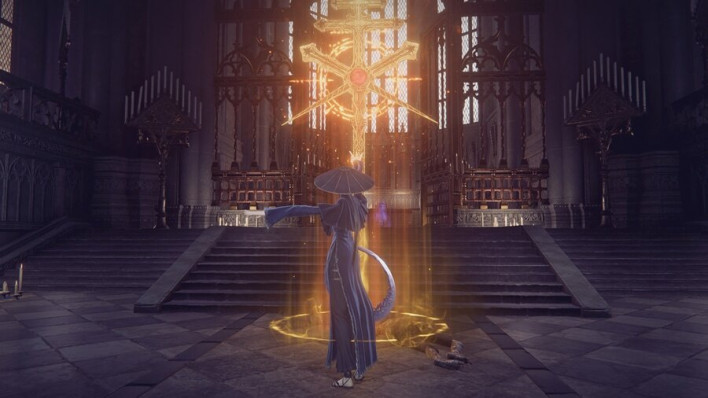
Elements that intensify competition inside Ritual Grounds include Red Stones and Gold Stones. Interacting with them increases the amount of Virtue earned: Red Stones boost Virtue of the Blade, while Gold Stones boost Virtue of Covenant. These items can instantly flip the momentum of competition, allowing bottom-ranked players to surge to the top or top players to plummet.
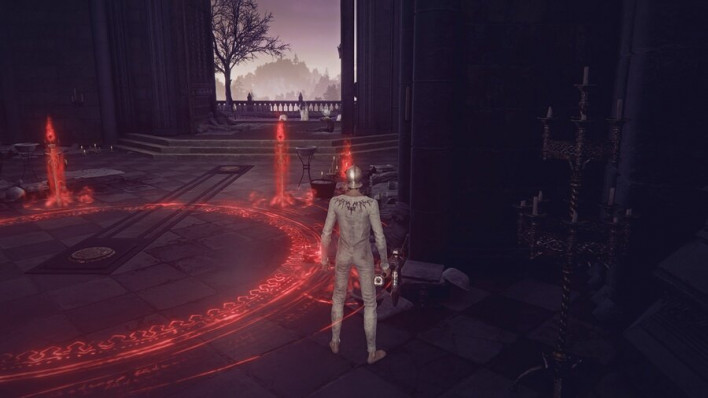
After accumulating various Virtues through Phase 3, scores are tallied to determine the top 3 players. Then, the final phase—Moon Blood Bestowal—begins. Moon Blood Bestowal functions as a 3-player battle royale where each player receives 2 respawn attempts. Additionally, the player who accumulated the most Virtue is granted buffs such as an HP bonus.
While this might seem to guarantee an advantage for the player with the highest Virtue, that is not necessarily the case. Because current standings reveal who is in first place, the second- and third-place players can implicitly join forces to eliminate the frontrunner first. Producer Kitao explained the reasoning behind choosing a 3-player battle royale for the final phase: "In a 1v1, the stronger player holds the advantage, but with 3 players, variables emerge—such as 2 players teaming up against the top seed, or someone waiting at a distance before launching a surprise attack."

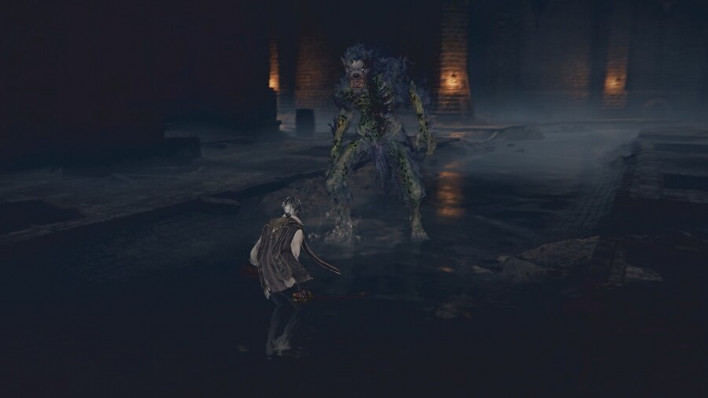
Hostile monsters in 'The Duskbloods' are largely divided into 3 categories: regular mobs for XP farming, elite foes, and Invaders. In previous FromSoftware titles, even 2 or 3 regular mobs grouping together posed a significant threat, but 'The Duskbloods' is different. With lower health and attack power, combined with nimbler player controls compared to prior titles, regular mobs do not pose a major threat.
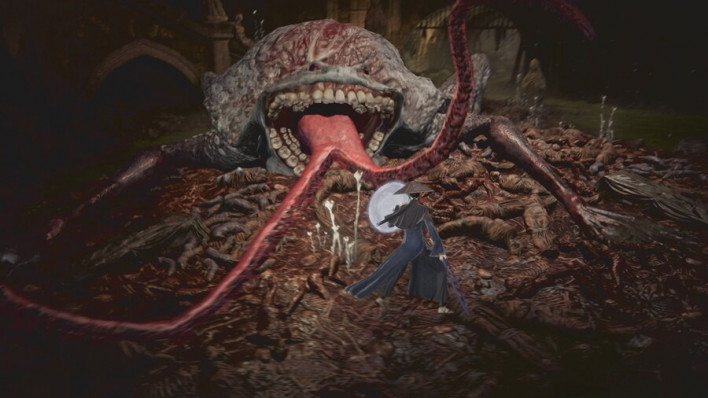
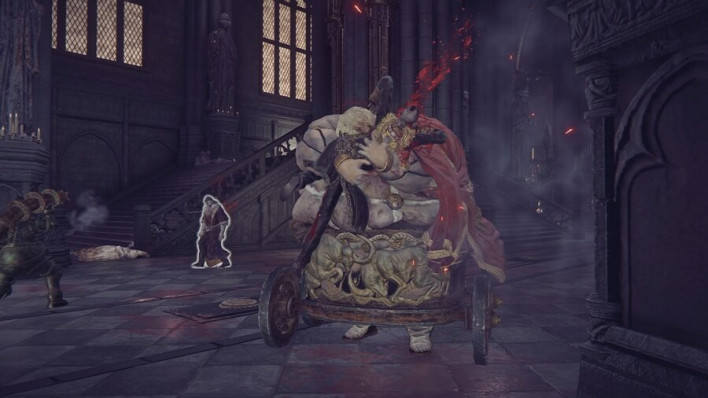
Elite foes and Invaders, however, are a different story. In the early-to-mid game, a single hit can drain more than half your health, and even in the late game, a single attack can shave off 20–30% of HP. As threatening as they are, the rewards for defeating them are correspondingly large. Slaying an elite foe or Invader yields Virtue of Subjugation and spawns a Blood Rose—a progression element familiar to anyone with experience in the roguelike genre.
Through the Blood Rose, players select 1 of 2 enhancements. Both elite foes and Invaders provide basic, straightforward upgrades such as increased attack power, max health, or stamina, but Invaders additionally offer unique upgrades like enhanced jump attacks or bloodsucking on melee hits. Depending on the player's Bloodsworn characteristics and selected options, character growth direction varies.
Meanwhile, a unique mechanic exists regarding Invaders: Joint Combat. When a player engages an Invader in battle, a prompt asks all players if they wish to join. Accepting teleports you to the Invader's location, allowing players who were fighting each other moments ago to temporarily team up. It is a signature system of 'The Duskbloods,' designed to take down Invaders who are far stronger and possess several times more health than elite foes.
Ever-Reliable Allies: Retainers
While regular mobs can be turned into minions via bloodsucking as explained earlier, this effect is not permanent. If a minion dies in combat, it is gone, and transitioning between phases also causes minions to disappear.
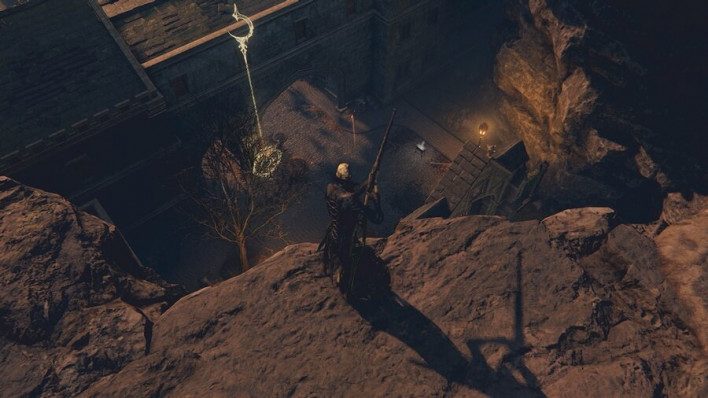
However, there are entities that stay on your side at all times through contracts (summons): Retainers. Contracts can be formed at yellow monuments located across the field, and contracted Retainers remain with you regardless of phase transitions.
Retainers possess distinct appearances and characteristics that define their combat roles. Some act as healer-types specializing in HP recovery and buffs, while others excel in melee combat, ranged attacks, or magic. Furthermore, players can swap to different Retainers at any time, making it crucial to select a Retainer that complements your Bloodsworn's combat style.
For example, a ranged-focused Bloodsworn can summon a Retainer specialized in melee or tanking to hold the front line while attacking safely from behind. Conversely, a melee-focused Bloodsworn can contract a healer or support Retainer for assistance.
Retainers possess various skills and grow through leveling up just like players. As their level rises, their available skills increase, and reaching Level 5 makes them powerful enough to turn the tide of battle. Each Retainer also features unique personalities and dialogue. Regarding this, Producer Kitao explained, "We designed them to be reliable characters players can form a deeper emotional connection with, compared to Spirit Ashes or phantoms in previous titles."
Another key aspect of Retainers is that they can be summoned at any time. Although they can fall in battles against elite foes, Invaders, or rival players, there is little cause for concern—a fallen Retainer can be re-summoned after a short duration. With a cooldown feeling under 1 minute, they serve as a continuously dependable companion throughout gameplay.
Alliances, Stigmas, and Events Adding Spice to Combat

In the PvPvE title 'The Duskbloods,' players must raise their Virtue through various activities while leveling up and growing characters by defeating regular mobs and elite foes. Looking at it this way, every monster and player might seem like an enemy, but that is not strictly true.
In Solo Mode, temporary alliances can be formed. Requesting an alliance that another player accepts forms a pact, allowing you to fight together. Naturally, this alliance does not last indefinitely. Either player can break the alliance mid-match at a penalty, and even if maintained, alliances automatically dissolve upon entering the final phase.
However, breaking an alliance for a surprise attack is not inherently beneficial, as unilaterally severing a pact incurs penalties as mentioned.
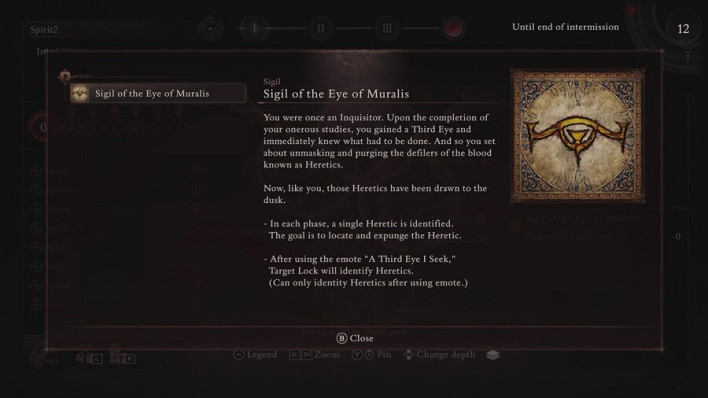
Stigmas function as personal missions selected directly by players. They alter relationships with other players—for instance, if Player A and Player B select Stigmas making them nemeses, whichever player kills the other upon meeting earns additional Virtue. However, Stigmas do not exclusively require player combat. Various types exist, such as tasks requiring an alliance with a player holding a specific Stigma.
Events introduce unpredictable variables to each phase. Occurring randomly at phase transitions, they impact overall gameplay. Examples range from an event where an airship appears allowing players to radio in bombardments on a location, to an event where holding a 'Star Fragment' across phase transitions grants substantial Virtue—sparking tense chases—as well as an event where lightning strikes swap player positions randomly (Storm of Nelare), and even an event spawning crowds of monsters that empower Bloodsworn Skills (Festival of Blood Sacks).

In closing the presentation, Producer Kitao stated, "As seen in the Virtue system, 'The Duskbloods' is not a game designed exclusively for top-tier action players. We built it to be enjoyable for everyone, regardless of action skill level, so we hope many players look forward to the network test."