
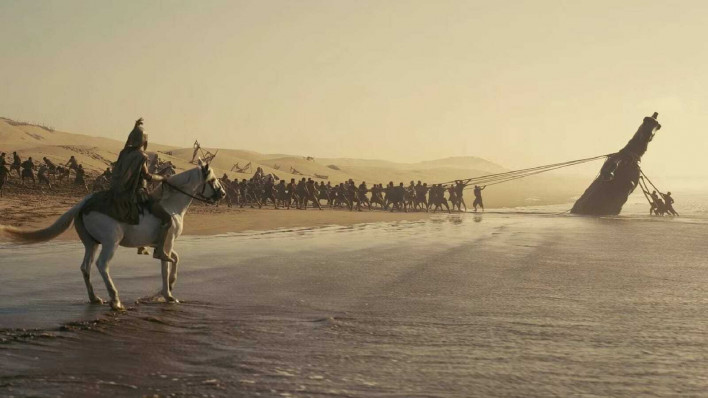
In July, a movie premiered and instantly swept the globe: Christopher Nolan's 'The Odyssey', starring Matt Damon. Based on an epic narrative from around 1200 BC—nearly 3,000 years ago—the film recouped its massive production budget in record time and continues its tremendous box-office run to this day.
And watching 'The Odyssey' in theaters, it proved to be fully deserving of the success. Even without sitting in an IMAX auditorium and watching it on a standard screen, the journey of a single man delivered an overwhelming experience that went far beyond mere entertainment. Its box-office triumph was by no means accidental.
Eight years ago, we also encountered the name 'Odyssey' in another medium: a game that ranks among the top tier for sheer fun within the Assassin's Creed franchise—'Assassin's Creed Odyssey'.
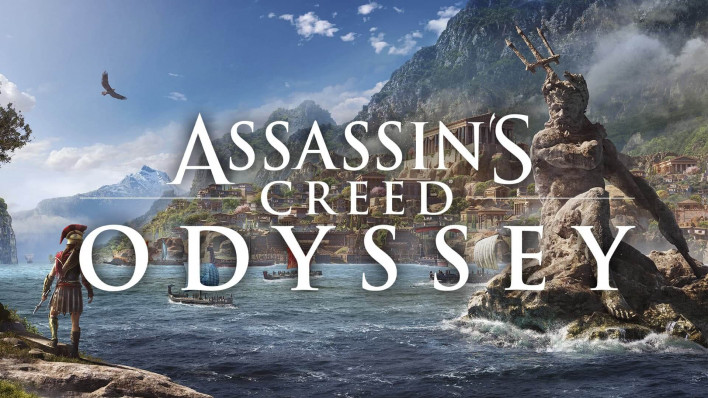
Strictly speaking, 'Assassin's Creed Odyssey' stands at a considerable distance from the original 'Odyssey' epic. Setting-wise, the Trojan War—the backdrop for Homer's Odyssey—took place in the distant past around 1194 BC, whereas the Peloponnesian War in 'Assassin's Creed Odyssey' broke out around 430 BC, a gap of more than 700 years. That is roughly comparable to the gap between modern times and the transition from the late Goryeo to early Joseon periods.
Nevertheless, both works share the proper noun 'Odyssey'. And there is good reason for it.
The protagonist of 'Assassin's Creed Odyssey' is Kassandra (or Alexios, though Kassandra is canonical and will be used as the primary name here). Born in Sparta and raised on the island of Kephallonia, this young mercenary operates around Kephallonia until meeting a client named Elpenor. Upon accepting a contract to assassinate the "Wolf of Sparta," she takes her first true steps into the wider Greek world.
What makes this starting area intriguing is that the island of Kephallonia lies right beside Ithaca—the homeland that Odysseus spent so many long years searching for in the Odyssey. In the game, Ithaca is rendered close enough to reach simply by swimming, featuring key locations inspired by the original epic, including Odysseus's Palace, Eumaeus's swineherd farm, and Melanthius's goat farm.
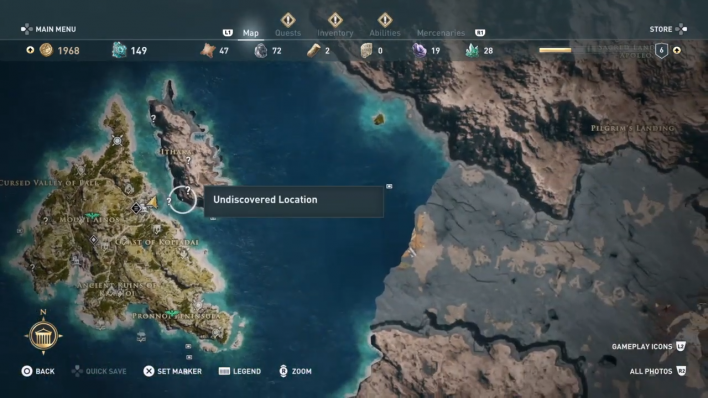
The catalyst for setting foot on Ithaca is also Elpenor's request. As a test to gauge Kassandra's skill before entrusting her with the crucial "Wolf assassination" assignment, Elpenor asks her to retrieve a stolen valuable from bandits. That valuable is none other than Penelope's Shroud, woven by Odysseus's wife.
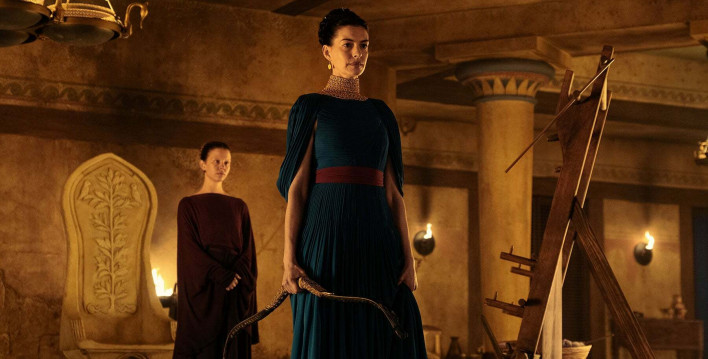
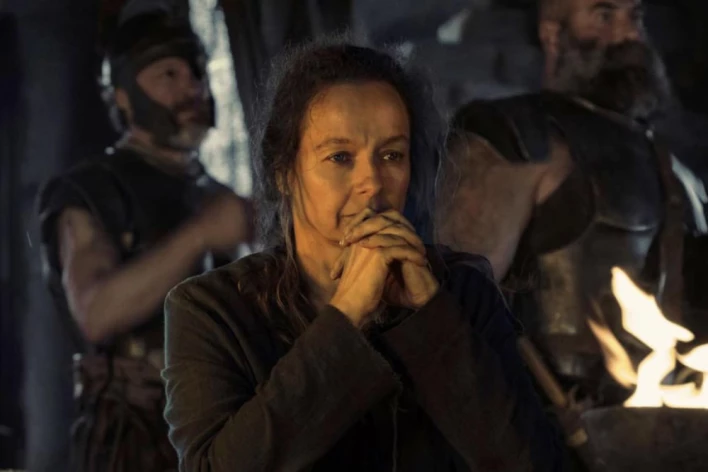
As anyone who watched the movie 'The Odyssey' knows, Penelope (played by Anne Hathaway) spends much of the film weaving a shroud. In the movie, the intended owner is not explicitly stated, making it appear as though she is weaving a shroud for Odysseus, who is presumed dead. In the original text, however, it is a burial shroud for her father-in-law, Laertes—which is known as "Penelope's Shroud."
Regardless, upon setting foot on Ithaca, Kassandra meets Odessa, a woman held captive by bandits who have occupied Odysseus's Palace. Believing herself to be a descendant of Odysseus—and named after him—Odessa dreams of grand adventures like her namesake. Kassandra convinces her to return home instead. The quest is titled "A Small Odyssey."
In Kassandra's time, the tale of the Odyssey has long passed into distant legend. Odysseus's palace lies in ruins, Penelope's shroud has become an ancient relic, and a woman who believes herself to be his descendant visits Ithaca yearning to become a hero of the distant past.
And right where Odysseus's story ended, Kassandra's long journey begins.
The core takeaway here is that this straightforward quest—recovering Penelope's Shroud and persuading Odessa—serves as a narrative prelude that fully encapsulates the central themes of both 'Assassin's Creed Odyssey' and the original Odyssey poem.
'Assassin's Creed Odyssey' follows Kassandra, who loses her entire family in childhood and embarks on a quest initially driven by revenge, only to unravel misconceptions and search for her family once again. Meanwhile, the Odyssey tells the story of Trojan War hero Odysseus struggling through ten years of adventure and wandering to return to the embrace of his family.
Odessa views the Odyssey as a tale of grand adventure, but in truth, it was simply a journey back to family. In the narrative structure of both the Odyssey and 'Assassin's Creed Odyssey', the adventure itself is not what matters most. What matters is whether there is a place you long to return to at the end of the journey, and who is waiting for you there. ...That said, depending on player choices, Odessa can end up hitting it off with Kassandra and joining her crew. We can probably chalk that up to gaming freedom.
After taking on the Wolf's assassination contract, Kassandra defeats the "Cyclops," a one-eyed bandit leader terrorizing southern Kephallonia, and rescues the captive captain Barnabas, receiving his ship, the Adrestia, as a reward. While this Cyclops pales in comparison to Polyphemus—the man-eating giant son of Poseidon—she nevertheless slays a Cyclops all the same.
However, the journey that follows takes a vastly different form from the original Odyssey epic.
Odysseus undergoes all manner of trials on his voyage home. Beyond Polyphemus, he loses most of his crew to the Laestrygonians, stays behind after falling for Circe, and suffers brutal losses to Scylla and the Sirens. After losing every last one of his men, he spends seven years with Calypso.
Kassandra's journey, however, takes a distinct path. Passing through the warzone of Megaris, she learns that the "Wolf" is her adoptive father, Nikolaos. Upon realizing Nikolaos is not her birth father, she travels through Delphi, Athens, Naxos, Sparta, Arkadia, and Boeotia, gathering her family members one by one. If the Odyssey is a tale of returning to an existing family left behind long ago, 'Assassin's Creed Odyssey' is a story about bringing together a family that has already been torn apart.
Yet both works share a defining commonality: "sailing across numerous islands to experience new adventures and travels."
In the Odyssey, Odysseus undergoes relentless seafaring. From raiding Ismarus, receiving hospitality from the Lotus-Eaters, and defeating Polyphemus, to reaching the island of Aeolus (god of the wind) to gain safe passage home—only for his crew's curiosity to ruin it—and drifting into the domain of the Laestrygonians, he experiences every conceivable nautical trial.
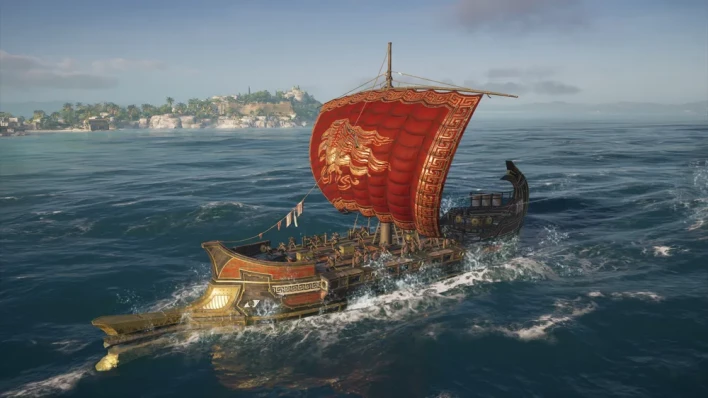
This structure applies equally to Kassandra. The moment she acquires the Adrestia, naval exploration opens up, leading into a non-linear quest progression. While regional level scaling prevents complete free-roaming from the start, players sail the Greek seas, meeting countless individuals and building relationships. Some approach with friendly intentions, while others prove distinctly hostile.
In the movie 'The Odyssey', the phrase "the Law of Zeus" is referenced frequently. Also known as 'Xenia', this custom was not a codified legal statute, but a shared code of conduct across the ancient Greek world. In the film, it is depicted as a rule observed because a guest might be a deity in disguise.
This 'Xenia' followed a specific order of protocol:
② Offer food and drink.
③ Provide a place to wash and sleep if needed.
④ Only then ask who they are and where they come from.
⑤ Upon departure, provide gifts and a safe escort as appropriate.
⑥ The guest must respect the host and not abuse their hospitality.
In fact, the entire Odyssey functions almost as an exploration of Xenia. The Phaeacians warmly welcome Odysseus, and only after entertaining him do they ask for his identity and tale, eventually granting him a ship to return to Ithaca. Conversely, Polyphemus and Penelope's suitors violate Xenia. Polyphemus devours Odysseus's men instead of treating them as guests, and the suitors abuse guest rights. Near the climax, Odysseus returns home disguised as a beggar; Eumaeus the swineherd honors Xenia by welcoming him, whereas the suitors insult him.
In the narrative of 'Assassin's Creed Odyssey', Kassandra is likewise a complete outsider. She rarely revisits Kephallonia after the opening chapter, instead exploring countless new islands and territories. Though the game does not implement Xenia as an explicit gameplay system, it repeatedly places Kassandra in positions where Xenia is necessary, seating the player directly in an era and setting where Xenia was paramount. This dynamic establishes the foundation that makes Kassandra's journey as a wandering foreigner believable.
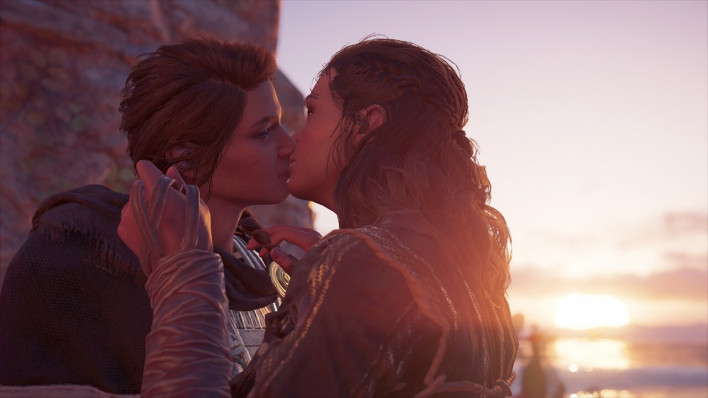
In the world of the Odyssey, the line between humans and gods is far more blurred than today. Athena acts as Odysseus's primary patron, disguising herself to assist his journey home, while Poseidon rages over the blinding of his son Polyphemus and churns the seas. Hermes appears directly before Odysseus when he is captive under Circe, teaching him how to resist her magic.
Thus, for Odysseus, myth is not myth. Gods actively intervene in human lives, monsters live across the sea, and mortals occasionally carry divine bloodlines. What we call Greek mythology today was a tangible part of reality for Odysseus.
A prime example of how ancient Greeks viewed this world comes from Hesiod. Estimated to have been active around the same era as Homer, Hesiod divided human history in 'Works and Days' into five ages: Gold, Silver, Bronze, Heroic, and Iron. He placed the heroes who fought at Troy and Thebes in the "Heroic Age" that preceded his own era.
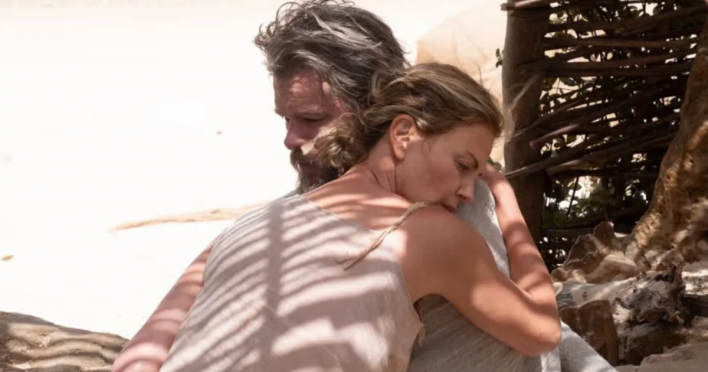
Odysseus belongs to the final generation of those heroes. The Trojan War has ended, and legends like Achilles and Ajax are already dead. The Odyssey is the tale of the surviving Odysseus making his way back to Ithaca. In that sense, the Odyssey sits precisely at the twilight of the Heroic Age.
Hesiod called the era that followed—his own present—the "Iron Age." The era of grand mortals close to the gods had passed, leaving behind a world filled with toil, suffering, and strife. And Kassandra in 'Assassin's Creed Odyssey' lives much later than Hesiod.
As a result, the Greek world Kassandra inhabits is similar to the Odyssey, yet markedly different. People still worship Zeus, Poseidon, and Athena, and the Oracle of Delphi exerts immense influence over both individuals and city-state policies. Faith remains intact, but "myth" has become a matter of the past.
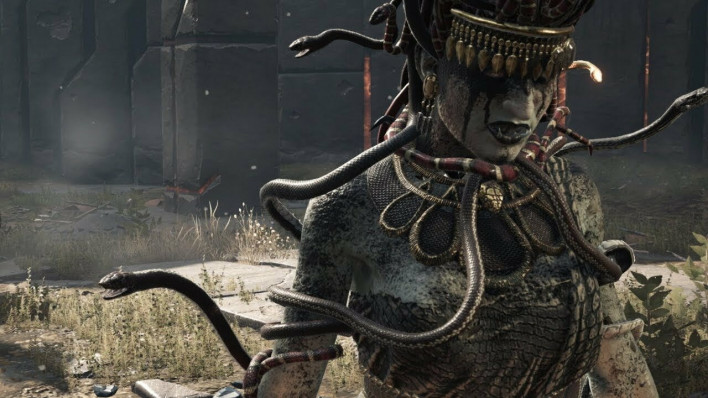
At this juncture, the 'Assassin's Creed universe' intervenes. The franchise reinterprets the beings and miracles humanity long considered divine as advanced technology belonging to the Isu—an precursor civilization. Monsters such as the Minotaur and Medusa are depicted not as supernatural beasts, but as technological remnants of that precursor era.
While oracles were sacred to ancient Greeks, the game portrays them as subject to political manipulation by human factions. Setting aside the existence of the precursor Isu race, late 5th-century BC Greece—the backdrop of the Peloponnesian War—is an era governed by human reason. The figures Kassandra meets, such as Socrates, Pericles, and Hippocrates, are historical figures rather than mythic legends.
In this way, Ubisoft deconstructs ancient myths against the backdrop of the "Age of Man"—far removed from the Age of Myth—while positioning Kassandra in a unique space. She is a historical figure who converses with Socrates and participates in the Peloponnesian War, yet also acts like a mythic hero wielding Isu technology and battling monstrous anomalies.
This explains why Ubisoft retained 'Odyssey' as the subtitle for this game. Under Hesiod's framework, Kassandra walks through the "Iron Age," yet undergoes experiences echoing those of the "Heroic Age." Because Homer's Odyssey was steeped in divine intervention and mythic elements, Ubisoft could attach the name 'Odyssey' to a title set in an era where myths had faded into campfire tales, drawing on Kassandra's unique position and the franchise's overarching lore.
There are many reasons why 'Assassin's Creed Odyssey' adopted the name 'Odyssey', as outlined above. Their narrative starting points align, both feature wide-ranging journeys across Greece, and even in an age where myth has faded, the protagonist is framed to fit the Heroic Age through her unique background and lore position.
However, the single biggest reason this game carries the subtitle 'Odyssey' is likely that both works center on *Nostos* (νόστος)—the theme of "homecoming."
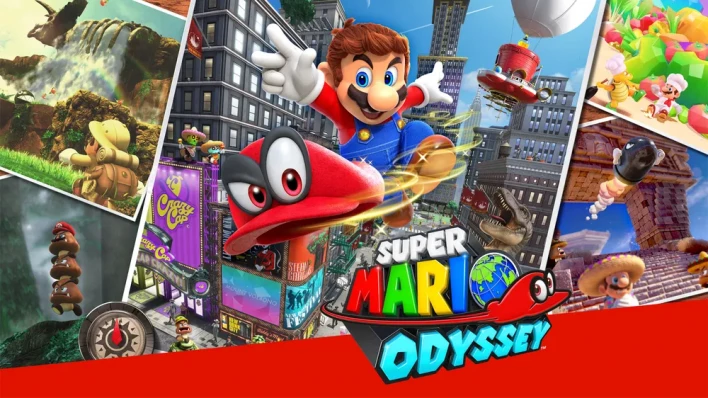
Across media, 'Odyssey' is widely used as a synonym for grand adventures. 'Super Mario Odyssey' is one example, as is 'One Piece Odyssey'. Stanley Kubrick's '2001: A Space Odyssey' is a somewhat different case (involving far more complex layers), but regardless, its narrative trunk differs greatly from the original text. While these titles tell their own stories, they diverge significantly from Homer's Odyssey, focusing primarily on the concept of "epic journeys across vast worlds."
By contrast, among the countless works titled "XX Odyssey," 'Assassin's Creed Odyssey' preserves the core essence closest to the original text: the aforementioned "homecoming." The difference lies in the fact that while Odysseus is a hero returning to an existing home, Kassandra is a hero who must seek out and build a home.
As anyone who has played 'Assassin's Creed Odyssey' knows, Kassandra's family history is extraordinarily complex. Born into a privileged Spartan general's household, Kassandra could not accept an oracle ordering the sacrifice of her younger brother Alexios, causing the family to shatter. To top it off, her father turns out to be an adoptive father who raised another son (Stentor), her biological father turns out to be Pythagoras (yes, the theorem Pythagoras taught in middle school), and her brother, thought to be dead, returns as a champion for her enemies—delivering family drama to rival Tekken. Furthermore, Kassandra did not even set out on her voyage to find her family in the first place.
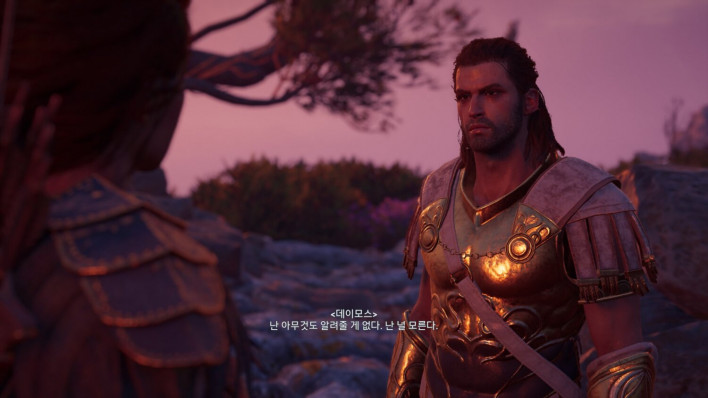
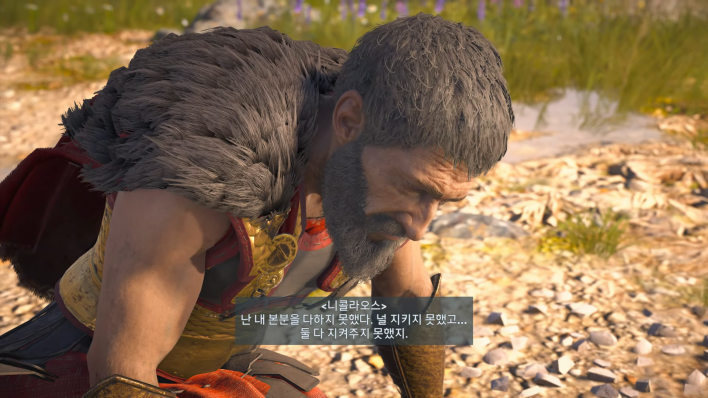
Yet over the course of her journey, Kassandra continuously uncovers new truths. She learns that her assassination target, the "Wolf," is her adoptive father Nikolaos; that her brother Alexios is alive under the name Deimos; that her vanished mother Myrrine is the leader of Naxos; and that she herself carries a special bloodline connected to Spartan royalty and the Isu civilization.
Through these experiences, Kassandra resets the goal of her journey—a process shaped by player choices. She can strive to reunite the family shattered on Mount Taygetos during her childhood, or eliminate both her adoptive father and brother to walk a lonely path.
If the player aims for the good ending chosen by many—reuniting the family—Kassandra travels across Greece to bring these scattered relatives together. The game then concludes with a scene where the entire reunited family shares a meal around a single dinner table.
This "dinner table" represents Kassandra's "home" in 'Assassin's Creed Odyssey'. It is distinct from her days as the eldest daughter of a Spartan general, and from her past as an idle mercenary living hand-to-mouth on Kephallonia. The family destroyed on Mount Taygetos does not remain unchanged. Depending on Kassandra's (and the player's) actions, the number of people sitting at that table varies—and at the extreme, Kassandra sits at the table entirely alone.
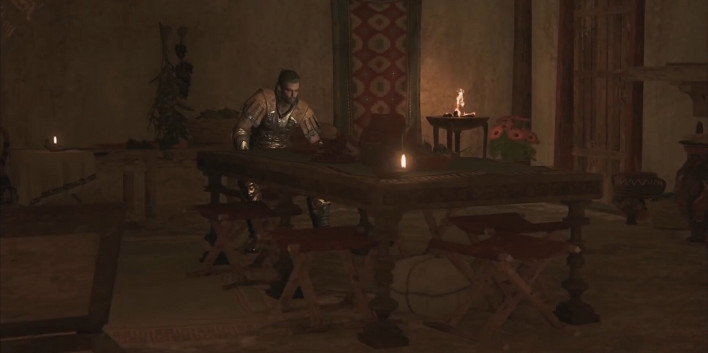
Ultimately, after countless travels, Kassandra arrives back at "her home." While her path differs from the Odyssey—where Odysseus journeys to return to an existing family and restores order to a homeland on the brink of collapse—the starting point and final destination remain the same: parting from family, and reuniting with family.
Odysseus, who sought to return home, and Kassandra, who rebuilds a lost home, undergo journeys that are distinctly different, yet share the exact same conclusion. That is why 'Assassin's Creed Odyssey' is a title that truly earns the name 'Odyssey'.