"How should it be pronounced?"
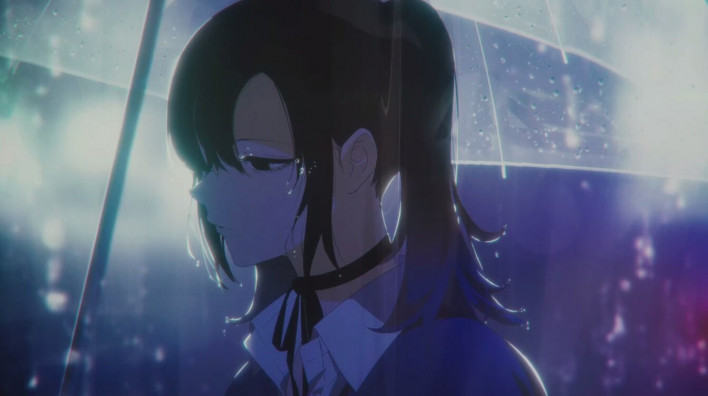
That was the first question that naturally came to mind when I met 'C#4R4CT3R,' the developer and indie publisher behind Rain98. It was also something I had wanted to ask every time I saw the Rain98 poster, which evokes a cynical, melancholic, and fragile, yet strangely dangerous atmosphere. Although I had several opportunities to see it during my past business trips to China, I rarely had the chance to meet the developers directly, as is often the case with Chinese game shows where you primarily interact with local partners or publishers.
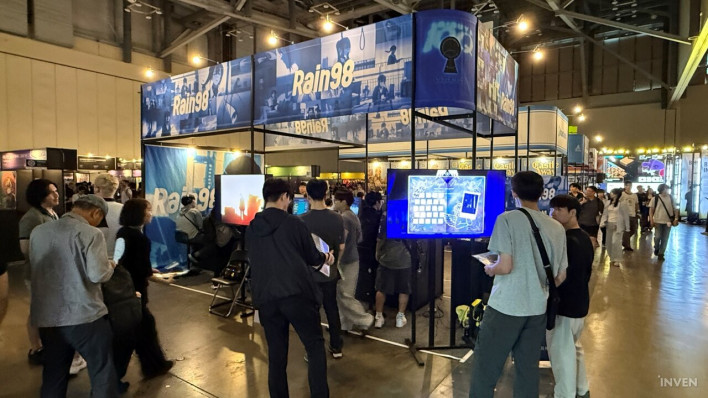
Founded in Shibuya, C#4R4CT3R has been actively participating in various game shows—from PAX and Bilibili World to ChinaJoy and BIC 2026—to showcase its debut title, Rain98, and connect with like-minded partners. Known for its unique, lo-fi aesthetic and distinct personality, the studio has been turning heads everywhere it goes. We sat down with Chai, the community manager, and Takahashi, the PR representative, to discuss the vision behind Rain98.
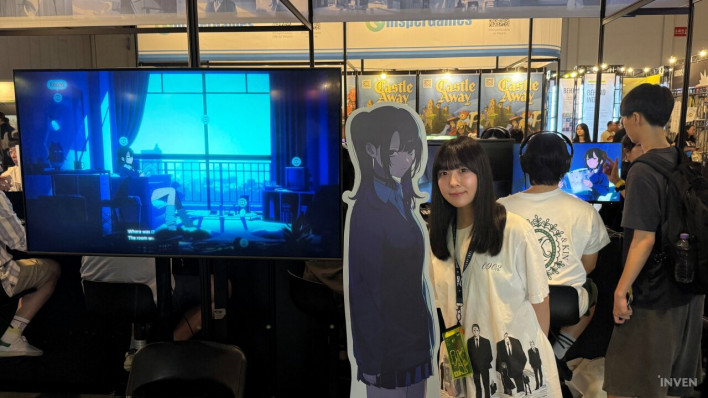
Q. First, could you please introduce yourselves.
Chai = I’m Chai, and I handle character and marketing promotions. I manage our social media and Discord, and run various events. I also coordinate matters related to Rain98, though our director, Sean, oversees the overall project, including story writing and creative management.
Takahashi = I am Takahashi, the PR representative. I mainly handle events and merchandise.
Q. The brand name 'C#4R4CT3R' is quite unique. What kind of brand is it? And I’d like to ask how it’s pronounced.
Chai = You can read it as 'Character.' It’s written in leetspeak, but if you look at it from a distance, that’s how it reads. Our brand emphasizes characters that are unique and lovable. We started as a small team of three, but we have since grown to a team of 20.
Takahashi = We don't just produce Rain98; we also work on introducing other games. As an aside, I once saw YouTubers saying, 'Rain98 looks really fun,' and reading our brand name letter by letter—'C, sharp, four, R, four, C, T, three, R'—and I thought, 'Oh, I guess you could read it that way too!' (laughs).
Q. Rain98 is being introduced to Korean users in earnest at BIC. Could you briefly introduce the game?
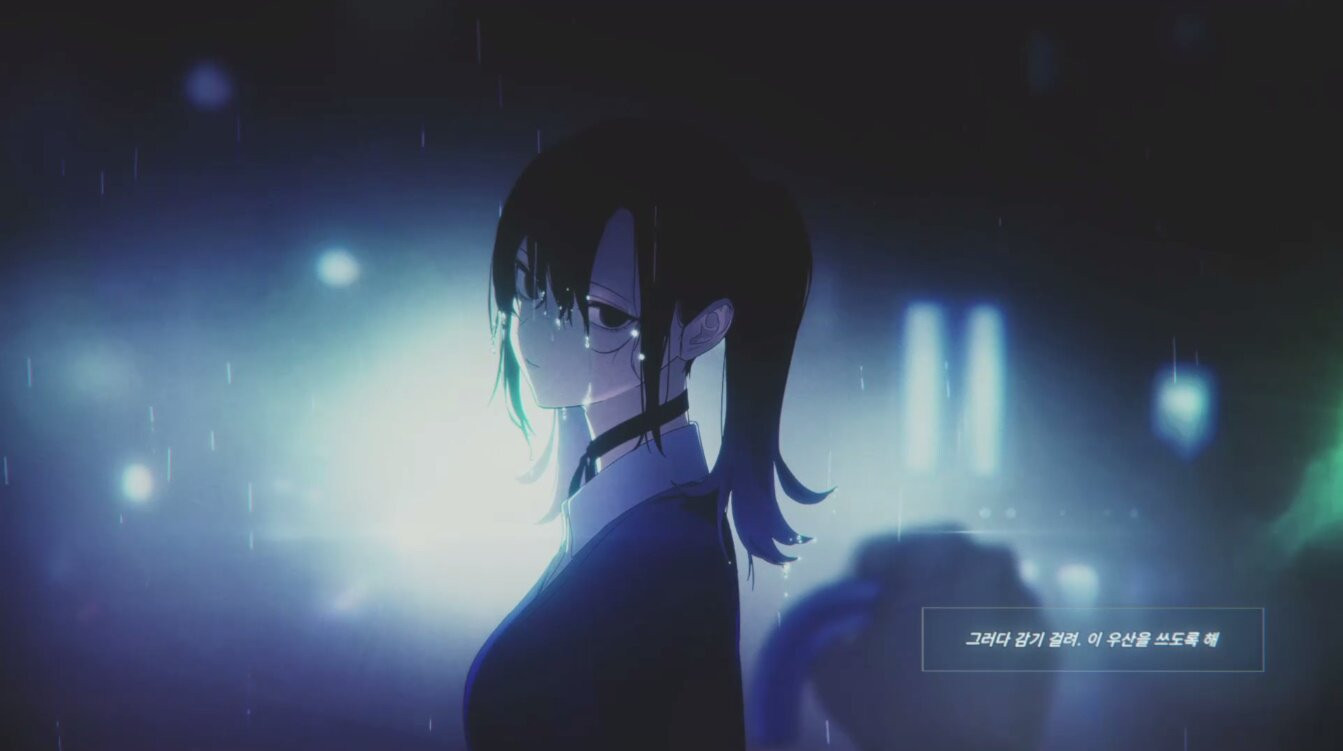
Chai = Internally, we describe it as a 'lo-fi psycho-thriller romance adventure.' It is essentially an adventure game with visual novel elements. The story follows a protagonist who time-slips to 1998 and meets 'Reina,' a girl who wishes for the end of the world. It depicts their daily life together and the story surrounding the apocalypse.
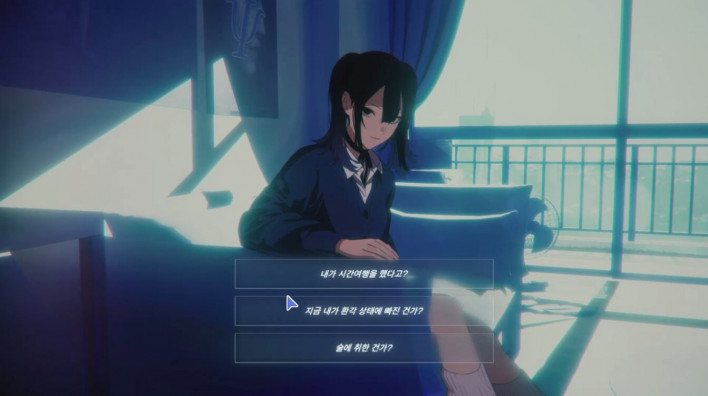
Q. The protagonist, Reina, stands out even at a glance. Could you tell us more about her character? I’m also curious about the specific mood or sensibility you wanted to convey through her.
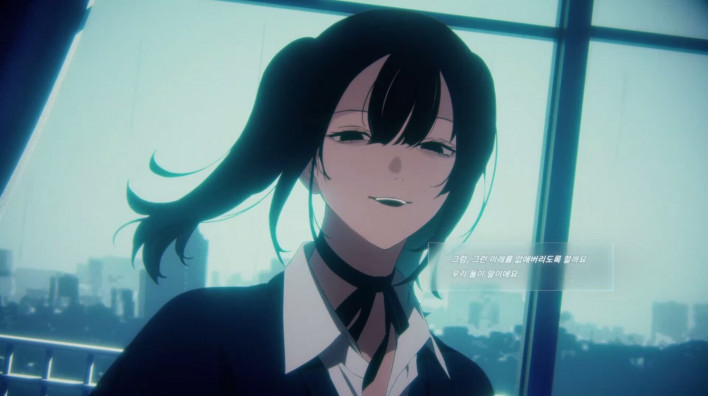
Chai = I'm glad you felt her appeal immediately. Beyond just having a pretty visual, Reina is a character with contradictory facets—she isn't just cute; she has a dark and dangerous side. As those who played the demo know, she has expressive movements and can seem cool one moment, only to act childish the next.
She is a deeply contradictory figure who wants the world to end yet still wants to live out her daily life, wandering without really knowing what she wants. She isn't just a 'cute' character; she has a unique and multifaceted personality. I think players will understand her charm more deeply as they reach the end of the story.
Takahashi = Although it’s a visual novel, we wanted to leave a lingering impression that makes players think about Reina long after the long playthrough is over. There are many attempts these days to create characters using AI prompts, but that often feels shallow and light. Reina, on the other hand, is like an 'onion'—hard to grasp at first glance, but revealing various sides and chaotic charm the deeper you dig. We captured the theme of a 'mysterious girl' with a depth that reveals new charms the more you peel back the layers, reflecting our desire to create a character that users can truly love
Q. Rain98 uses the setting of 'late 90s Tokyo' and 'rituals related to the end of the world.' Is there a reason you chose 1998 instead of 1999, the actual end of the century?
Chai = 1999 was the year Nostradamus' prophecy became a huge topic in Japan. We wanted to depict the process leading up to that catastrophe, so we started in 1998. If 1999 is the period of total destruction and chaos, we wanted to frame the year before as a grace period—a time when the future could still change depending on how one acts.
Takahashi = If the full-blown panic hits in 1999, 1998 is a period of anxiety, wondering, 'Wait, what is about to happen?' We wanted to capture not just Reina's wandering, but the process of how the time-slipping protagonist changes amidst the uncertainty of a world that doesn't know its own fate.
Q. You feature a 'psycho lo-fi' aesthetic. What kind of feeling did you want to capture with that?
Chai = When people hear 'psycho-thriller,' they often think of jump scares. Instead, we added psychological elements—the anxiety and surprise that suddenly creep in while living a strange daily life. 'Lo-fi' isn't just about low resolution; we used it as a device to capture the 'chill' and calm mood unique to the late 1990s.
Takahashi = If you listen to the lo-fi music in Rain98, it’s not high-volume; it’s a jazz piano melody playing softly in the background, slowly seeping into the atmosphere. It’s not about sudden horror, but rather the feeling of psychological anxiety slowly tightening, like a warning to 'not open the door' while the door creaks open slowly. We wanted to convey a unique atmosphere where the lo-fi aesthetic combines with a creeping sense of unease through music and direction.
Q. You’ve created a unique atmosphere by combining music, sound effects, and color. What was the point you focused on most?
Chai = Rather than focusing solely on sound or visuals, we concentrated on balancing the two to create that specific atmosphere. That synesthetic mood only works when the overall balance is finely tuned.
Takahashi = Some view visual novels and ask, 'Is it really a game if you just read text and click?' But we wanted to offer an immersive experience that goes beyond simple reading, pulling the player into the entire screen. That is the core of Rain98. When you wear a headset, Reina's ASMR-like voice, the jazz piano, and the unique blue tint blend together to make you feel like you're in a trance.
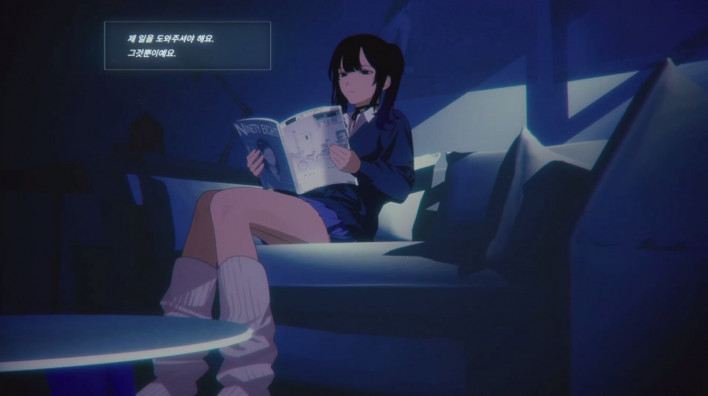
Also, when talking in the apartment, we don't just rely on a single standing illustration. She sits on the sofa, reads a magazine, smokes, and changes poses constantly, giving the vivid impression that you are watching Reina actually living in that room. We went beyond the traditional visual novel style, using over 1500 illustrations from various angles and props like Tamagotchis to bring her daily life to life. We put so much effort into it that, from a production standpoint, we felt like we might as well have been making an animation.
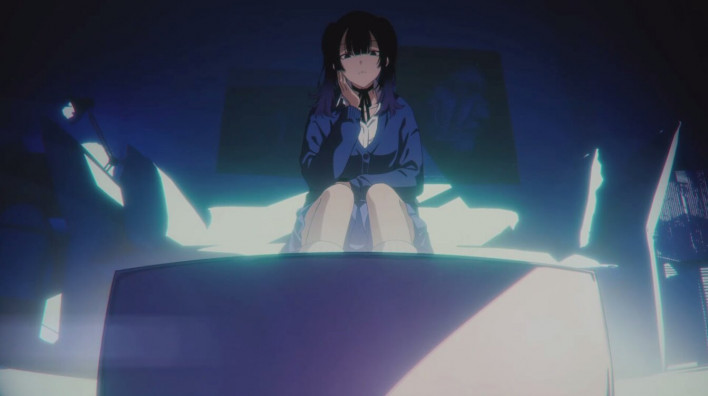
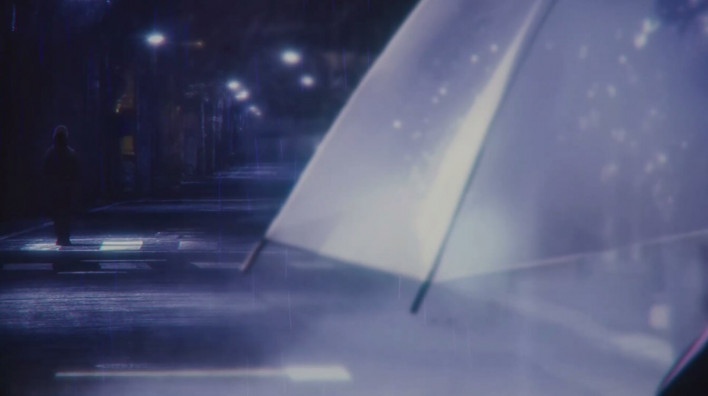
Q. With the recent retro craze in the gaming industry, there seem to be frequent attempts to incorporate 90s vibes. What kind of 90s sentiment does Rain98 aim to capture?
Chai = It’s definitely a retro boom right now. We didn't plan it specifically with that in mind, but to show the lifestyle of the turn of the century, we thoroughly referenced animations, movies, photos of Shibuya, fashion, and trends from that time. We wanted to create a work that evokes nostalgia for those who experienced 1990s Japan, while offering a fresh and unique sentiment to foreign users.
Takahashi = Our goal isn't just to show the 1990s Japanese background or a cyberpunk world. Rain98 is, above all, Reina's story, and the 90s props and lifestyle are devices to highlight her personality and charm. The use of blue tones to stimulate nostalgia was also applied after detailed research by our artists.
Of course, it’s not that we didn't want to shed light on the 90s. Korean, Chinese, and other Asian users have likely encountered Japanese life through animations like Doraemon for a long time. However, Western audiences have often encountered Japanese animation through One Piece or Naruto from the 2000s onward, rather than 90s daily life. Naturally, most of them are unfamiliar with the daily ecology of 90s Japan.
Looking back, I think creators in 90s Japan felt a very strong sense of fin-de-siècle anxiety. Based on that, they poured out masterpieces that blurred the lines between reality and fantasy, like Neon Genesis Evangelion, Cowboy Bebop, and Ghost in the Shell. But when I try to recall animations that shed light on the daily life of that era, nothing really comes to mind. So, we thought it would be interesting to show global game and animation fans a slice of the unique lifestyle of 90s Japan through our game.
Q. It was also unique how provocative elements like smoking and fetishes left a fleeting impression due to the subdued tone. Was that intentional? And what kind of story did you want to tell by using those materials without holding back.
Chai = It was somewhat intentional. The cigarette smoke is for the specific mood and homage, and scenes like wearing loose socks were incorporated as natural details of daily life rather than mere fetishism.
Takahashi = Rather than a device to target specific tastes, it’s a means of expression to show the natural daily behavior of Reina, a character living alone. The loose socks scene isn't just fan service or eroticism; it’s embedded in the natural context of understanding and approaching the character as you progress through the story and mini-games.
In fact, when we demonstrated at PAX, Western media didn't really point that out. As you know well, they are sensitive to such issues. It seems they accepted it as a natural part of the process of getting to know the character while playing the demo.
Even during our exhibition in China, it wasn't viewed as a 'pretty girl' game for men; female users really liked it. Rather than a flashy, provocative beauty, we wanted to show a subtle charm that makes you naturally fall in love and ask, 'When is the official release?' after playing the 30-minute demo. It was very interesting that Korean users reacted the same way.
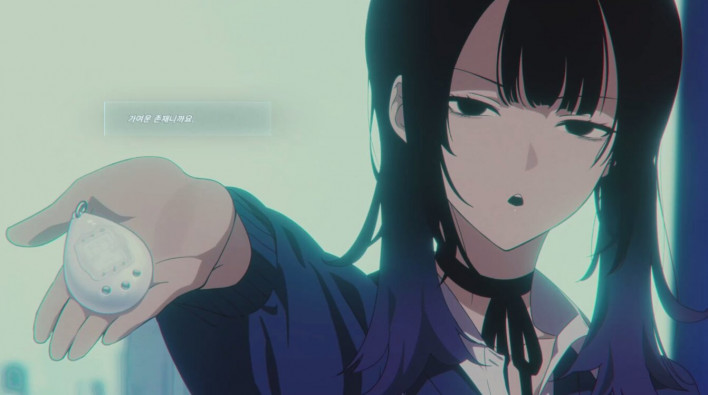
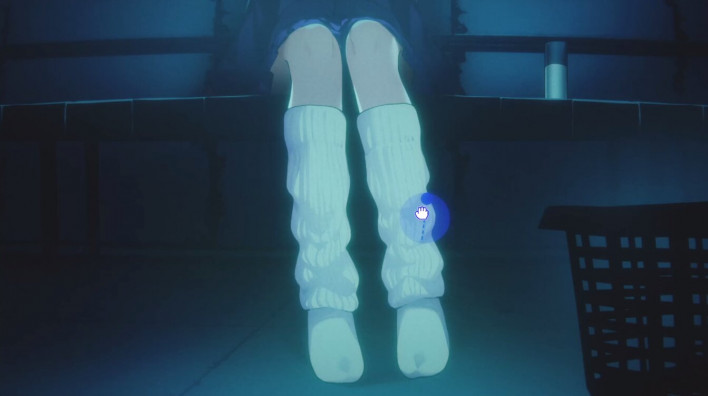
Q. It was originally scheduled for release in 2025, but it was delayed to 2026. What parts did you reinforce?
Chai = We are truly sorry to the fans who have been waiting. We initially planned for a short, three-hour game, but after participating in various global events, we realized that user expectations were far higher than we had imagined. We decided to delay the release to ensure we could raise the quality to meet those expectations. The first playthrough has now been extended to about 10 hours, and we have significantly bolstered the story, art volume, and overall detail.
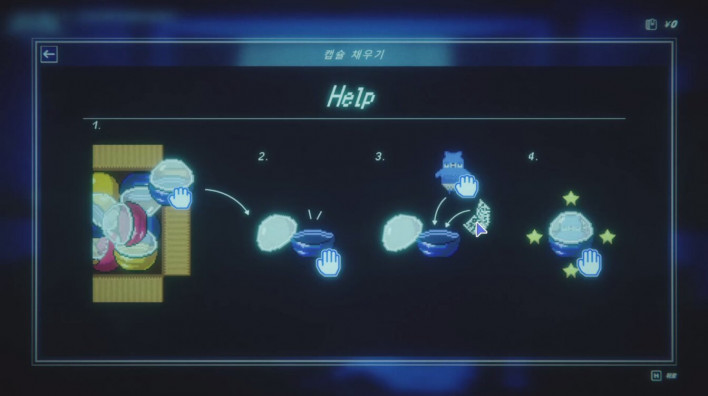
We have released a 30-minute public demo, and I am relieved to hear that it is being praised for having much higher completeness than previous event builds. Please look forward to the full version, which is packed with Shibuya street exploration, capsule toys, and various mini-games and interactive elements.
Takahashi = Of course, there are also dating elements with Reina. By expanding the volume to 10 hours, we added over 100 types of mini-games to provide much more interactive fun than existing visual novels. We kept the story-driven framework but strengthened the choices and adventure elements.
As this is our first work, we actively reflected feedback from Discord and on-site events to refine the UI and reinforce tutorials for parts that might be unfamiliar to overseas users. For example, capsule toys are immediately recognized in Japan, but many people in the US didn't know what they were at all. So, we listened to opinions and reflected that feedback.
Q. You’ve been receiving a great response while exhibiting at events around the world, including PAX East, TGS, Bilibili World, ChinaJoy, and BIC. What do you think global gamers find most appealing about Rain98? Also, are there any memorable differences in how fans from different regions have reacted?
Chai = When we exhibited at PAX, I was worried about whether a character in a Japanese school uniform would resonate with American users, but they sent us a lot of positive feedback, saying they were deeply immersed in Reina's charm. In China, they focused on the deep immersion of the story and world-building and enjoyed the demo to the end.
The reaction was generally enthusiastic regardless of the region, and I was especially moved at ChinaJoy when fans gave us handmade acrylic stands and fan art, even though the game only had a demo available.
Takahashi = We’ve gained confidence that our work resonates well in the West. We live in an era where people all over the world consume anime through platforms like Netflix and Crunchyroll, and I feel that any resistance to anime-style graphics has largely disappeared. With anime-style aesthetics becoming mainstream—much like the Persona series—I think Reina from Rain98 is being accepted as a natural and appealing character by global gamers.
I was even surprised to meet a fan who cosplayed as Reina at an overseas game show. I am just grateful that so many people in Korea have sought us out as well. At this year's Tokyo Game Show booth, we plan to actually recreate Reina's apartment, and Reina will also make an appearance.
Q. You are introducing it to Korean users in earnest at this BIC. What kind of work do you want it to be remembered as by Korean users?
Chai = Korean fans have left many positive impressions about the demo, and I hope it is remembered as a work that leaves a lingering impression while deeply enjoying the daily life with Reina.
Takahashi = I hope it remains a game where you can vividly feel the unique sentiment of 90s Tokyo. Since last year's BitSummit, many people have asked about Korean language support, and Korean users have a high share of our Steam wishlist. I am happy to finally be able to respond to the support of Korean users directly through this BIC. In our official Discord community, the director is actively communicating by recommending and receiving recommendations for animations and books, so please join us.
Lastly, a word for the Korean fans waiting for the game's release.
Chai = This is my first time meeting Korean users through this event, and I am grateful for the great interest shown even before the event. I ask for your continued love and support for the demo and the official release later.
Takahashi = Many people were disappointed that they couldn't come to the Busan BIC in person and asked, 'Can we meet in Seoul?' Please enjoy the 3-hour demo that will be released soon and give us plenty of feedback. It’s not a game that is provocative or loud enough for streaming, but I hope Reina's sincere and charming appearance touches many people's hearts, and I ask for your continued anticipation and interest.