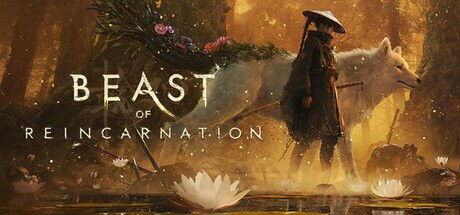
Game Freak's new action RPG, 'Beast of Reincarnation,' was undoubtedly one of this year's most anticipated titles. The fact that it was a brand-new IP from the studio famous for the Pokémon series, the shift to an action RPG genre—a departure from their usual fare—and, above all, the striking visuals revealed in the initial trailers, all combined to capture the attention of gamers worldwide.
The information released one by one afterward continued to build anticipation for 'Beast of Reincarnation.' From the designs of the protagonists, Emma and Ku, to the post-apocalyptic world and the bizarre, plant-fused enemies and bosses, the game was packed with elements that seemed destined to be a hit. Early impressions of the combat system even suggested that it would at least deliver a satisfying, tactile experience.
Despite all the hype, the actual experience of playing 'Beast of Reincarnation' is, in many ways, underwhelming. What exactly went wrong? While the game features many familiar elements, familiarity can often be a strength if executed well. Unfortunately, 'Beast of Reincarnation' failed to capitalize on this. Despite having high-quality ingredients, the final product feels like a dish everyone has tasted before.
※ Contains some story-related spoilers
Good ingredients require good cooking
Familiar story, lackluster direction and storytelling
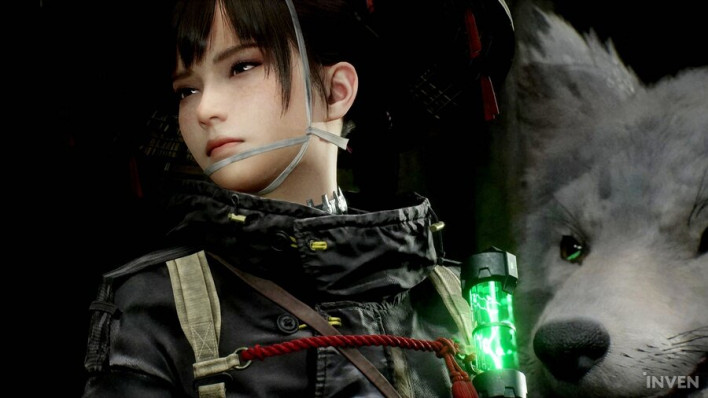
When you break down the various features of 'Beast of Reincarnation,' it is clearly full of delicious, fresh, and high-quality ingredients. From the post-apocalyptic world to the 'Blight Monsters'—creatures that appear to be a fusion of plants and animals—and the emotionless protagonist Emma and her partner Ku, who absorbs the corrupt energy of these monsters, the game is filled with compelling concepts.
The character roster is also quite decent. It includes Violet, a mysterious girl visible only to Emma; Brad, the advisor figure typical of such concepts; and Kagura, a companion on the journey, all of whom join Emma and Ku.
Of course, if we are being objective, it is hard to deny that these settings feel like things we have seen before. But that is the nature of familiar concepts; they are popular, so they are reproduced and utilized across various works.
In this sense, 'Beast of Reincarnation' has almost everything it needs—good ingredients and the seasoning to support them. However, the final product falls short of expectations. Despite having a strong concept and narrative foundation, it fails to weave them into a cohesive story.
The root cause lies in the plot and storytelling. The story begins in earnest as Emma and Ku set out on a journey to defeat the 'Beast of Reincarnation,' which, true to its name, keeps resurrecting to threaten humanity. To counter this threat, the duo travels, defeating powerful Blight Monsters known as 'Nushi' (bosses) and absorbing their power. With a clear goal and motivation for growth, the narrative of 'Beast of Reincarnation' is, in many ways, standard.
The problem is the plot structure. Every chapter unfolds in almost the exact same way: you arrive in Area A, Brad tells you a Nushi is nearby, you find and defeat it, and then move to the next chapter. This structure repeats from start to finish. Even worse, the direction, which should compensate for this, is largely identical. If the plot must be repetitive, the direction should at least provide variety to give each chapter a distinct feel, but the lack of variation makes it hard to feel any sense of novelty as you progress.
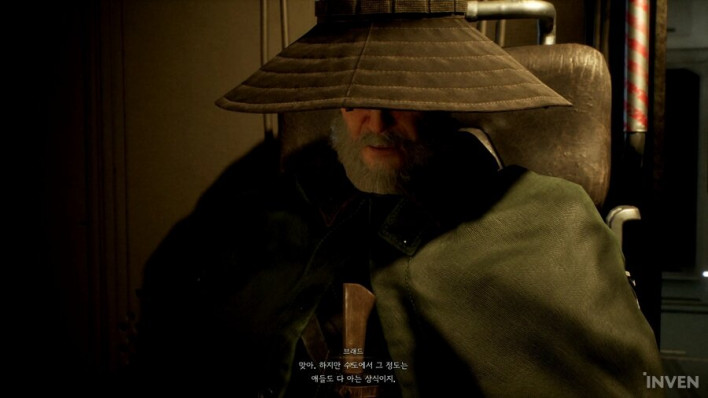
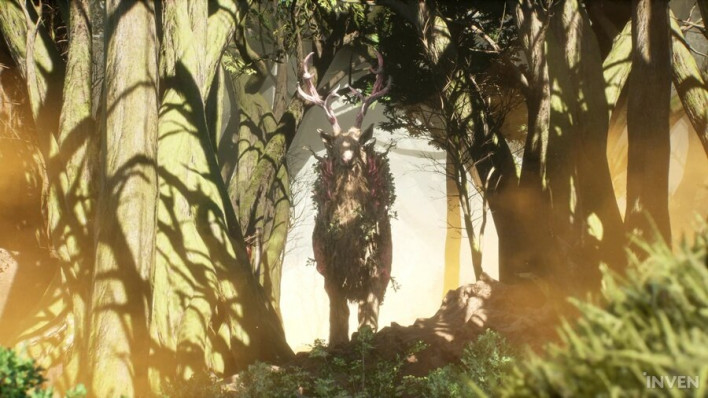
This repetition carries over to the bosses that cap off each chapter. With their plant-animal hybrid appearances, they evoke a sense of grandeur—much like the Forest Spirit from 'Princess Mononoke'—creating forests upon their arrival and leaving behind withered landscapes when they depart. Yet, beyond these initial visuals, there is little depth. Once the dramatic entrance is over, these cinematic flourishes vanish. The narrative is reduced to a one-dimensional premise: these 'Nushi' are threatening humanity, so you must eliminate them to gain power.
If there were a wide variety of bosses, this might be less of an issue, but even that is lacking. There are only about 6–7 unique boss types. While there are more boss encounters, most are just 'palette swaps' under the guise of being 'strengthened' versions. If you fight 10 bosses, you are essentially fighting the same ones twice.
The problem isn't just fighting the same bosses; the patterns for these duplicate bosses are over 90% identical, and even the defeat cutscenes are the same. Far from feeling the excitement of facing a new boss, you find yourself thinking, 'This boss again?' before the fight even begins.
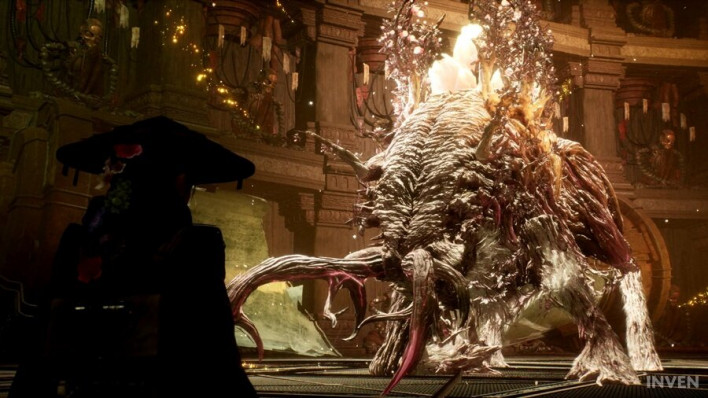
This disappointment carries over into the storytelling. A familiar concept doesn't have to lead to a generic story; there are plenty of ways to interpret familiar material with one's own flair. 'Beast of Reincarnation' fails here as well. Most of the story progresses through a few lines of dialogue without any cinematic direction, and the scenes are mostly filled with characters standing still while talking. It fails to capitalize on its attractive concepts at all.
Another disappointing aspect of the story is the translation. It seems to be a translation of a translation (likely from English), and while the basic dialogue is generally fine, there are several instances where the translation hinders immersion. The most prominent example is 'Blight Monster.' In Japanese, it is 'Fushokutai' (Corrosion Body), but it was translated based on the English 'Blight Monster,' resulting in the somewhat awkward term 'Busik-mon' (Corrosion Monster).
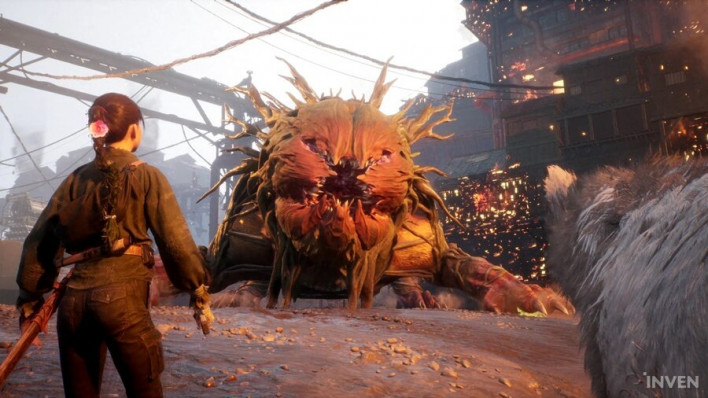
Of course, it is understandable that differences arise when translating from English. Even so, the term 'Busik-mon' breaks immersion every time it appears. Given the use of the word 'corrosion,' it seems they were aware of the Japanese term, and perhaps Game Freak's identity as a Pokémon developer influenced the choice. The problem is the nuance; changing a threatening 'Corrosion Body' to a 'Busik-mon' creates a comical impression. It is a disappointing choice that harms the game's atmosphere rather than showing any creative flair.
While not as egregious as 'Busik-mon,' there are many other ambiguous translations. Translating the 'King of the Capital' as 'Administrator of the Capital' or referring to Ku as a 'Pale Blight Monster' instead of 'White Corrosion Body' are examples of translations that don't fit the context.
The peak of these translation issues is the dialogue between Kagura and Emma. Before every mission, Emma says 'I'm off' (Ittekimasu) to Kagura, and upon returning, she says 'I'm home' (Tadaima), to which Kagura replies 'Welcome back' (Okaeri). This is not just a repetitive greeting; it is a phrase exchanged through the medium of 'home,' described in the game as a place to return to, representing the fundamental human emotion of belonging.
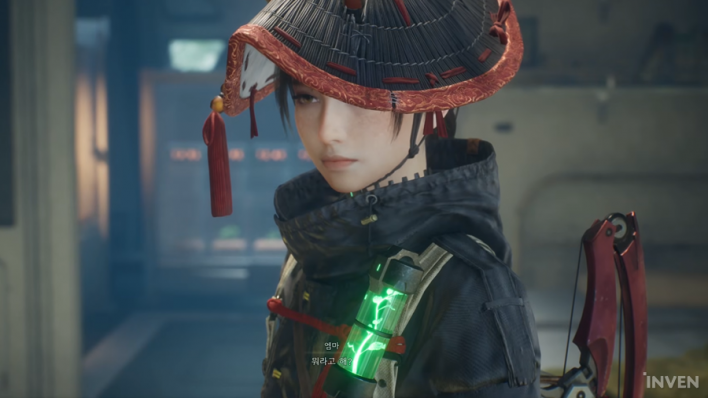
While Emma says these words mechanically at first, they act as a key narrative device. They show her humanity and her growth as a person. It is as if this dialogue is the seedbed that helps sprout emotions in the emotionless Emma. The problem is that the translation of these important lines keeps changing. It may seem like a simple greeting, but given that the repetition itself is meaningful, the original intent was not properly preserved.
In summary, 'Beast of Reincarnation' had the right ingredients. With an attractive world, characters, unique enemy designs, and a combat system that promised a tactile feel, the potential was there. However, the process of 'cooking' these elements—from direction and storytelling to translation—was consistently disappointing, resulting in a dish that feels like something everyone has tasted before.
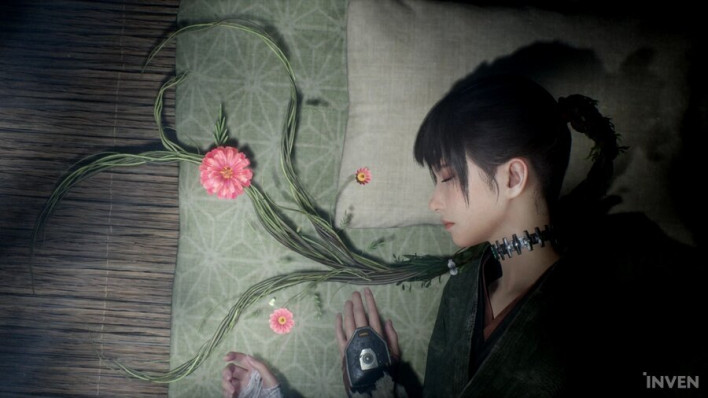
Still, the action was good
Double action created by one person and one dog
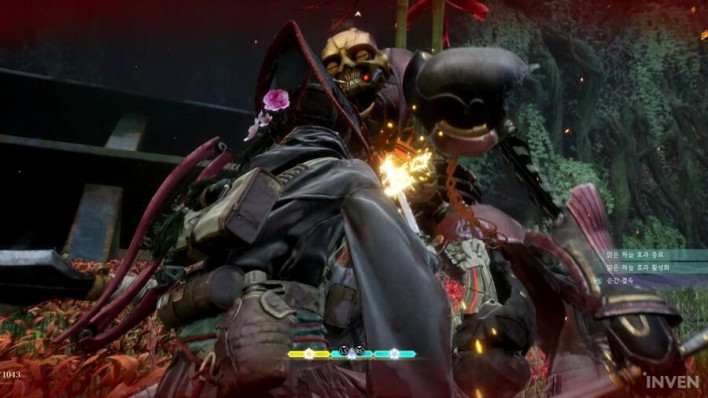
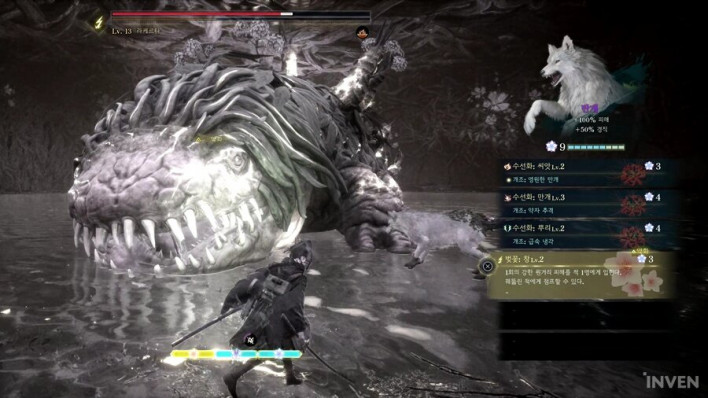
Despite the many shortcomings, the one saving grace of 'Beast of Reincarnation' is that the action is quite decent. The core combat system is built around parrying. Each successful parry builds up the enemy's 'stagger' gauge, and once staggered, a finisher move can be triggered to deal a powerful blow. However, you don't necessarily have to rely on the stagger gauge; it is possible to defeat enemies, from small fry to bosses, by depleting their health directly.
Parry-based combat can seem difficult at first. In most action games, parrying is a high-risk, high-reward mechanic that requires precise timing. However, 'Beast of Reincarnation' has tuned the parry timing to be exquisite, ensuring players don't feel overly stressed. Combined with responsive controls and satisfying sound effects, the action is definitely a highlight.

Combat isn't just about parrying; there is also a dodge mechanic. Interestingly, while the parry window is generous, the dodge window—the 'invincibility frames'—is very short. In most action games, dodging is the primary defensive tool due to long invincibility frames, but here it is the opposite. Because the invincibility window is so short, you won't use it often. Instead, dodging shines when avoiding special patterns that cannot be parried.
Mini-bosses and bosses use unblockable attacks that glow red, and this is where dodging comes into play. You can quickly create distance or, like parrying, time it perfectly to trigger a 'Just Dodge' and follow up with a counterattack. The action flows seamlessly.

Emma's skill mechanism, based on button combinations, was also quite appealing. Her skills, or 'Nushi Skills' (sword techniques, ultimate skills), are based on real-time button inputs. By combining these with basic attacks, you can trigger different techniques that are as visually spectacular as they are powerful. When landed correctly, they can deplete more than half of a strong enemy's health or even trigger a stagger state.
Nushi Skills aren't a 'cure-all' that can be used recklessly. They require a dedicated resource called the 'Bond Gauge.' Filling it isn't difficult; it fills significantly upon a successful parry and decreases slightly if you fail a parry and trigger a guard instead. Since you are encouraged to parry, the gauge fills naturally, so you rarely find yourself unable to use a skill.
Despite their power and ease of resource management, Nushi Skills have a clear drawback: you cannot guard while using them. Emma's health is quite low, and she can be taken down by just a few hits from minor enemies. While you can dominate minor enemies with these skills, you must be careful to use them only when there is an opening against strong enemies or bosses. It is a system that balances power with risk.

While Emma performs flashy real-time action, her partner Ku assists with automated combat and turn-based command inputs. The auto-combat isn't very helpful, but Ku's true value lies in the 'Blooming' skill. It assists in various ways, from breaking enemy shields to creating openings for bosses or exploiting elemental weaknesses.
The Blooming skill also requires a dedicated resource, 'FP,' which, like the Bond Gauge, fills upon successful parries. Ultimately, the combat flow of 'Beast of Reincarnation' involves parrying attacks to fill the Bond Gauge and FP, creating openings with Blooming skills, and dealing massive damage with Nushi Skills. It is a well-integrated mix of real-time action and turn-based RPG command combat.

The ability to use ranged weapons as a primary tool was also a positive. In many games of this concept, ranged weapons are relegated to secondary tools or are virtually useless, but 'Beast of Reincarnation' is different. By focusing on ranged weapon skills and combining various equipment, you can even take on bosses using only ranged weapons.
While 'Beast of Reincarnation' boasts a solid combat mechanism, it falls short of becoming a top-tier action game. It takes two to tango; even the most spectacular action needs responsive enemies to truly deliver a sense of impact. A great combat system only shines when tested against a diverse array of foes, and this is where the game is most disappointing.

The biggest disappointment regarding enemies is their variety. There are fewer than 10 types of minor enemies, and most appear in Chapters 1 and 2. Even the Golem types, which make up half of them, don't differ much from each other. For a player expecting increasingly powerful and bizarre enemies, this is a letdown.
If the Nushi were diverse, it might be less of an issue, but the bosses are even worse. As mentioned, there aren't many types, and their patterns aren't very difficult. I was able to defeat 80–90% of the bosses on my first try, and even when I died, it rarely took more than five attempts. When the boss fights, which should maximize the catharsis of combat, are this easy, even the well-crafted action loses its luster.
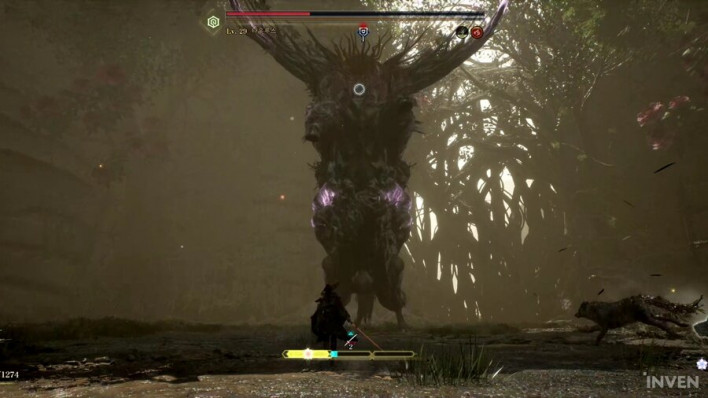
The problem with boss fights isn't just the low difficulty; it's that the combat design itself is repetitive and boring. They repeat a set of patterns and often create unnecessary distance during the fight. In a game where the action should be constant, these frequent breaks in the flow make it hard to enjoy the well-crafted combat.
A game that failed to become a 'perfect hexagon
Only the action and OST were good
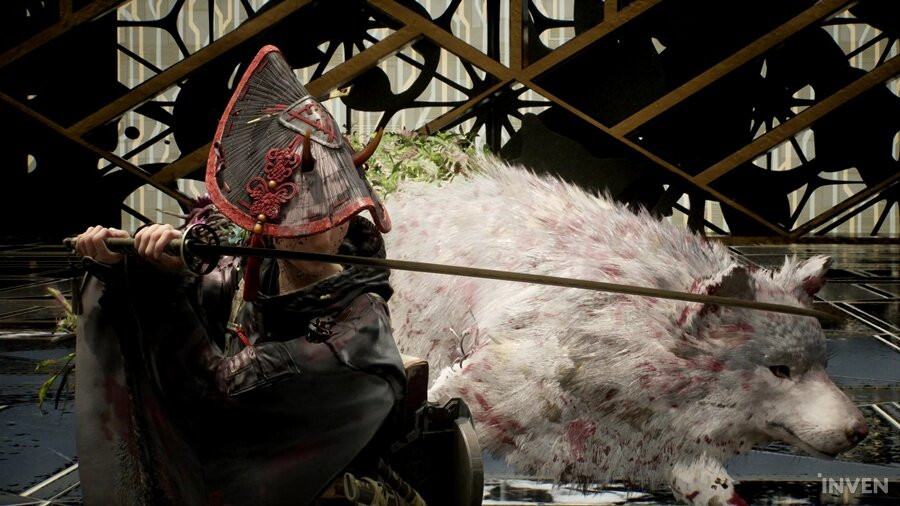
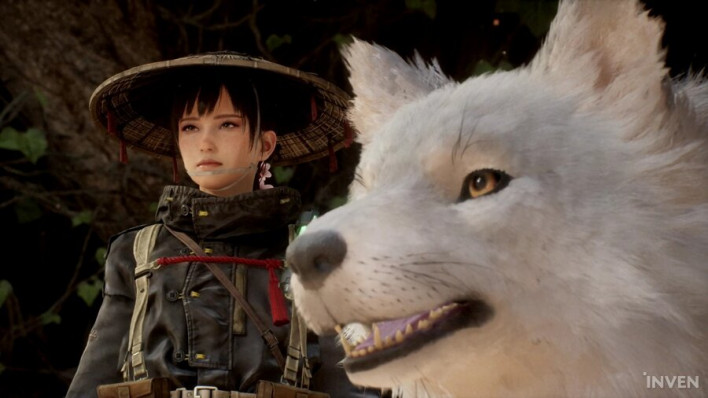
'Beast of Reincarnation' leaves much to be desired. While its flaws are more visible than its strengths, it is not unplayable. The character designs for Emma and Ku are quite attractive, and the OST does a great job of elevating the game's atmosphere. However, these strengths are undermined by poor direction, storytelling, and repetitive structure.
Exploration also has clear pros and cons. The ability to explore areas is a positive. Tools like the grappling hook, creating platforms with hair, or creating platforms with vines during a double jump are well-implemented.
The problem lies in the payoff. Exploration needs a clear incentive—such as encountering hidden, powerful bosses or discovering rare items—but most of the rewards here are mediocre. There is simply little reason to pore over the map, driven by the curiosity of wondering what might be hidden in the corners.
In conclusion, 'Beast of Reincarnation' is a game that falls short of its potential. It likely aimed to be a 'perfect hexagon'—a game where action, story, and OST shine equally. However, despite having good ingredients and potential, the process of crafting them into a high-quality work left much to be desired. The potential to be a masterpiece was scattered within a mediocre result.
- An OST that pleases the ears
- Parry-based action with a satisfying tactile feel
- Dry, predictable dialogue and direction
- Busik-mon' instead of 'Corrosion Body': disappointing translation quality
- Monotonous gameplay structure that repeats every chapter
- Too few bosses and enemy types
Review Platform: PC (Official Release Version)