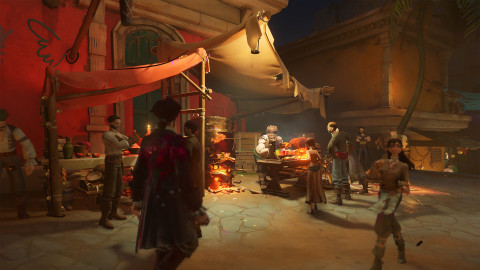
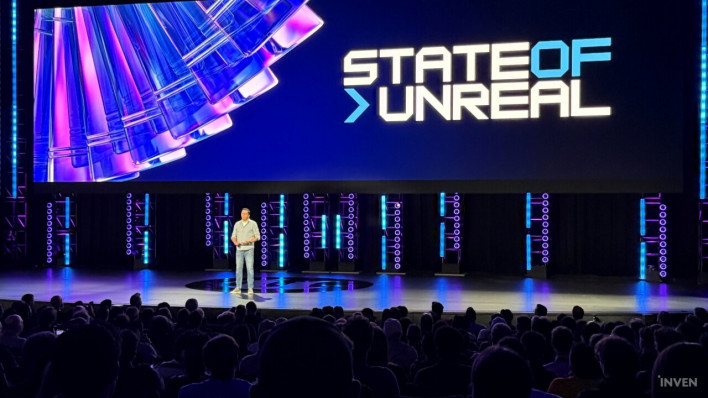
On the 17th (local time), Epic Games hosted UNREAL FEST 2026 at McCormick Place in Chicago. The event serves as a platform for Epic Games to share information regarding its various technologies and ecosystems, including Unreal Engine, UEFN, and the Epic Games Store.
UNREAL FEST 2026 Chicago kicked off with the 'State of Unreal,' which outlined the vision and upcoming major updates for Unreal Engine. This session revealed details on the latest version, Unreal Engine 5.8 (released today, the 18th), key news for UEFN, and the roadmap for Unreal Engine 6.
Unreal Engine 5.8: Reducing Shader Counts While Maintaining Quality, Plus AI and Stability Improvements
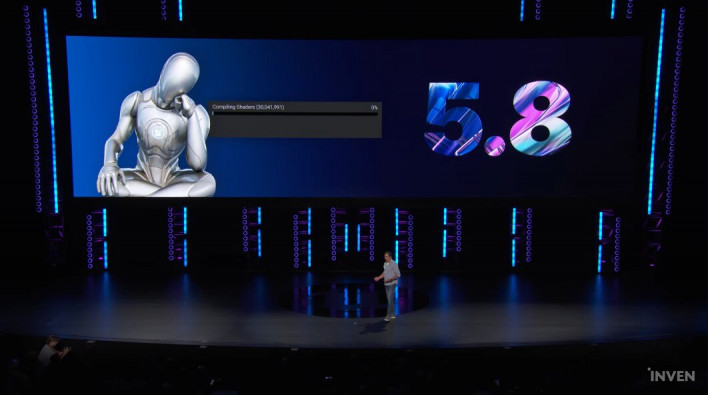
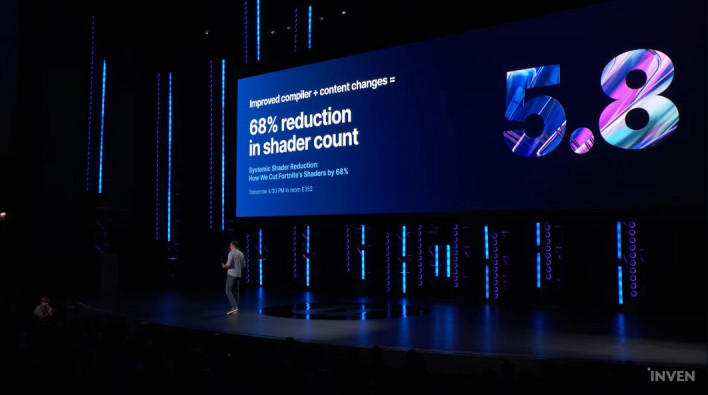
The primary focus for Unreal Engine 5.8, released alongside the opening of UNREAL FEST Chicago, was core engine optimization and the elimination of lag. VP Simon Turango explained that they approached this from two main angles. First, they optimized the shader compilation process by improving the shader compiler and enhancing 'de-duplication' performance to identify and remove redundant tasks. This significantly reduced compilation and load times; when applied to Fortnite, the shader count dropped by 68%, resulting in faster cooking, loading, and reduced memory usage.
Additionally, the PSO (Pipeline State Object) precaching system was refined. This aims to reduce the stuttering caused by real-time compilation when PSO information is missing during runtime, while also simplifying tuning, debugging, and profiling. Furthermore, in collaboration with Microsoft and hardware partners, they are introducing an advanced shader delivery architecture to securely distribute precompiled shaders.
Beyond this, many systems that remained in the experimental stage during the 5.x series have reached production-ready maturity. Notably, 'MegaLights,' which allows for thousands of dynamic shadow-casting and area lights in a scene at a fixed cost, and 'Iris,' an opt-in replication system that makes multiplayer implementation easier and more robust based on Fortnite's experience, are now officially supported in production starting with 5.8.
The platforms supporting existing features like Lumen are also expanding. While Lumen was previously unavailable on Nintendo Switch 2, version 5.8 introduces 'Lumen Lite'—a lightweight mode that maintains Lumen's quality while lowering GPU costs—allowing for similar effects on the Switch 2. Research is also underway to optimize Nanite and expand its supported platforms.
In addition to performance optimizations, new features have been added to make creating realistic worlds easier and faster. For terrain, a new terrain authoring tool has been introduced, allowing users to manipulate complex 3D shapes directly rather than being restricted to traditional heightfields. To facilitate collaboration, the engine now provides native support for partitioning and World Partition streaming, making it easier for multiple users to build worlds by sharing source assets simultaneously. Platform-specific adjustments, such as automatic Nanite scaling, have also been streamlined.
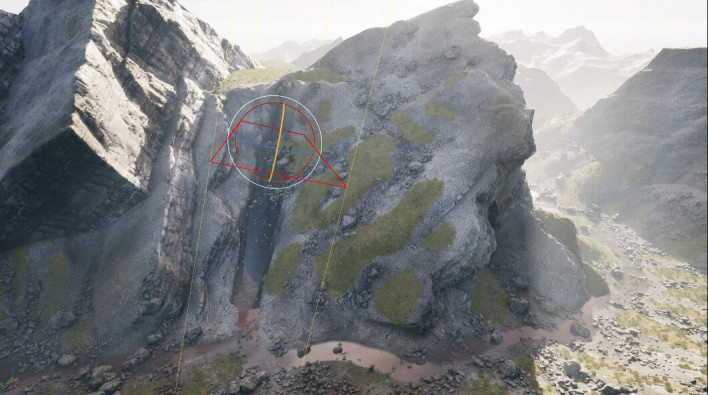
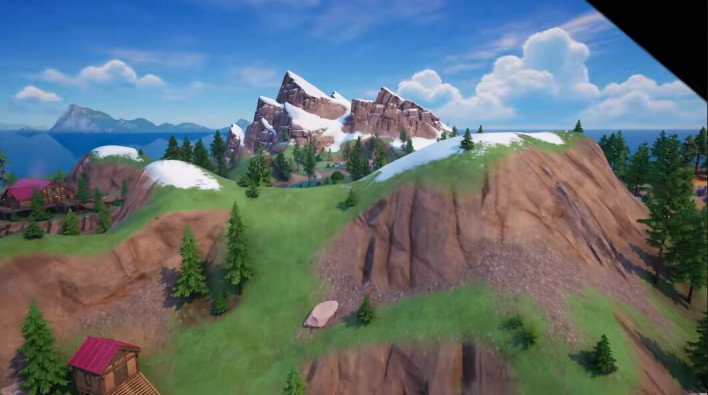
Tessellation control is now possible at the triangle level, allowing resources to be concentrated only where detail is needed to save memory. The engine also supports virtual textures that combine material layers, additional attribute painting, and automatic UV generation. Furthermore, non-destructive modifiers and procedural tools have been introduced, allowing for the free reordering and recombination of mountain shapes and layer placements.
In the animation and cinematic sector, several improvements have been implemented, led by MetaHuman. Thanks to the technology from Meshcapade, which joined the Epic Games ecosystem earlier this year, a new plugin has been released on Fab that extracts animation data for body, face, and finger movements from standard video input without the need for dedicated suits or markers. It has also become much easier for artists to sculpt directly on rigs or organically embed body controllers.
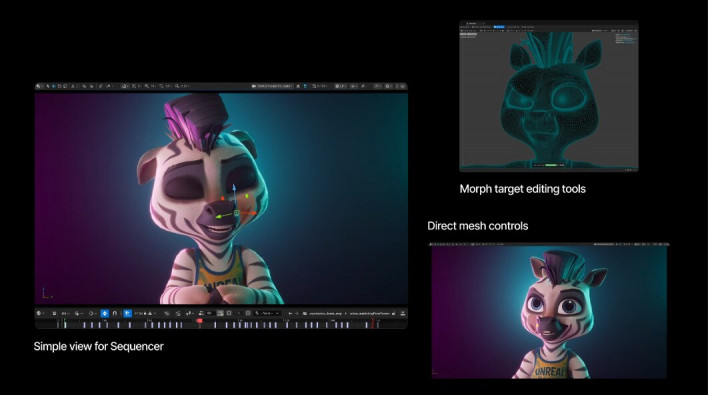
The engine now supports the Tiled Bitmap format, a compression format for ultra-high-resolution media. This allows the viewport to decode only the tiles and mipmap levels actually required, preventing processing resources from being wasted on pixels that are off-screen or unseen, thus ensuring smoother performance in ultra-high-resolution environments.
Finally, details regarding the MCP (Model Context Protocol) server for utilizing AI in Unreal Engine were introduced. By porting AI models into the editor control interface, developers no longer need to struggle with complex node graphs. The engine now includes an internal MCP server, providing a plugin environment that connects to any Large Language Model (LLM), such as Claude Code, Gemini, or a developer's custom model. The AI can read and understand the scene in real-time via the MCP server and perform actions directly within the engine, with the developer able to preview and verify the process.
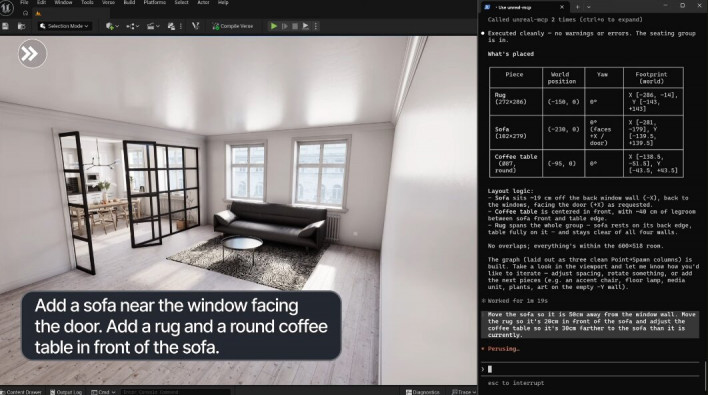
Elements rendered this way are not just images; they generate editable geometry and PCG (Procedural Content Generation) graphs. Furthermore, instead of manually adjusting dozens of parameters, users can provide reference images and request modifications in a specific tone, which the AI then applies uniformly. AI can also handle Blueprint and material logic coding, generating material instance graphs, expanding Niagara template parameters, and linking trigger logic. This process helps artists implement cities that would take months of manual work in just a few days through iterative cycles.
The MCP server, PCG primitive plugins, and lighting/environment control skill sets revealed at this State of Unreal are available for download starting today with version 5.8.

Meanwhile, generative AI linear content and 'Diffusion Lens,' scheduled for release early next year, were previewed. This method combines depth passes from the viewport with natural language text and transmits them to the Movie Render Graph. By feeding this into a generative AI image model, users can obtain 4K style frames that perfectly match the composition of the image model.
This goes beyond simply rendering 2D elements; by linking depth data to video models, users can create consistent cinematic footage or map 1:1 with local Flux client image models to visualize various art concepts in real-time. For example, entering keywords like 'a room on fire' into the Diffusion Lens will display the style visualization next to the viewport, facilitating smoother conceptual work. This feature is slated for official release early next year.
UEFN: A Free Creative Space with Mega IPs like LEGO and Disney
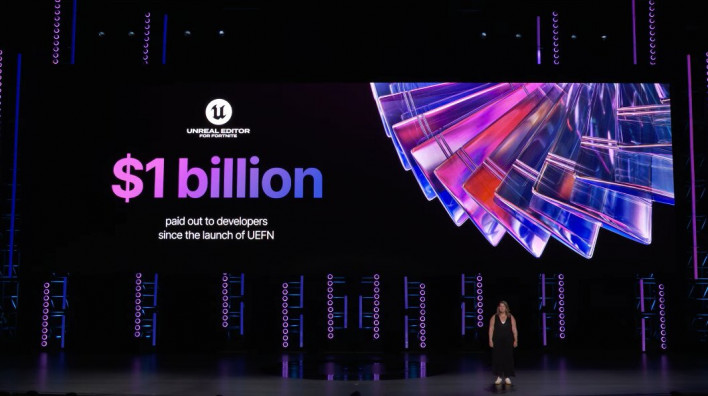
Following the Unreal Engine 5.8 presentation, the achievements and technical changes of UEFN, another pillar of the Epic Games ecosystem, were introduced. Three years after its launch, over 75 million of Fortnite's monthly active users are enjoying creator-made games. As of May, games created with UEFN accounted for 47% of total playtime in Fortnite, showing significant growth year-over-year. Consequently, the cumulative payout to creators worldwide has surpassed $1 billion.
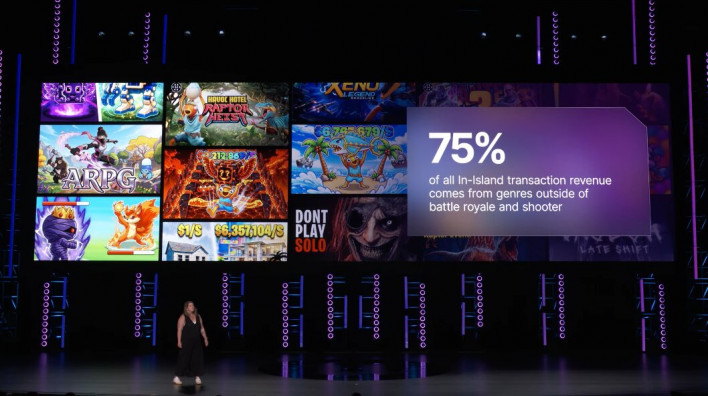
Notably, the in-island direct payment feature introduced in January has become a successful new revenue model; currently, over 3k islands are generating more revenue through direct payments than through the traditional engagement-based payout system. While genres were initially focused on shooters or battle royales, new genres now account for over 75% of in-island direct payment revenue..
As the UEFN ecosystem continues to thrive, 'stability' and 'development efficiency' have been identified as top priorities. To this end, iteration time for build deployment has been reduced by an average of 40% compared to before, with up to 70% reduction for large-scale projects. Additionally, changes are now reflected in game modes in real-time, allowing creators to verify and adjust modifications instantly. A workflow is also supported that allows creators to detach the camera while in a paused state during development to freely explore scenes and edit spaces.
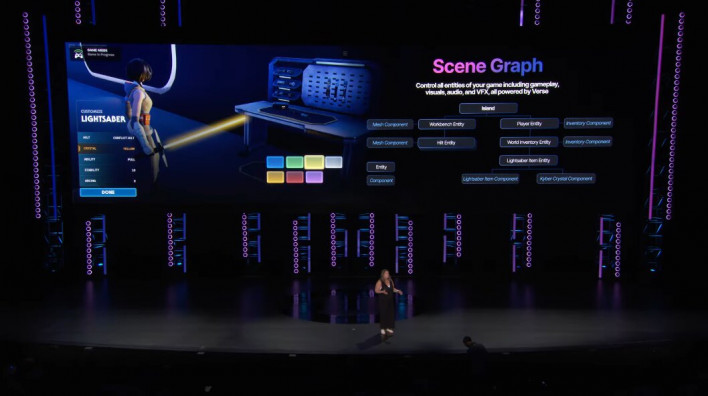
Meanwhile, core technologies are being validated in UEFN ahead of the Unreal Engine 6 launch. First, a 'Scene Graph' is being introduced, which allows for easier tracking of custom items or inventory systems within a scene; recent updates have unlocked initial sets for custom weapon creation and dedicated animation workflows. Furthermore, the new programming language 'Verse,' first applied in UEFN, is seeing improved utility as major engine systems are being ported to be controllable via Verse code.
Following the resolution of Epic Games' antitrust lawsuits against Apple and Google and the return of Fortnite to both major app stores, UEFN is undergoing mobile optimization. This process, which includes system stabilization, is expected to exit the experimental phase this August. The Discover UI is also being revamped to ensure creator games reach the appropriate users. By the end of this year, the Fortnite lobby screen itself will be replaced by the Discover panel to encourage direct access to a wider variety of games.
Finally, the achievements of the IP Partner Program and additional partnerships were announced. UEFN has established partnerships allowing creators to freely use world-class IPs such as LEGO, Star Wars, Squid Game, and K-Pop Demon Hunters. Thanks to this, small indie developers like Future Trash achieved a mega-hit with the UEFN game 'Droid Tycoon,' which utilizes the Star Wars IP.
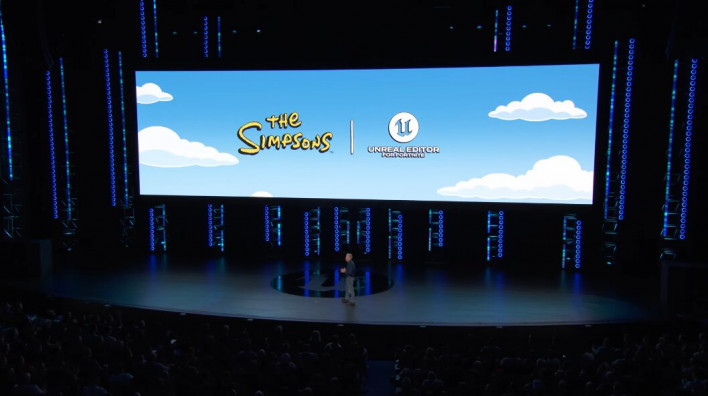
In this regard, Ray Gresko, Senior VP of Product Development at Disney, appeared on the State of Unreal stage to announce full-scale cooperation. Building on the success of last year's Fortnite Simpsons event, Disney will officially join the UEFN IP partners later this year. Beyond the Simpson family, all key assets—including various Springfield characters, landmarks, and even the nuclear power plant's radioactive waste—will be fully opened as official assets and templates in UEFN.
UE6 = UE5 + UEFN: The Unreal Engine 6 Generation, Changing from the Foundation Up
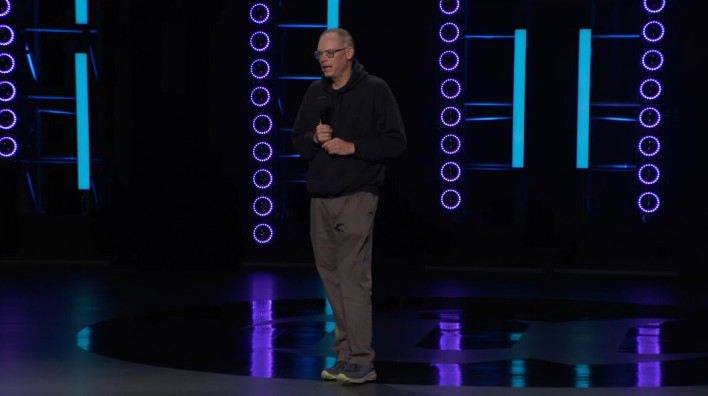
Following the UEFN ecosystem presentation, CEO Tim Sweeney took the stage to explain the core vision of Unreal Engine 6. Unlike previous versions that prioritized graphics technology, Unreal Engine 6 will see a fundamental change in the engine's foundation. The two core pillars are the integration of Unreal Engine and UEFN workflows, and a structure centered on the 'Verse' language.
CEO Tim Sweeney presented the formula "UE5 + UEFN = UE6." He explained that they are preparing for a system where content built once in UE6 can be simultaneously deployed live across existing PC, console, and mobile stores, the Fortnite ecosystem, and even metaverse ecosystems built by other developers on UE6.
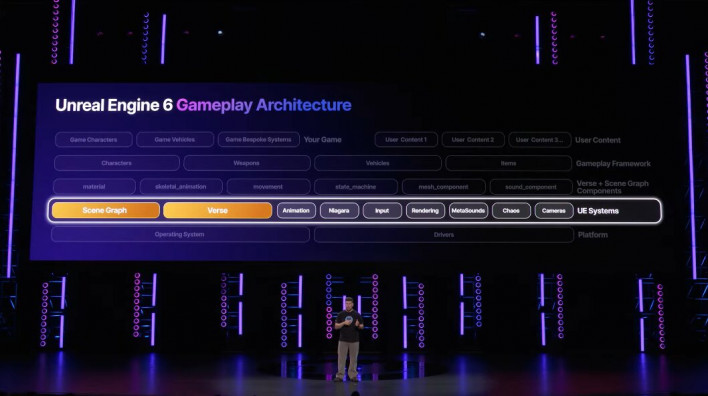
Subsequently, EVP Marcus Wassmer and Technical Director Curtis Schmidt appeared to elaborate on the key directions for Unreal Engine 6. First, 'Verse,' the new language already being validated in UEFN, will replace C++ as the core language in Unreal Engine 6. Verse provides universal API and language consistency within the Unreal Engine ecosystem, eliminating the need to manually install nodes after downloading assets from Fab. This builds a smart asset ecosystem that is perfectly portable between projects and games. Furthermore, Verse object classes will be applied to all core engine systems, including materials, meshes, and Niagara, ensuring data integrity through immediate detection during compilation and code verification.
Key features of Verse include 'Distributed Software Transactional Memory' and true multi-threading based on it. While existing languages were written in a single-threaded style, Verse applies a distributed software transactional memory system that organically distributes processing across hundreds, thousands, or millions of servers in a data center. If an object is needed on a specific server, the runtime rolls back the current transaction, migrates the object, and re-executes, maintaining transaction consistency. Additionally, in the event of a computation failure, the system can perform a full rollback and restart simulation, allowing for clean recovery without code collision errors.
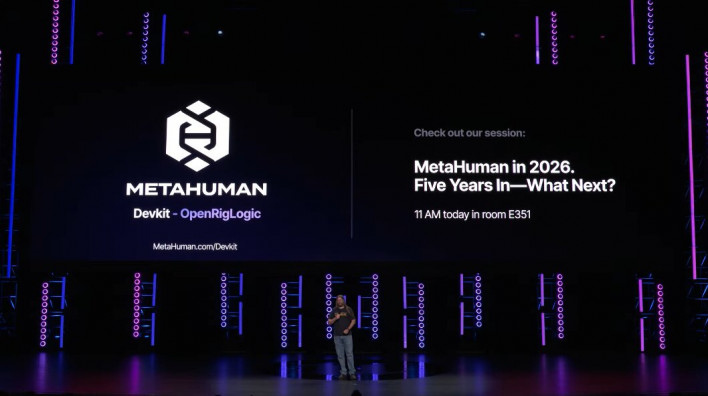
To foster this development environment, Epic Games is opening up various formats, assets, and devkits. For instance, the Fortnite cosmetic system will transition to an open UE6 module, allowing players to link outfits purchased in Fortnite to their own games, or use outfits from their own games in Fortnite. Additionally, the MetaHuman devkit is being fully opened, allowing it to be used without restrictions in third-party engines or platforms starting today.
Furthermore, a new open-source version control system called 'Lorr' is being introduced. Designed to overcome the limitations of existing binary data processing and collaboration, it breaks large binary files into small fragments, increasing efficiency by fetching only the data needed for the current branch and revision, rather than requiring the download of the entire history to a local machine. It also prevents bottlenecks by organically and transparently extending server layers from local machines to regional caches and global storage layers. The Lorr system will soon be integrated into the Unreal Editor and is being fully released as open source starting today.
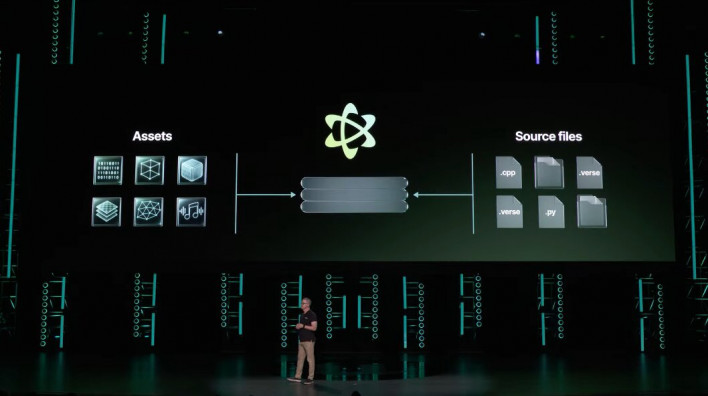
Finally, CEO Tim Sweeney discussed the AI and migration roadmap, as well as the 'Team Open' business strategy. Regarding AI, he noted that while it will not replace the engine itself, it is expected to increase productivity by reducing tedious, repetitive tasks for artists and programmers. In line with this philosophy, tools such as fast code indexing to assist with large-scale engine codebase processing and automatic crash analysis systems will be integrated into UE6.
As the transition to Unreal Engine 6 occurs, actors and Blueprints will also gradually shift to the new framework. The Cascade particle system will be completely removed in Unreal Engine 6, requiring a transition to Niagara. To help developers prepare for these changes, the Unreal Engine main stream source code is being released on GitHub starting today. CEO Tim Sweeney also emphasized the 'Team Open' model, which stands against centralized, proprietary platform models that extract excessive fees and standardize content. In this spirit, Unreal Engine 6 will continue to build an open ecosystem by releasing main stream source code and more.
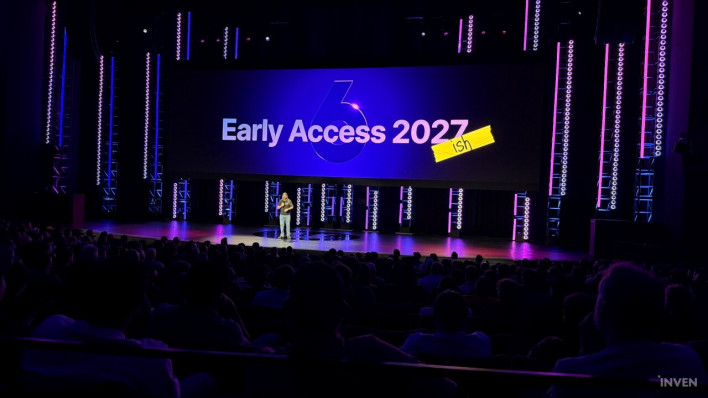
Unreal Engine 6 is currently in development with a target for an Early Access release by late 2027, with the full version planned for release 12 to 18 months later. Further details regarding Unreal Engine 6 will be shared via the official website and YouTube in the future.

Sort by:
Comments :0