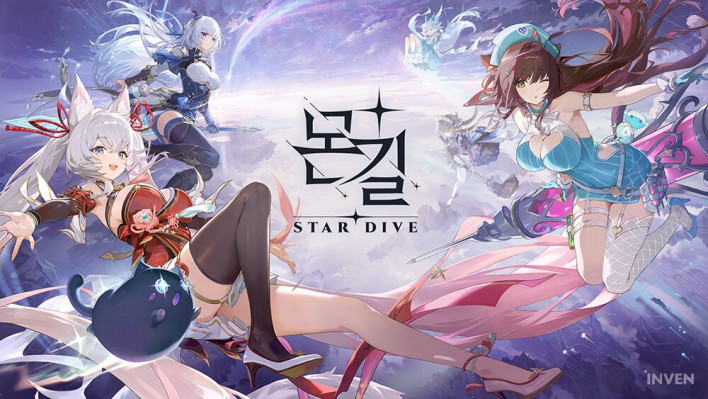
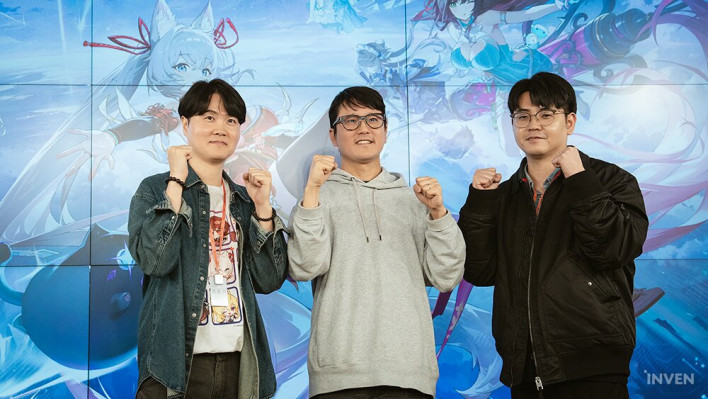
Ahead of the April 15 launch of Netmarble's new title, Monster Taming: STAR DIVE, the company held a joint media interview. Participants included Kim Gun, CEO of Netmarble Monster, and Lee Da-haeng, a director at Netmarble.
Monster Taming: STAR DIVE is the official successor to Netmarble's flagship IP, Monster Taming. It captures the fun of monster collection through taming and action-packed gameplay. The development team aimed to deliver greater enjoyment by reflecting modern trends, featuring a mix of original characters and monsters alongside new ones.
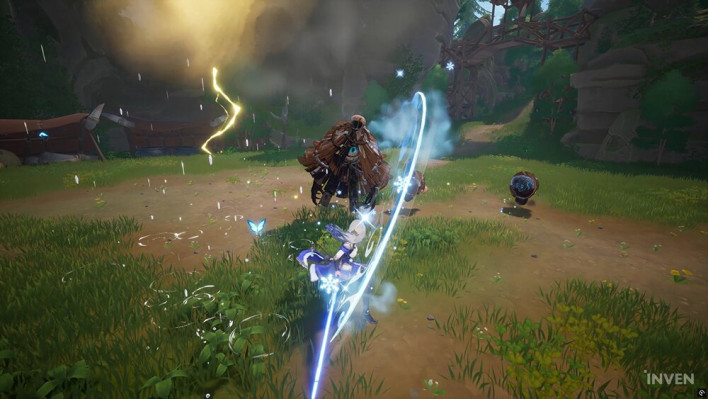
To preserve the core appeal of the original, the game includes various features for utilizing acquired monsters, such as 'Monster Ring,' synthesis, and link chains. The original's three-person party tag action has also been evolved, allowing for faster, more dynamic combat and strategic party building by combining characters and monsters.
The official launch version includes numerous improvements to player accessibility. An 'Easy' difficulty mode has been added, allowing players to choose between two difficulty levels at the start, with no difference in rewards. Netmarble Business Division Head Kang Dong-ki explained that this adjustment is intended to ensure players can enjoy the game at their own pace. UI/UX optimized for both mobile and PC platforms will also be provided.
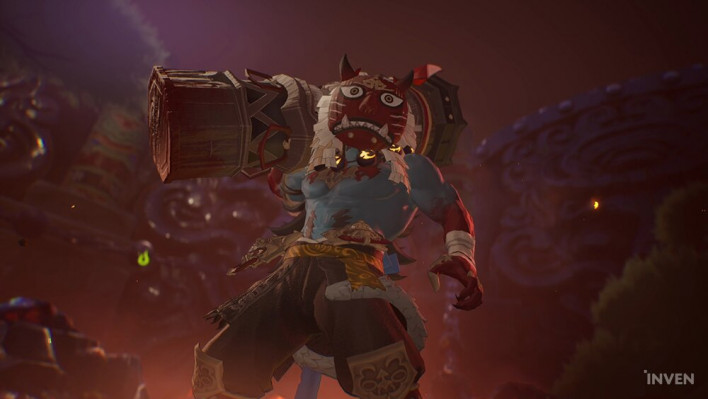
The core business model (BM) revolves around character and artifact summoning. The 'pity' system is set at 90 pulls for characters and 80 for artifacts, with a 1% acquisition rate for featured items. Legendary monsters are end-game collection content to be added after the May update. The first, 'Reginula,' differs from standard monsters in both appearance and performance.
The game launches on April 15 for iOS, Android, Epic Games Store, Google Play Games, and the Netmarble Launcher, with plans for future releases on Xbox and PS5.
The Differentiators and Direction of STAR DIVE
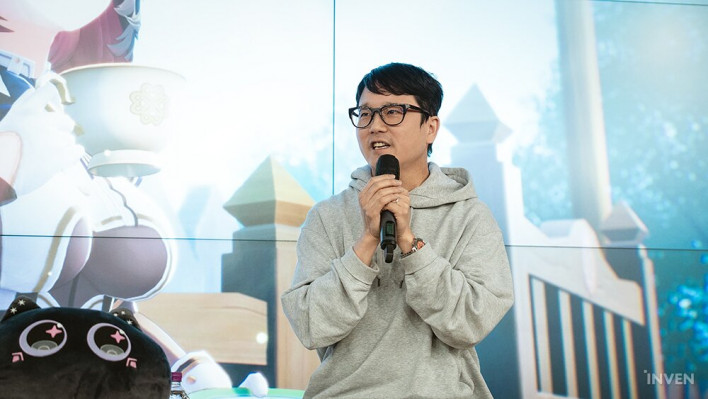
The original game saw great success in Korea. Are there specific contents or strategies prepared for the overseas market.
Director Lee Da-haeng: We have been conducting regional tests since last year and received significant feedback from Japan, North America, and other markets. Based on this, we modified everything from character designs to various systems.
While the Monster Taming IP carries expectations in Korea, it is unfamiliar globally, so we felt the game had to stand on its own merits. We have been creating opportunities for players to experience the game, such as at G-STAR and GDC. Through these events and extensive playtesting, we are seeing growing anticipation abroad. We are focusing on viral marketing to drive success.
What do you consider to be your competitors.
CEO Kim Gun: There are many games to compete with, but I believe there were more gamers when the original Monster Taming first launched. Nowadays, you rarely see people playing games even on the subway. While preparing STAR DIVE, I viewed non-gaming media as our true competition, which is why we worked hard to lower the barrier to entry.
Which markets are you prioritizing outside of Korea? And what do you see as the differentiators of STAR DIVE compared to other new domestic subculture games.
Kim Gun: Right now, my biggest wish is for it to do well in Korea. The original wasn't launched with massive preparation, but we put a lot into STAR DIVE. Personally, I see this not as a revival, but as a beginning. It is true that we prepared with an eye toward larger markets.
Many character-driven games we compete with are projects that have been in development for a long time with large teams, so I think there were differences in scale compared to other domestic titles. I don't think the results always matched their intentions. We don't believe we have an advantage in a 'scale war' either.
What we prioritized was 'selection and focus.' Rather than trying to do everything others are doing with our limited resources, we sought to do only what we do best. Early in development, the question wasn't 'what should we make?' but 'what should we cut?' I am confident in the final product because of that process. I hope this will be our competitive edge.
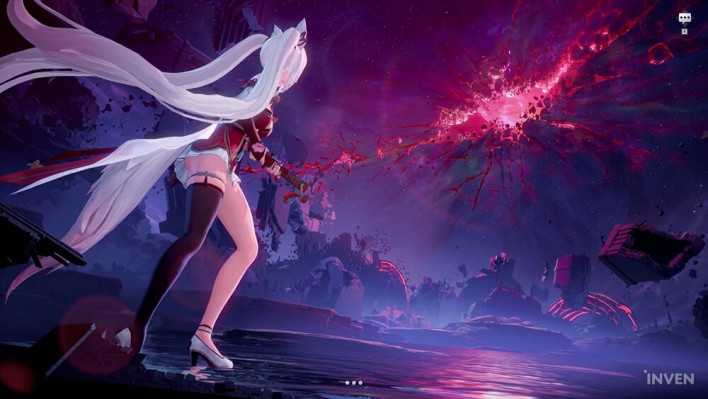
Subculture games often attract users who want depth rather than casual play. What are your differentiators or strengths to attract them.
Kim Gun: We received many questions about whether there was any consideration for users who want to immerse themselves in a game. Our game has high density. It's a matter of how you play. Even with package games, everyone plays differently. Most games currently on the market require users to follow the company's schedule rather than their own to have fun.
We created a game that users can play at their own pace. It isn't shallow. By removing competitive elements, we wanted to position it as a game that can be played without the stress that usually comes with such systems.
Why do you emphasize its identity as a subculture game.
Lee Da-haeng: I think it's ironic for us to declare it a subculture game. If the subculture user base likes it, then that's what it will become. We pay attention to their feedback because we developed it with the hope that players of similar genres would be satisfied.
I don't think it's meaningful for us to label it ourselves. However, we clearly aimed for that genre during development and incorporated feedback, which is why it is perceived that way. We are certainly hopeful.
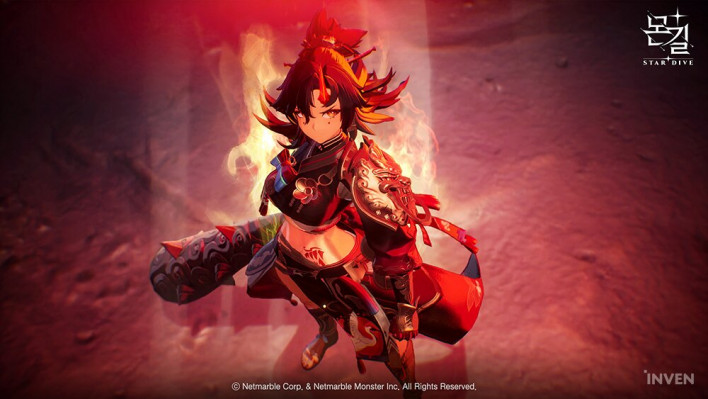
Gameplay, Characters, and Overall Systems
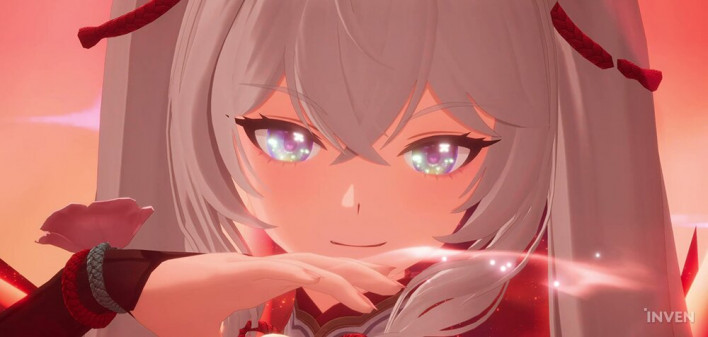
The 3D modeling received positive reviews. What was important in character creation.
Kim Gun: We reached this point after a long R&D process. Netmarble Monster has traditionally been strong in semi-realistic styles. It took a long time to catch up to others while preparing our toon-shading. Afterward, we conducted R&D to differentiate skin textures and clothing materials. That resulted in the current look.
Compared to the original, the number of characters is smaller, but I believed each one needed to express its own personality. We went through a lot of trial and error to build the current lineup. You could say we put a lot of effort into the process.
In the original, there were specific 'meta' combinations. What do you think will be Tier 1 in STAR DIVE? And who is your favorite character.
Kim Gun: Since the original's end-game was PvP, users cared about which meta was Tier 1. STAR DIVE was developed with a focus on single-player. I wanted it to feel like you're playing a completely different game depending on your character combination, rather than just finding the most efficient one. While some combinations might be easier, I don't think that will become the core meta like in the previous game.
My favorite character is Mina. She was very important in the original, so I have a strong attachment to her. She isn't in the launch version, but there is a sister character named Narae. I'm quite attached to them, almost like they're my own children (laughs).
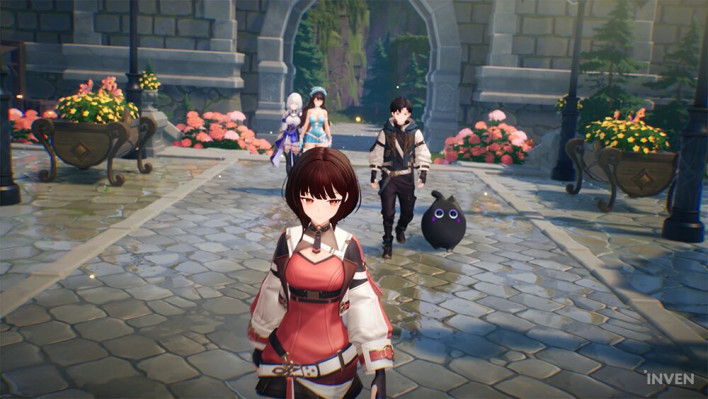
Good graphics alone aren't enough for success. Could you explain the narrative and game systems in more detail.
Kim Gun: In our previous development style, we would build a world and then plant characters in it. This time, we built the story around the characters. We developed it with the mindset that the characters are driving the story, not us. A key point was the pacing. It's quite fast-paced, but it's more about momentum than just rushing through. I think the strength lies in constantly unfolding the story from the start.
We live in an era where people watch YouTube at 2x speed and skip around. It's said that Korean users skip a lot of dialogue in games. So, we made it so that even if you skip, you skip by sentence units, allowing you to understand the content by reading the subtitles. We are making the game with a flow closer to a short-form drama, allowing players to grasp the story while moving quickly.
While there may be mixed opinions on depth, I hope this acts as a device that allows for easy immersion without requiring a huge time investment.
You introduced Legendary monsters as end-game content. Why? Do they have special functions..
Kim Gun: Legendary monsters weren't included at launch because we are still testing them. The update cycle is long, and they are designed to add fun to the combat itself. I believe the acquisition itself is the biggest reward.
Lee Da-haeng: We are preparing something special for Legendary monsters that goes beyond the existing Monster Ring, which we will reveal later.
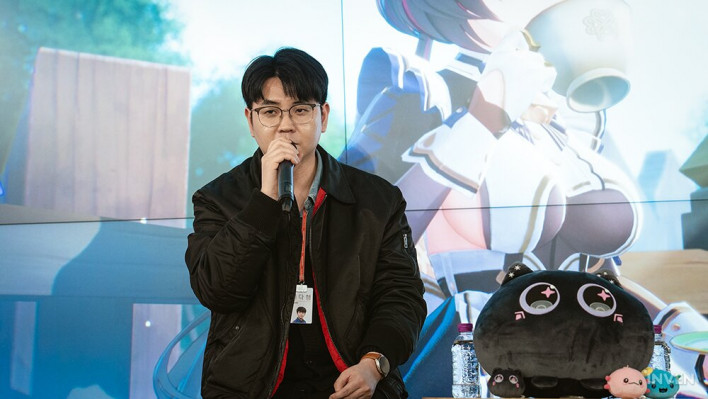
Is there anything you didn't get to say at the showcase? What are you technically confident in, and where will users find the appeal.
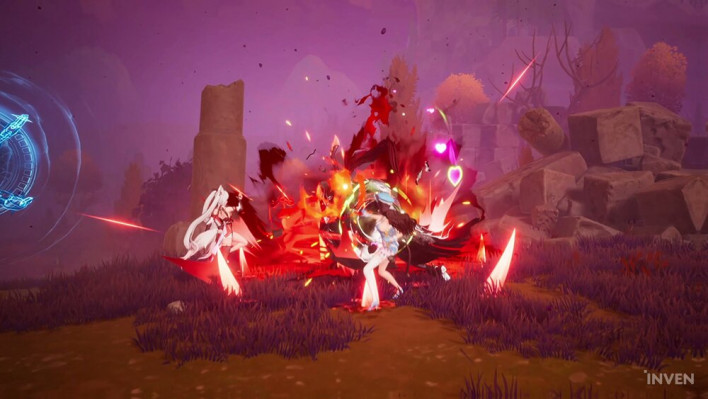
Kim Gun: We focused more on combat than graphics. Netmarble Monster has always liked 'impactful' gameplay. I think STAR DIVE has the fastest feedback of any game we've made. We paid a lot of attention to the actual control feel, ensuring actions trigger immediately without input lag.
As an action RPG, the action is the core. We worked to ensure it feels more definitive when playing than when just watching. We gave up some things for this. Combat fun was the most important part of our 'selection and focus.' It might look like a game you've seen before, but I think it will provide a distinct difference when played.
Lee Da-haeng: We know there were mixed reactions to the showcase. We could have used a conventional format, but because the Monster Taming IP attracts a diverse audience, we structured various sessions hoping to satisfy different tastes. The game introduction was short. We plan to have a live broadcast on Friday to show gameplay, which I think will answer many of the users' questions.
There was a lot of talk about the humor and tone of the showcase. Are you willing to improve? How much information will be revealed in tomorrow's live broadcast.
Lee Da-haeng: We are thoroughly reflecting on the humor. As I mentioned, it was an attempt at a different structure. Since attempts don't guarantee success, we failed. We are in a state of deep reflection and will not touch that side of things again.
In the live broadcast, we plan to focus on how the various feedback we received during testing has been implemented. We also intend to show as much detail as possible regarding character skill sets.
Kim Gun: The development team wasn't involved in that. We saw it for the first time yesterday, too.
You mentioned making many decisions to 'cut' content. Did you have the company's full agreement.
Kim Gun: There were internal opinions that it was too much since G-STAR, and after the first user reveal, there was a lot of talk about needing improvements. We are adjusting accordingly. If you try to satisfy too many people, you end up satisfying no one. I realized that after G-STAR. We are proceeding with development based on that principle.
The game hasn't been fully shown yet. The developers have their vision until launch, but after launch, the users lead the way. There is less than a week left until that day. Moving forward, we will look at user communities more closely and make clear decisions regarding future update directions.
The official launch was delayed. What areas did you focus on improving.
Kim Gun: The area we put the most effort into this year is play balance. Since there are two difficulty levels, they need to have distinct identities, and I wanted the recommended difficulty to be fun even if viewed as a standalone game. Another focus was mobile optimization and improving responsiveness on touchpads, which can be slower than keyboards or controllers. These were our two most important topics.
What did you gain from collaborating with Epic Games.
Lee Da-haeng: Epic Games was a platform we wanted to grow with. We received many opportunities to participate in global offline events. One reason for the collaboration was that Epic Games was preparing a stage to showcase games for growth, and we were able to gain promotional opportunities in line with that direction.
There is sensitivity regarding AI issues. To what extent did you receive help.
Kim Gun: This game has been in development for a long time. Internally, we joked that this might be the last game made entirely by humans. We think about AI, but we barely use it.
Recently, we've been experimenting with automating things like code reviews to reduce errors or problems during development. I think there are areas where it can help during project execution. So, I don't think there's any cause for concern regarding AI.
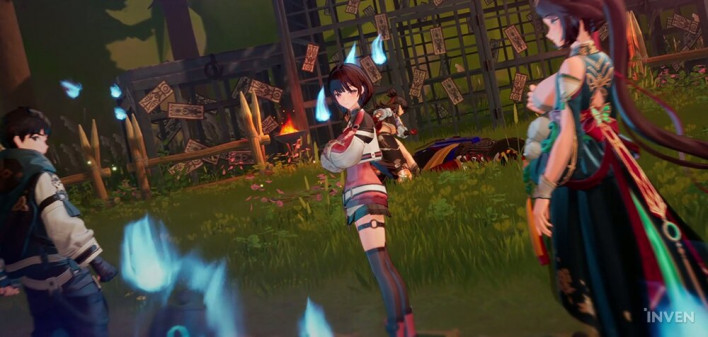
Is the Korean-themed 'Sura' the game's 'kick' (hook).
Lee Da-haeng: I think the oriental-style region is a hook. The global reaction is very positive, so we have high expectations. The launch version includes the oriental region. I consider that part the climax.
Kim Gun: With the Mina and Narae sisters appearing, I think players will definitely be immersed once they reach that point. While creating the Joseon-style Sura, Chairman Bang Jun-hyuk gave a lot of feedback, and I was surprised by how detailed his points were. We did a lot of internal verification and put a lot of effort into historical research.
How is the console preparation going? Which platform are you focusing on most among the multi-platform release.
Kim Gun: Consoles are the deepest type of device. There was feedback from overseas that it was a shame the console version was coming later. It's also becoming a topic in console communities, which I am grateful for.
For STAR DIVE, there isn't a huge visual difference regardless of the platform. The baseline is quite high. Of course, you can see better results on high-end devices with ray tracing. We tested with gamepads the longest. We wanted it to play like a well-made console game. Console test reactions were particularly good overseas. We put a lot of effort into overall UI/UX improvements so it could be played comfortably with a gamepad. Ultimately, it felt like we were developing three games at once.
Personally, I think the gamepad is the most fun, but during the final launch preparations, we added many improvements so that the desired gameplay can be achieved on mobile touchscreens as well. I believe this will allow for smooth play.
BM, Monetization, and Character Breakthrough (Blooming)
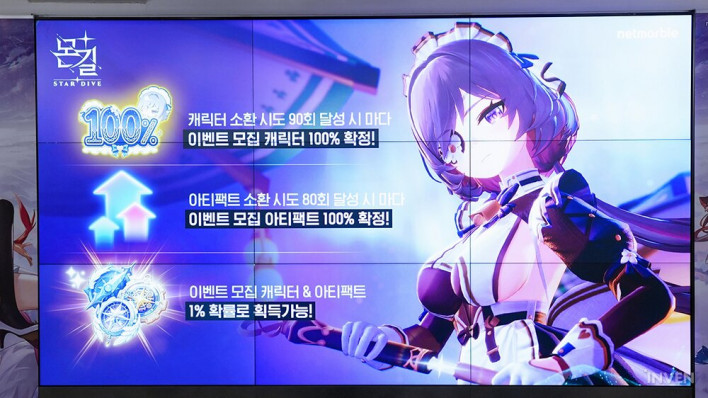
The gacha pity is 90 pulls. How does the in-game currency collection structure work.
Lee Da-haeng: We focused on making it comfortable for users. We adopted a method where currency is acquired through story progression and expansion. You can choose the story difficulty, and it's a system that allows you to progress without hurdles. This reflects our user-centric philosophy of not wanting to cause stress. I think users will be satisfied with this.
Kim Gun: For a gacha-based BM to work, games usually push players to get stronger to earn more rewards. We have completely moved away from that. We lowered the 'Easy' difficulty so that there are no hurdles at all. If we receive feedback during service that there are hurdles, we plan to lower them further.
The recommended difficulty is fun, but since it involves some skill, there might be differences based on individual ability or device. We created the 'Easy' difficulty with that in mind. We made it so you never feel like you can't progress without spending money. I don't know how the results will be, but I think it will be felt as a huge difference from the day we open.
The monetization structure seems more important than the gacha rates. If there are systems like 'breakthroughs,' the burden of spending seems like it would remain. How is the monetization designed.
Lee Da-haeng: There's a rumor that 10 pulls cost ₩50,000, but we are thinking around ₩23,000. For breakthroughs—we call it 'Blooming'—there are 6 stages. Recent games seem to use tricks, like making it seem like the rates are high but requiring many duplicates.
We have a Blooming system that requires 6 characters, but there is no other case where you need the same character. We didn't design the BM to deceive users or use predatory tactics. We lowered the hurdles so that many people can acquire characters.
Kim Gun: With the 'Easy' difficulty, Blooming is no longer mandatory. You can change the difficulty at any time. For the character BM, it's not really necessary unless it's a matter of affection.
What is the benefit of Blooming, then? And how many characters are there at launch.
Kim Gun: The benefit of Blooming is personal satisfaction. Skill usability improves slightly. When you first acquire a character, we've prepared them to perform their role well regardless of grade. Balance is important in PvP, but we focused more on achieving the character's purpose. Blooming allows you to use them in areas where they might otherwise be difficult to use. Other than that, there is no forced requirement in the current design. There are 19 characters.
You mentioned Blooming is about affection, but the 'Dimensional Rift' content has seasons and grades based on scores. I see this as a PvE competition system. Scores will differ based on Blooming status; how will that be handled.
Kim Gun: Rifts and Raids are end-game content. They have individual difficulties, but even in end-game content, the rewards based on rank aren't huge. How far you cleared is what's important. It's not designed to require high-level Blooming.
Lee Da-haeng: It is true that there are rank-based devices for seasonal content. There is no problem clearing it without Blooming or specific monsters. However, if you have Blooming characters or specific monsters, you can clear it faster or more easily. We prepared these devices so core users can receive feedback on their growth.
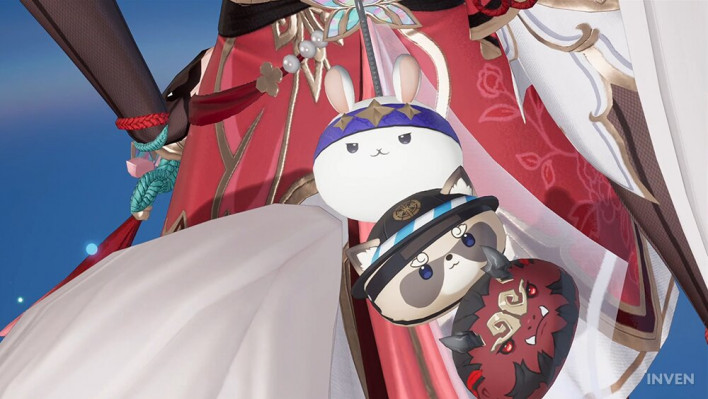
There was a scene in the Tomak game where a Monster Taming trailer appeared. What was the intention behind promoting a new game inside another game.
Kim Gun: We were making Tomak ourselves to commemorate its 25th anniversary. When you go to the theater in the game, an ad plays, and it featured a video for the predecessor of R2Beat, which we made in the past. Since STAR DIVE was originally planned to launch last year, we put the video in, and it looked seamless. After talking with Epic Games, we decided to actually include it.
Lastly, please say a word to the users waiting for Monster Taming: STAR DIVE.
Kim Gun: This is the largest project I have been responsible for developing. It's a game we've worked on for a long time and carries a lot of weight. It's a game you can play for free without worrying about BM or similar factors. I believe it guarantees excellent gameplay and a fun time, even if viewed as a standalone game. Since the barrier to entry is low, I hope you'll try it with a light heart—even just the launch content will provide a fun experience. I hope both those who know Monster Taming and those who don't will give it a try.
Lee Da-haeng: After 13 years, the Monster Taming IP is finally being presented as a completely new game after much hardship. I hope many people enjoy it. We don't think it's perfect. We believe it's a game that will grow through service after launch. We are starting this service to communicate, improve on shortcomings, and nurture a better game and IP. From that perspective, I ask for your affectionate feedback and support.

Sort by:
Comments :0